Algeria
 Egypt
 Libya
 Morocco
 Sudan
 Tunisia
 Benin
 Burkina Faso
 Cabo Verde
 Côte d'Ivoire
 Ghana
 Guinea
 Guinea-Bissau
 Liberia
 Mali
 Mauritania
 Niger
 Nigeria
 Senegal
 Sierra Leone
 The Gambia
 Togo
 Cameroon
 Central African Republic
 Chad
 DR Congo
 Equatorial Guinea
 Gabon
 Republic of the Congo
 São Tomé and Príncipe
 Burundi
 Comoros
 Djibouti
 Eritrea
 Kenya
 Madagascar
 Malawi
 Mauritius
 Mozambique
 Rwanda
 Seychelles
 Somalia
 South Sudan
 Tanzania
 Uganda
 Angola
 Botswana
 Eswatini
 Lesotho
 Namibia
 South Africa
 Zambia
 Zimbabwe
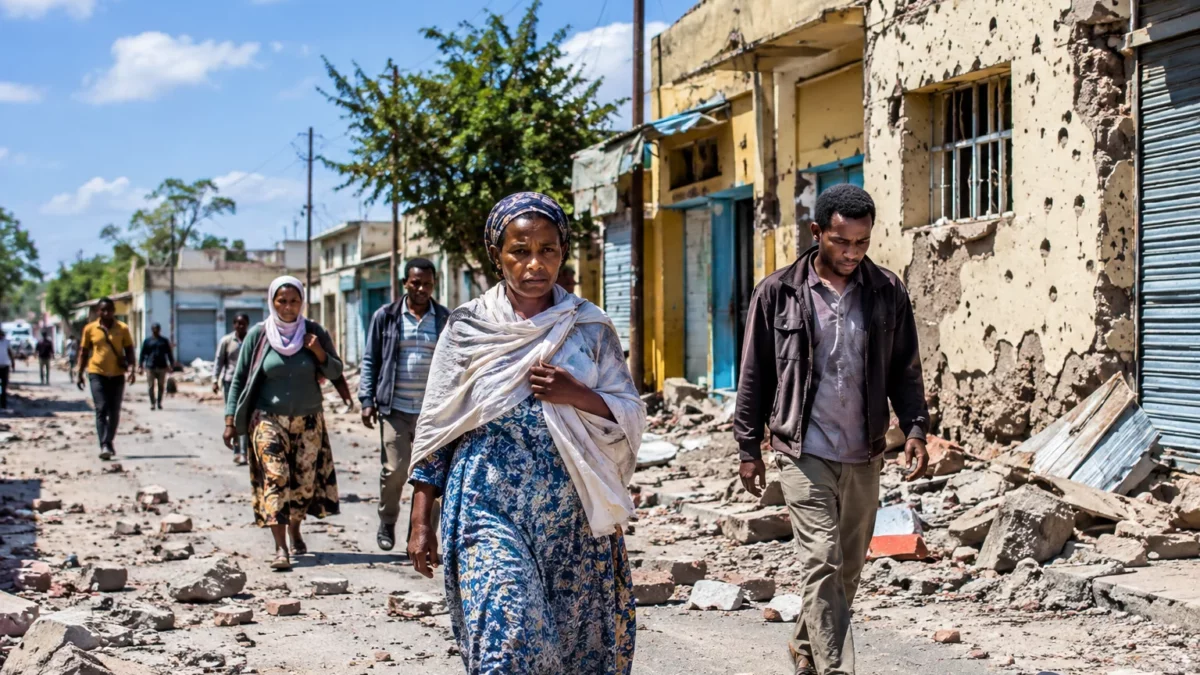
In Alamata, September’s fighting put residents of a strategic town at the heart of the clashes. An investigation published on 23 November by Amnesty International documents artillery fire that killed 14 civilians. It also implicates military positions established in residential neighbourhoods. These findings come as the truce concluded in 2022 between Addis Ababa and the TPLF is seriously weakened.
A truce under pressure in northern Ethiopia
Tigray, a region in northern Ethiopia, was barely emerging from a devastating war when the federal government and the Tigray People’s Liberation Front (TPLF) signed the Pretoria Agreement on 2 November 2022. Negotiated under the auspices of the African Union, it was intended to end the fighting and provide a framework for the return to political and institutional life.
Peace, however, did not resolve several disputes. The status of territories claimed by Tigray and Amhara, the return of displaced people, disarmament and the TPLF’s place in the institutions remain contested. Tensions over the regional administration have also worsened relations between the federal government and Tigrayan leaders. An analysis by the German institute SWP describes the region as being “between war and peace”, where political disagreements exist alongside armed clashes.
The resumption of hostilities prompted a response from the African Union. On 23 September, its Commission Chairperson called for de-escalation and a resumption of dialogue under the Pretoria Agreement. He recalled that the text remains, in the organisation’s view, the main framework for a settlement between the parties. IGAD, the East African regional organisation, also called for the fighting to stop.
Fourteen deaths verified by Amnesty
Between 26 and 28 September, the Ethiopian federal army and allied forces carried out artillery strikes in Alamata, according to Amnesty. The organisation says it investigated four incidents and independently verified the deaths of 14 civilians, including three children. It reports shelling in densely populated residential neighbourhoods and calls for an investigation into possible war crimes.
To reach its conclusions, Amnesty says it interviewed 28 people, including witnesses, victims’ relatives, and medical and humanitarian workers. Its researchers say they analysed videos, photographs and satellite images. The organisation says it wrote to the federal forces, allied forces and the TPLF to seek their responses. At the time of publication, the federal army and allied forces had not responded. The TPLF rejected the accusations against it and called for an independent investigation.
The figure of 14 deaths does not account for all the tolls reported during those days. The BBC separately relayed information from a doctor at Alamata General Hospital, who estimated that at least 52 civilians had been killed during three days of fighting in the town and its surroundings. The two figures are based on different methods and scopes: Amnesty says it verified 14 deaths in four specific incidents; the tally cited by the BBC covers reported casualties during the fighting as a whole. They therefore cannot be conflated or presented as a consolidated toll.
Alamata is both an inhabited town and a strategic transit point for supplies of food, fuel and military equipment. In the strikes reported by Amnesty, a residential neighbourhood known as “the condominiums” was hit. Homes were struck at dawn on 27 September. The report also describes strikes near the market. Families, traders and people dependent on local services are directly exposed when fighting reaches the streets.
Obligations of all parties
Amnesty also implicates the TPLF. The organisation says its forces established military bases in residential areas, including in schools, before the fighting resumed. Such installations can increase the danger to residents. The TPLF disputes the accusations made against it, and its responsibility for these acts has not been established by a court ruling.
These allegations do not lessen the obligations of the federal army and its allies. International humanitarian law requires each party to protect civilians and distinguish military objectives from homes. The use of artillery in densely populated areas poses a high risk to people not participating in the fighting. The possible presence of combatants among civilians is not, by itself, sufficient to justify indiscriminate fire.
The consequences go beyond the immediate casualties. Bombardments disrupt access to healthcare, markets and schools, and can force families to leave their homes. Local authorities must then manage displacement and urgent needs, while the federal administration and Tigrayan officials dispute political legitimacy and control. Witness accounts describe people killed and injured at the market; they are a reminder that the fighting also affects the town’s everyday activities.
Implications for the Horn of Africa
The resumption of fighting in Alamata goes beyond a local clash. Ethiopia occupies a central position in the Horn of Africa and hosts the African Union headquarters in Addis Ababa. A further escalation could undermine regional mediation efforts and increase civilian displacement. Recent calls by the AU and IGAD show that regional partners are closely monitoring the situation, although their statements have not, so far, restored the truce.
What happens next will depend in particular on credible investigations being opened, observers and humanitarian organisations being granted access, and political dialogue resuming. Responsibilities for the strikes will also need to be clarified, and residents of areas where forces are deployed must be protected. For Alamata’s civilians, the immediate issue remains concrete: being able to live, move around and access essential services without being caught in the crossfire.
Sources consulted: Amnesty International investigation into the strikes in Alamata, African Union call for de-escalation, security bulletin on Tigray and Associated Press report on the clashes and reported casualty figures.