Algeria
 Libya
 Morocco
 Sudan
 Tunisia
 Benin
 Burkina Faso
 Cabo Verde
 Côte d'Ivoire
 Ghana
 Guinea
 Guinea-Bissau
 Liberia
 Mali
 Mauritania
 Niger
 Nigeria
 Senegal
 Sierra Leone
 The Gambia
 Togo
 Cameroon
 Central African Republic
 Chad
 DR Congo
 Equatorial Guinea
 Gabon
 Republic of the Congo
 São Tomé and Príncipe
 Burundi
 Comoros
 Djibouti
 Eritrea
 Ethiopia
 Kenya
 Madagascar
 Malawi
 Mauritius
 Mozambique
 Rwanda
 Seychelles
 Somalia
 South Sudan
 Tanzania
 Uganda
 Angola
 Botswana
 Eswatini
 Lesotho
 Namibia
 South Africa
 Zambia
 Zimbabwe
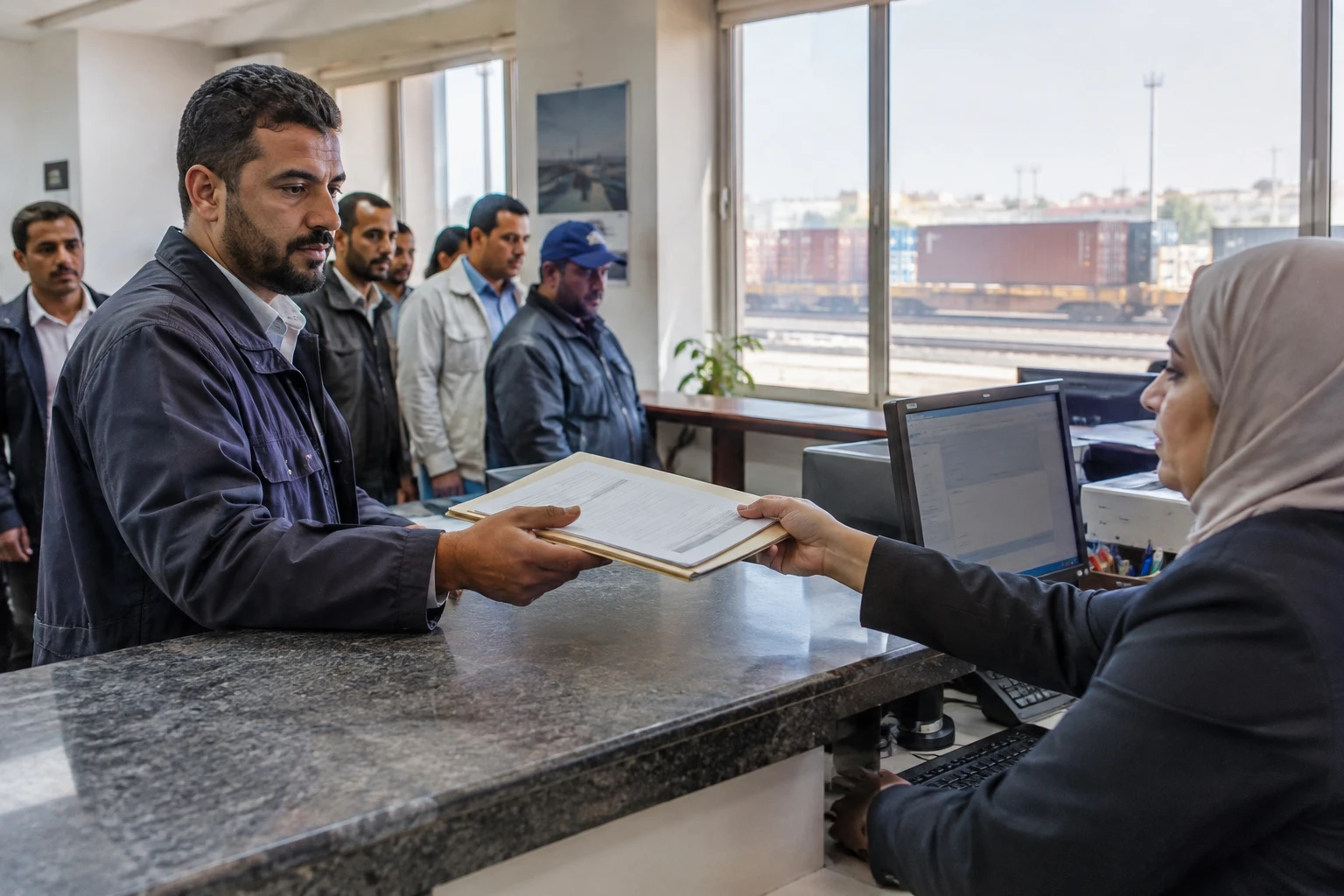
Goods in Alexandria can now be prepared and stored away from the seafront docks. For Egyptian companies, the question will be whether this new logistics link genuinely cuts delays and costs, beyond simply adding another facility.
A land-based link near Alexandria’s business centres
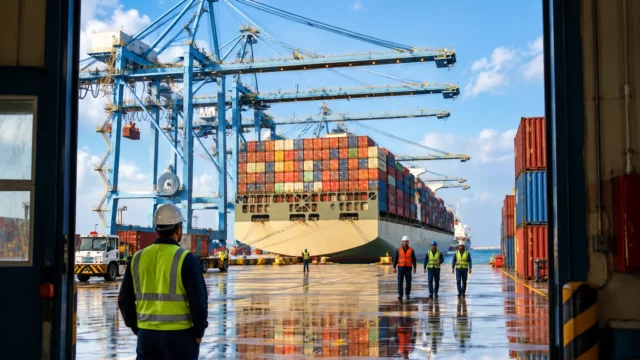
Al-Amriya dry port was inaugurated on 14 October 2026 in Alexandria governorate, in northern Egypt. The facility covers 146,000 square metres. Its announced cost is 700 million Egyptian pounds. Transport Minister Kamel El-Wazir attended the inauguration, according to the ministry and the Egyptian state news agency. Egypt’s Transport Ministry details the opening of Al-Amriya dry port. The key details on the date, area and cost were also reported by Ahram Online.
A dry port is an inland facility where cargo handling, storage and shipping operations linked to maritime freight can take place. The aim is to move some of the work carried out on the docks to a site connected to transport networks. At Al-Amriya, its proximity to Alexandria port and conventional rail links is intended to facilitate these movements. The site is also close to the first route of the high-speed electric train network, the ministry says.
This arrangement could ease pressure on maritime terminals and surrounding roads. But on its own, it does not guarantee faster deliveries. Results will depend on train schedules, connection capacity, customs procedures and coordination between rail, port and logistics operators. For exporters, the benefits will be measured above all by the reliability of shipments and the total cost of transport.
A national strategy extending beyond Cairo
Al-Amriya is Egypt’s second dry port, after the one in 6th of October City, according to the Transport Ministry. The government is placing these facilities within a broader project to link seaports with industrial, agricultural and mining areas by roads, railways and logistics zones. The official announcement refers to eight integrated logistics corridors and a national programme of dry ports and logistics zones. The number of planned facilities varies across government announcements and planning stages; announced projects should therefore not be confused with construction under way or facilities already in service.
The initiative forms part of Egypt’s recent efforts to strengthen its position in transport and transit trade. The country has ports on the Mediterranean and Red Sea, as well as the Suez Canal, a strategic passage between Asia and Europe. This geography offers opportunities, but competitiveness also depends on the smooth running of operations on land. The challenge is to connect infrastructure, rather than multiply facilities without ensuring continuity between them.
The dry port in 10th of Ramadan City illustrates this expansion. In April 2026, Egyptian company EDECS and MEDLOG, the logistics arm of shipping group MSC, announced an agreement linked to the project. The planned facility covers 189,000 square metres. EDECS outlines the 10th of Ramadan project; Ahram Online also reported on the partnership. The development thus brings together domestic players and an international operator in a sector where operating conditions will matter as much as construction.
The expected effects will not be the same for everyone
For manufacturers and importers in the Alexandria region, a facility close to business centres could simplify the movement of goods. Road hauliers could benefit from better-organised loading, provided the transfer to rail is reliable and economically attractive. Smaller companies, however, will only gain if services are accessible and rates transparent. An efficient but expensive or poorly connected facility risks reserving its benefits for the largest operators.
Egyptian authorities present the use of rail as a way to limit congestion, accidents and emissions associated with road transport. These are objectives, not results already demonstrated at Al-Amriya. The share of freight actually transferred, the frequency of connections and changes in waiting times will need to be monitored. The dry port’s ability to serve local businesses, rather than just transit flows, will also be decisive.
The question of management also warrants attention. The facility was built for the National Company for Refrigeration and Supply, which is affiliated with the Armed Forces Projects Authority, according to the ministry. This information sheds light on the project’s institutional structure; on its own, it does not establish how access or pricing will work in future. Transparent operations and the place given to different users will affect its economic value.
An issue that extends beyond national borders
For North Africa and the continent, Egypt’s experience raises a practical question: how can ports, railways and production zones be connected to reduce breaks in supply chains? Egypt is not a member of the Arab Maghreb Union, but its links with the Mediterranean, the Red Sea and African markets give it regional importance. The quality of its corridors could matter for trade between Africa and external markets, without making Egypt a model that can automatically be applied to countries with different networks and constraints.
The next step will be less dramatic than an inauguration: measuring the facility’s actual use and the reliability of its connections. The ministry says other projects are being prepared or are under way, including east of Cairo and at Borg El-Arab. Their timetables and entry into service will need to be tracked separately. For companies and users, the decisive test will remain simple: will goods move faster and at a predictable cost between docks, factories and markets?