Algeria
 Egypt
 Libya
 Morocco
 Sudan
 Tunisia
 Benin
 Burkina Faso
 Cabo Verde
 Côte d'Ivoire
 Ghana
 Guinea
 Guinea-Bissau
 Liberia
 Mali
 Mauritania
 Niger
 Nigeria
 Senegal
 Sierra Leone
 The Gambia
 Togo
 Central African Republic
 Chad
 DR Congo
 Equatorial Guinea
 Gabon
 Republic of the Congo
 São Tomé and Príncipe
 Burundi
 Comoros
 Djibouti
 Eritrea
 Ethiopia
 Kenya
 Madagascar
 Malawi
 Mauritius
 Mozambique
 Rwanda
 Seychelles
 Somalia
 South Sudan
 Tanzania
 Uganda
 Angola
 Botswana
 Eswatini
 Lesotho
 Namibia
 South Africa
 Zambia
 Zimbabwe
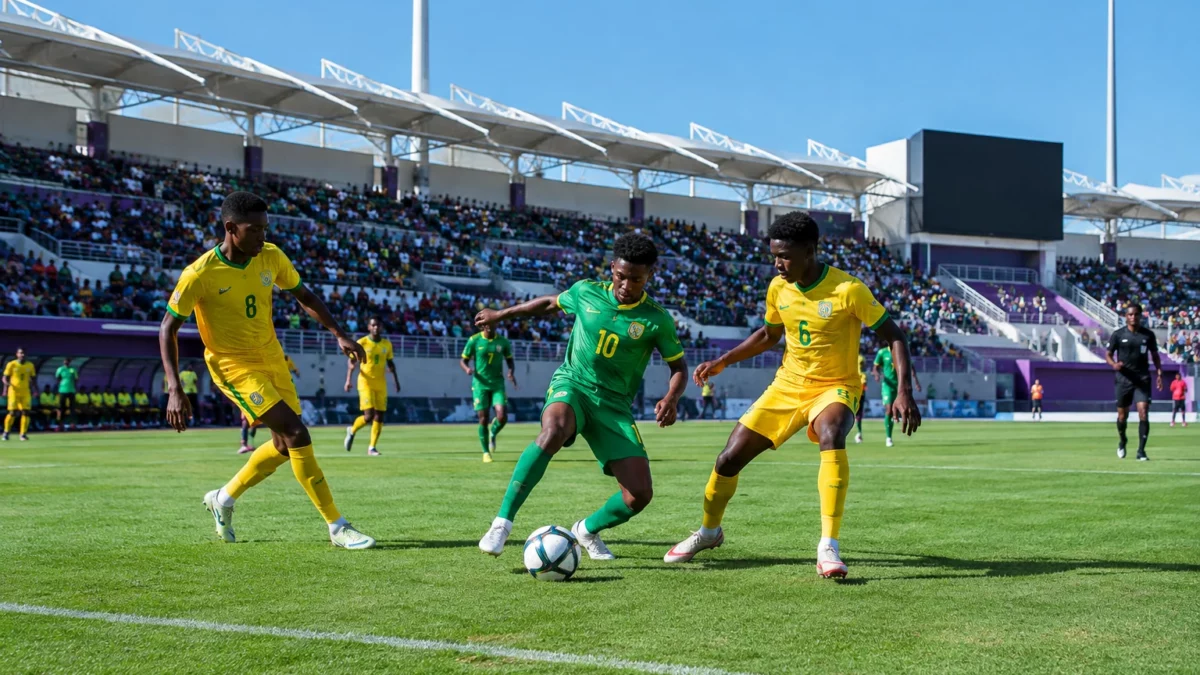
For Africa’s youth sides, the group stage has already separated the contenders from the rest. Eight teams are continuing their campaigns at the U-17 World Cup in Qatar, while Tanzania and Cameroon have been eliminated. From here, everything comes down to one match: defeat ends a team’s tournament.
A first round that puts teams to the test
The format offers a chance to bounce back after an uneven group stage: 48 teams were divided into 12 groups, with 32 progressing to the knockout stage. The opening matches in this round, sometimes referred to as the round of 32, set teams on the road to the last 16. The World Cup is taking place in Qatar from 19 November to 13 December 2026.
The competition brings together sides from every confederation. For African teams, each qualification reflects a distinct campaign, rather than a uniform continental performance. Group results, opponents faced and preparation conditions vary from one side to another.
FIFA organises the tournament. For African representatives, the Confederation of African Football (CAF) oversees qualifying competitions and football across the continent. Both levels matter: the World Cup tests teams against different playing styles, while development pathways are also built through domestic leagues and national structures.
African fixtures to watch
Among the scheduled matches, Côte d’Ivoire are due to face the Republic of Ireland, while Morocco will take on Chile. Mali are scheduled to play the Dominican Republic, Senegal will face Australia, Uganda will meet France and Algeria will play Venezuela. These matches pit teams with different records and profiles against one another; no result can be taken for granted before kick-off.
The matches will also test players’ ability to manage a tight schedule and the pressure of knockout football. A strong group-stage performance does not guarantee further progress. Conversely, a team that has struggled can still advance if it finds solutions against its new opponent.
The available information does not detail the eight qualified African sides or all of their fixtures. It would therefore be unwise to complete the list by inference. The matches cited nonetheless show the presence of several countries from West, North and East Africa: Côte d’Ivoire, Mali, Senegal, Algeria, Morocco and Uganda.
What the eliminations do — and do not — tell us
Tanzania and Cameroon are leaving the competition. Their departure marks the end of their campaigns in Qatar, but is not enough on its own to assess the state of their youth development. At this age, results also depend on preparation, international experience and the finer details of a match. A broader assessment would require examining each team’s matches and campaign.
For the sides still in contention, progress offers players and coaching staff international exposure. It does not guarantee a professional career. It can, however, build young players’ experience, give them a frame of reference against other footballing schools and allow federations to assess their development work.
The impact is not limited to sporting bodies. Clubs, academies and families are also following the players’ performances. But a tournament’s media exposure is no substitute for sustained coaching or regular domestic competitions. What happens next in the players’ careers will also depend on the opportunities available after they return, in sporting environments that differ greatly from one country to another.
A regular fixture in Qatar
Qatar is hosting the 2026 edition after staging the 2025 tournament, which Portugal won 1-0 against Austria. Nigeria remains the tournament’s most successful nation, with five titles, ahead of Brazil, who have four. These figures recall the historic strength of certain sides, without predicting the results of the current generation.
For Africa, the immediate challenge is to turn qualification into longer campaigns. The upcoming matches will show which teams can overcome the first hurdle in the knockout bracket. They will not, by themselves, establish a definitive hierarchy among African countries: generations change, and the margins are often decided by small details.
The next measure will therefore be simple: how many of the eight teams will continue their journey after this first knockout match? The tournament will provide the answer as the matches unfold, while federations can then draw their own conclusions from the campaign.