
 Algeria
 Egypt
 Libya
 Morocco
 Sudan
 Tunisia
 Benin
 Burkina Faso
 Cabo Verde
 Côte d'Ivoire
 Ghana
 Guinea
 Guinea-Bissau
 Liberia
 Mali
 Mauritania
 Niger
 Nigeria
 Senegal
 Sierra Leone
 The Gambia
 Togo
 Cameroon
 Central African Republic
 Chad
 DR Congo
 Equatorial Guinea
 Gabon
 Republic of the Congo
 São Tomé and Príncipe
 Burundi
 Comoros
 Djibouti
 Eritrea
 Ethiopia
 Kenya
 Madagascar
 Malawi
 Mauritius
 Mozambique
 Rwanda
 Seychelles
 Somalia
 South Sudan
 Tanzania
 Uganda
 Angola
 Botswana
 Eswatini
 Lesotho
 Namibia
 Zambia
 Zimbabwe
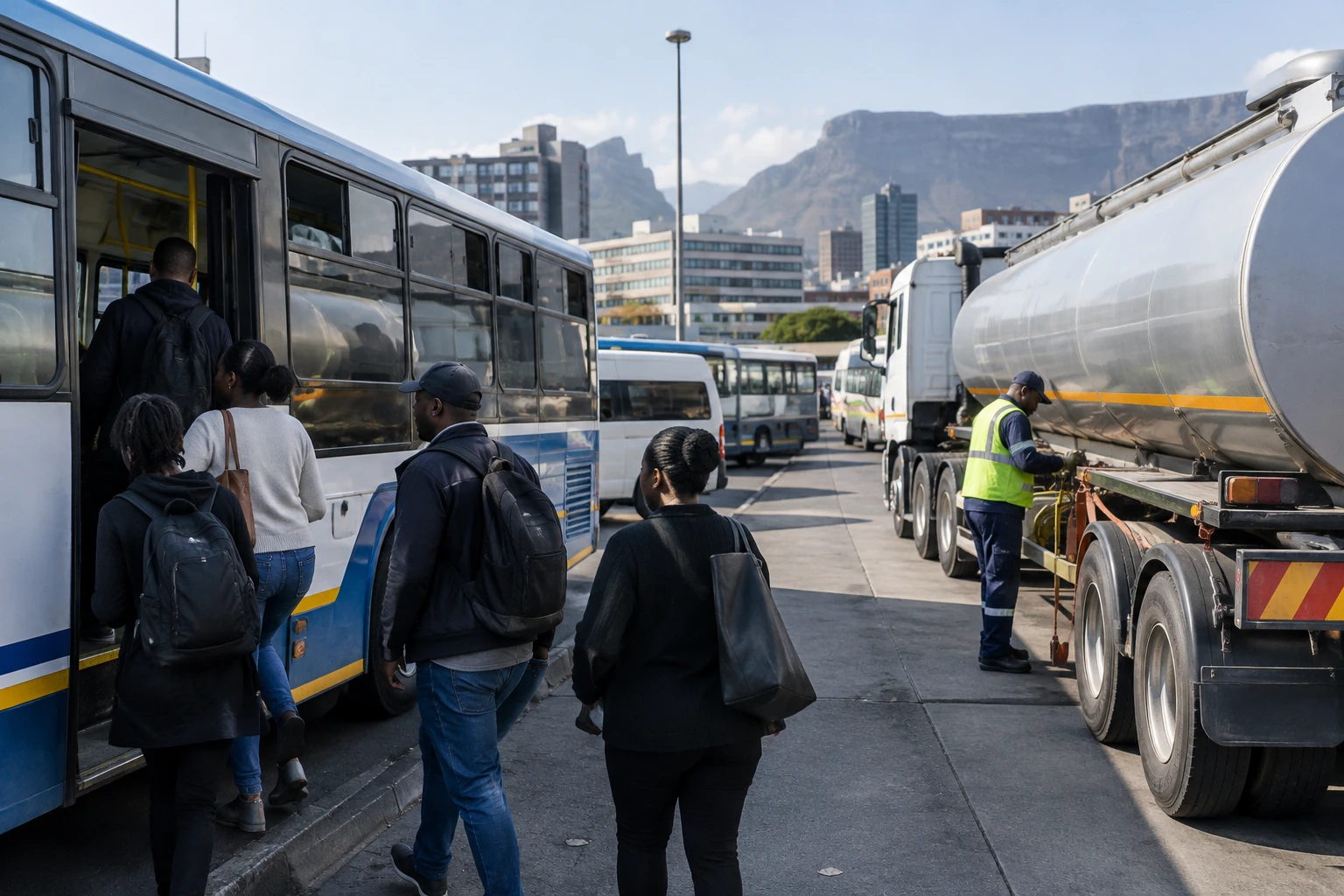
In Cape Town, energy contract announcements raise a practical question: will investment in oil and gas create lasting jobs and useful infrastructure, or remain concentrated in extraction? The debate runs through African Energy Week 2026, amid promises of economic benefits and climate protests.
Cross-border projects, benefits yet to be proven
Held from 12 to 16 October in Cape Town, South Africa, the gathering brings together governments, companies and investors. It comes as African countries seek to secure their energy supplies and fund infrastructure, in a global market exposed to geopolitical tensions.
Verner Ayukegba, vice-president of the African Energy Chamber, announced that deals worth about $10 billion had already been concluded during the event. Reuters also reported this estimate and cited several transactions mentioned: EduEnergias’ acquisition of Chevron’s historic assets in Angola, gas announcements in Senegal and initiatives in Nigeria linked to the supply of the Train 7 liquefied natural gas project. This is a figure given by an industry official, not an independent account detailing the amounts actually invested or disbursed. Reuters’ video report on the announced deals.
Another project discussed is the gas pipeline linking Nigeria to Morocco. Its phased development could require financing far in excess of the $10 billion announced, according to Ayukegba. But a project on this scale will depend on political decisions, agreements between countries, financing and construction work spanning several years. An announcement therefore does not mean that the pipeline is funded or under construction.
These projects involve countries on different paths. Angola is an established hydrocarbon producer, while Senegal is developing its gas projects. In Nigeria, liquefied natural gas — gas cooled for transport by ship — is part of an already significant industry. Contracts can attract capital and support public revenues, but their impact on employment also depends on local suppliers, industrial processing and the skills used.
South Africa’s question: produce, process, employ
In South Africa, the debate also concerns how to turn resources into economic activity. Godfrey Moagi, chief executive of the national oil company, believes oil and gas exploration and production can help reduce unemployment. But he points to a broader issue: the benefits would be greater if extraction led to the creation of related industries.
The distinction matters. An extraction site can generate revenue and jobs, but some of the value may leave the country if equipment, specialist services and processing are imported. By contrast, local companies able to supply parts, process raw materials or build infrastructure can spread the benefits beyond operators and their direct contractors. This requires investment, markets accessible to local businesses and a sustained industrial policy.
The South African government has also called for stronger energy cooperation between African countries, particularly to improve security of supply and develop regional refining capacity. This approach was advocated in Cape Town on 14 October at a meeting of the African Petroleum Producers’ Organisation, which brings together national companies in the sector. The South African ministry’s statement on energy cooperation.
This regional approach connects with the priorities of the Southern African Development Community (SADC), the organisation that co-ordinates cooperation between states in the region. Electricity grids, energy trade and generating capacity do not stop at national borders. Better interconnection can help diversify sources of supply, but requires lasting agreements and suitable infrastructure.
Protests highlight the climate cost of these choices
On the sidelines of the conference, activists from Greenpeace Africa and Extinction Rebellion protested against new oil and gas projects. They support a faster development of renewable energy and warn of the climate and social consequences of expanding fossil fuels. The Associated Press reported that police moved the protesters away. Organisers and industry officials, for their part, argue that access to resources and investment are drivers of development.
These positions do not address exactly the same question. Supporters of hydrocarbons emphasise access to energy, public revenues, employment and industrialisation. NGOs stress long-term emissions, the impact of projects on communities and the risk of locking economies into fossil-fuel infrastructure. In South Africa, the government presents gas in particular as a possible complement to renewables when solar or wind generation falls. Critics fear that such complementarity will prolong dependence on fossil fuels.
The consequences will not be the same for everyone. Jobs and contracts may cluster around sites, ports and major cities. Communities close to projects may be directly exposed to changes in their environment. Households and businesses are also affected by another essential measure: the price and reliability of electricity. The number of billions announced is therefore not enough to establish who will benefit from the projects, or at what cost.
From announcements to measurable results
The continental challenge is to link energy cooperation to concrete results: generating capacity, cross-border networks, affordable access to energy and skilled jobs. The projects announced in Cape Town involve several economies, from Nigeria and Senegal to Angola and Morocco. Their progress will depend on agreements between states, confirmed financing and published timetables, while SADC provides a framework for cooperation in southern Africa.
The next steps therefore warrant close scrutiny: will the announced deals be formalised, financing secured and contracts made accessible to local businesses? The countries concerned will also have to balance immediate energy needs, economic diversification and climate commitments. For now, the $10 billion is an announcement by the African Energy Chamber, not yet proof that the projects will deliver the promised jobs and infrastructure.



