Algeria
 Egypt
 Libya
 Morocco
 Sudan
 Tunisia
 Benin
 Burkina Faso
 Cabo Verde
 Côte d'Ivoire
 Ghana
 Guinea
 Guinea-Bissau
 Liberia
 Mali
 Mauritania
 Niger
 Nigeria
 Senegal
 Sierra Leone
 The Gambia
 Togo
 Cameroon
 Central African Republic
 Chad
 DR Congo
 Equatorial Guinea
 Gabon
 Republic of the Congo
 São Tomé and Príncipe
 Burundi
 Comoros
 Djibouti
 Eritrea
 Ethiopia
 Kenya
 Madagascar
 Malawi
 Mauritius
 Mozambique
 Rwanda
 Seychelles
 Somalia
 South Sudan
 Tanzania
 Uganda
 Angola
 Botswana
 Eswatini
 Lesotho
 Namibia
 South Africa
 Zambia
 Zimbabwe
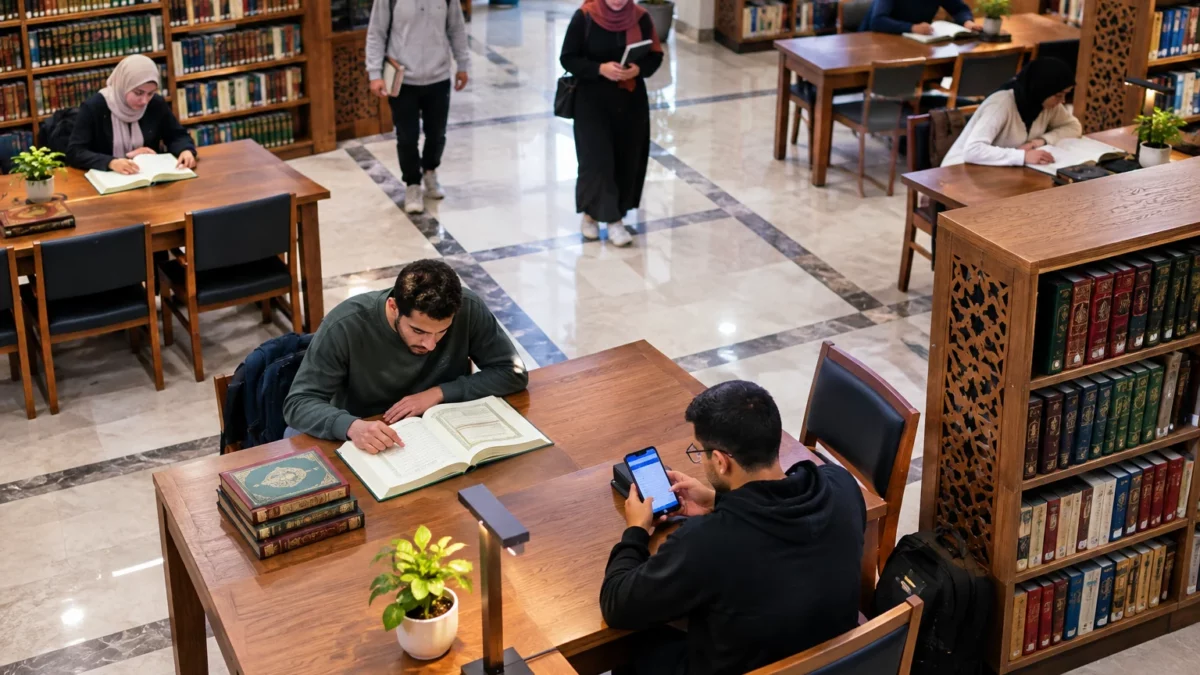
A religious question asked on a phone can receive an answer within seconds. But a well-worded answer is not necessarily religious advice suited to the person, their circumstances or their school of thought. This is the line that artificial intelligence assistants are seeking to make visible — and that their users must learn to recognise.
A research tool, not a religious authority
The Qaf app, launched in August 2026 by entrepreneur Abdellatif Abdelfattah, has found itself at the centre of this debate. Its launch video circulated widely on social media. Some messages presented the tool as a simplified way to access Islamic knowledge; others warned against turning to a machine for a fatwa, or religious legal opinion.
The distinction matters. Qaf says it draws on published Islamic works, including those in the Shamela digital library, to find passages and present answers with references. Its help centre states that the app does not issue fatwas and recommends consulting a qualified scholar for a decision concerning a personal case. These statements describe the function the tool claims to offer; by themselves, they do not guarantee the accuracy of every answer.
A fatwa is not simply a matter of finding a rule in a book. It requires examining the question, the context, the facts specific to the person and the methods of interpretation being applied. In Muslim traditions, legal schools and scholarly authorities may disagree. A generated answer that leaves out these differences risks presenting a particular opinion as a universal rule.
Qaf’s founder himself warned that AI-generated answers could contain errors. After the reactions prompted by the launch, he also said the tool was not intended to issue fatwas. The debate is therefore not just about an app’s reliability: it is also about how its designers present its limitations and how users interpret its answers.
The debate is also taking shape in African institutions
In Egypt, a North African country where Islam plays a major role in public life, religious authorities have been discussing the governance of these technologies for several years. In August 2025, Dar al-Ifta, the Egyptian institution responsible, among other things, for answering religious questions, held an international conference in Cairo on training muftis in the age of artificial intelligence. A mufti is a specialist qualified to formulate religious opinions.
In discussions reported by the organising institutions, the message is nuanced: AI can help organise and consult resources, but issuing a fatwa remains a human responsibility. The debate is therefore as much about specialists’ expertise as it is about the governance of tools, the transparency of their references and how their errors are corrected.
This discussion also matters to Muslim societies across the continent beyond Egypt. Practices, languages and religious authorities differ from one country to another. A tool designed primarily for classical Arabic corpora does not automatically meet the needs of people seeking explanations in French, Wolof, Hausa or other African languages. General questions about religious practice must also be distinguished from family, commercial or medical situations, where the consequences of an answer can be tangible.
Language and sources affect quality
A specialist assistant may have an advantage over a general-purpose chatbot: it can direct users to specific works and make references easier to find. Qaf’s help centre says the app provides searchable sources and can flag differences of opinion among scholars. This can facilitate an initial search, provided the references are accurate, representative and sufficiently contextualised.
But digitisation does not solve everything. An online library does not necessarily contain all traditions, historical periods or interpretations. Texts available in a given language carry more weight in the results than works that are missing, poorly digitised or under-represented. A tool’s quality therefore depends not only on its software, but also on the choices made in selecting sources and presenting disagreements.
For African audiences, the language issue is particularly tangible. An answer can seem convincing while losing nuances in translation. Religious practices and the authorities people consult also vary according to national and local contexts. An app that is accessible from the continent does not thereby become a reference suited to every community.
This dependence on corpora and digital infrastructure also raises an issue of technological sovereignty. Researchers and institutions in African countries need not be mere users of services designed elsewhere: they can help digitise texts, develop language tools and set rules for transparency. This requires resources, technical expertise and collaboration between digital specialists, linguists and religious institutions.
What users should be able to verify
For readers, caution does not mean rejecting all digital assistance. An assistant can help find a text, compare explanations or prepare a question to put to a specialist. However, an automated answer should not decide a personal situation on its own, especially when rights, responsibilities or family relationships are at stake.
Designers also have a practical responsibility. They should clearly explain which sources inform their answers, distinguish general information from religious opinion, flag disagreements and provide a way to correct errors. Without these safeguards, ease of access can give an uncertain answer the appearance of authority.
The next challenge, then, is less about whether AI will become part of religious practice than about who controls its sources and the methods it uses to present knowledge. The debates under way in Cairo and the tools developed by private teams illustrate two aspects of the same undertaking: preserving access to knowledge without confusing speed of response with scholarly authority. For African institutions and communities, the place of local languages and the representation of their resources in digital systems will remain decisive issues.