Algeria
 Egypt
 Libya
 Morocco
 Sudan
 Tunisia
 Benin
 Burkina Faso
 Cabo Verde
 Ghana
 Guinea
 Guinea-Bissau
 Liberia
 Mali
 Mauritania
 Niger
 Nigeria
 Senegal
 Sierra Leone
 The Gambia
 Togo
 Cameroon
 Central African Republic
 Chad
 DR Congo
 Equatorial Guinea
 Gabon
 Republic of the Congo
 São Tomé and Príncipe
 Burundi
 Comoros
 Djibouti
 Eritrea
 Ethiopia
 Kenya
 Madagascar
 Malawi
 Mauritius
 Mozambique
 Rwanda
 Seychelles
 Somalia
 South Sudan
 Tanzania
 Uganda
 Angola
 Botswana
 Eswatini
 Lesotho
 Namibia
 South Africa
 Zambia
 Zimbabwe
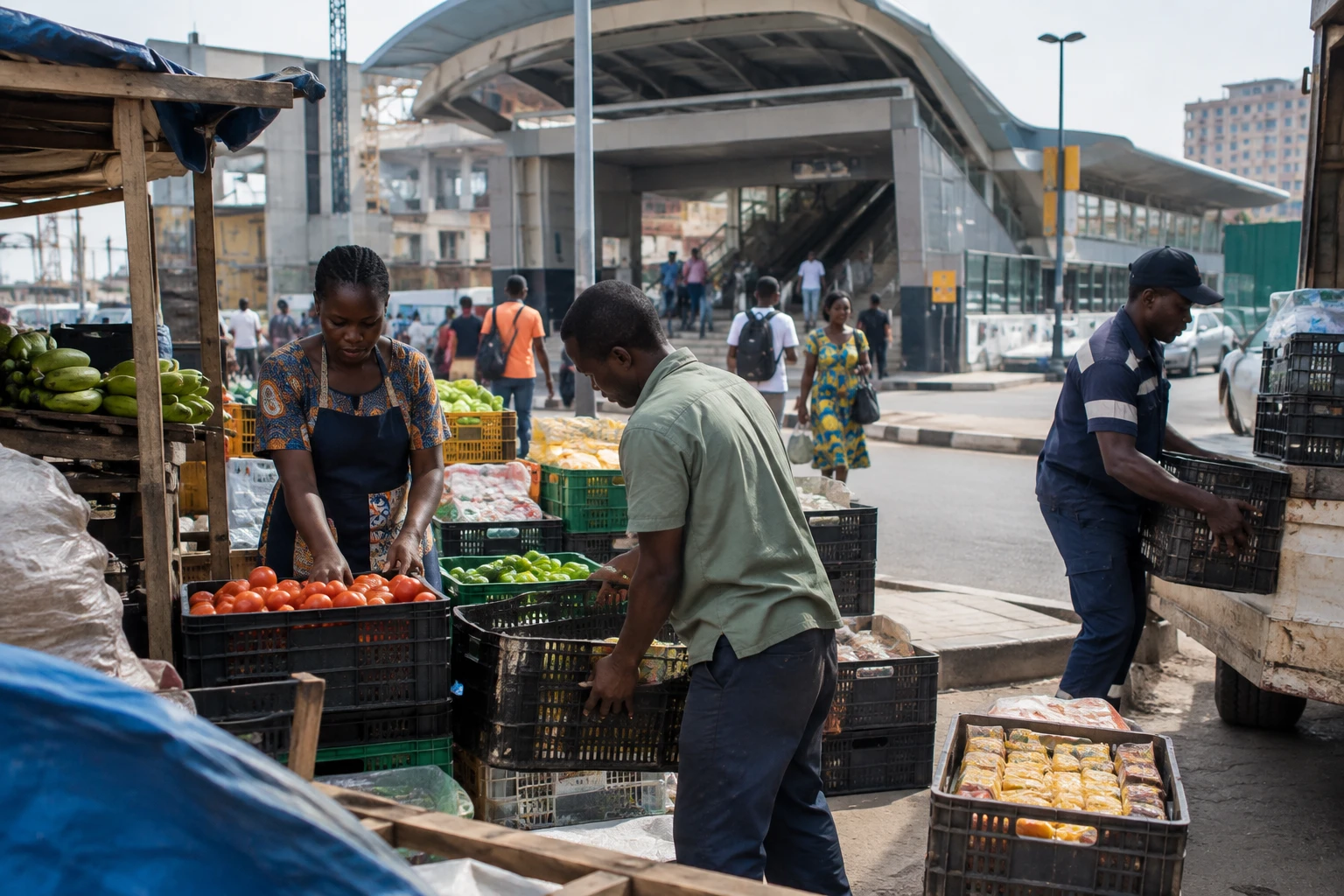
For residents of Greater Abidjan, the promise of a metro is first measured in time spent travelling. But the line under construction raises another question: whether a major public investment can also create lasting jobs and opportunities accessible to Ivorian businesses.
A network designed to connect several municipalities
Abidjan accounts for a large share of Côte d’Ivoire’s economic activity. Its expansion has increased travel between northern neighbourhoods and employment centres in the south. In this urban area, traffic congestion weighs on workers, traders and businesses alike. The country’s political capital remains Yamoussoukro, while Abidjan is its main economic centre.
Metro Line 1 is to connect Anyama to Port-Bouët over 37.4 kilometres, with 18 stations in seven municipalities: Anyama, Abobo, Adjamé, Plateau, Treichville, Marcory and Port-Bouët. It is part of a broader public transport system, in which the Bus Rapid Transit (BRT) project is to connect Bingerville to Yopougon along the east-west axis. Both projects aim to better serve the main urban centres, although their projected capacities alone do not guarantee a reduction in congestion.
Urban mobility is also a regional issue. Across West Africa, major cities are growing rapidly and seeking to connect housing, jobs and services through more reliable networks. Côte d’Ivoire’s experience in Abidjan will be watched beyond its borders, particularly by cities facing similar challenges.
Jobs promised, but of different kinds
During a site visit on 11 November 2026, Prime Minister Robert Beugré Mambé said that more than 2,000 Ivorians were already working on the project. He specifically mentioned the recruitment of young women. The head of government estimates that the project will eventually generate more than 5,000 jobs, including 2,000 permanent positions. These figures have also been reported by the Ivorian Press Agency, but remain official forecasts rather than a tally of jobs already created.
The distinction matters. Construction jobs are tied to the works and may be temporary. The permanent jobs announced relate to operating and maintaining the network, while other activities could develop around the stations. The government has called on Ivorian private-sector operators to invest in the commercial spaces associated with the stations. Whether these opportunities materialise will depend in particular on contracts, training needs and the terms of access to markets.
The project is part of the objectives of the 2026–2030 National Development Plan. The plan aims to increase the employed population from 11.5 million to 14 million and raise formal employment from more than 1.5 million to more than 3 million. These ambitions apply to the country as a whole: even if the metro jobs materialise as planned, they would represent only a share of the total.
Benefits will also depend on access to stations
According to government announcements, services are due to begin in January 2029. The project was estimated to be 66% complete during the 11 November visit. The metro is expected to carry up to 540,000 passengers a day and operate with a planned fleet of 25 to 30 trains. The Ivorian Press Agency has reported that trials are planned before commercial services begin. The timetable therefore remains a target to be monitored as construction and testing progress.
For residents, the line’s usefulness will depend on its ability to cut journey times and make connections convenient. Stations will need to be accessible from surrounding neighbourhoods, including for people who currently reach main roads on foot, by bus or using informal transport. If the network is hard to reach or too expensive for some passengers, its benefits risk being unevenly distributed.
The shops planned around the stations also raise questions about how value will be shared. Well-located premises could create opportunities for Ivorian businesses and traders. But the scale of investment required and the rules for allocating spaces will determine who can actually benefit. At this stage, the call for private investment sets a direction; it does not yet specify how opportunities will be divided between small businesses and major operators.
An investment to be judged by its results
The cost cited in the available information on the project is about CFAF 1,166 billion. An earlier government document describes the concession framework for the line, but the published amounts and scope have evolved over the course of the project. The announced cost should therefore be distinguished from the final cost, which can only be established using updated, detailed financial data.
The metro’s promise will thus be tested on several fronts: meeting deadlines, ensuring reliable operations, training staff over the long term and connecting stations with other modes of transport. The number of jobs actually created, whether they are permanent and the role given to local businesses will also provide tangible indicators. For Côte d’Ivoire and its West African partners, it is this implementation — rather than announcements alone — that will show whether the project can combine urban mobility with widely shared economic benefits.
Ivorian government data on the metro’s progress and announced jobs
The trial and service launch timetable reported by the Ivorian Press Agency
Employment targets in the 2026–2030 National Development Plan