Algeria
 Egypt
 Libya
 Morocco
 Sudan
 Tunisia
 Benin
 Burkina Faso
 Cabo Verde
 Côte d'Ivoire
 Ghana
 Guinea
 Guinea-Bissau
 Liberia
 Mali
 Mauritania
 Niger
 Nigeria
 Senegal
 Sierra Leone
 The Gambia
 Togo
 Cameroon
 Central African Republic
 Chad
 DR Congo
 Equatorial Guinea
 Gabon
 Republic of the Congo
 São Tomé and Príncipe
 Burundi
 Comoros
 Djibouti
 Eritrea
 Kenya
 Madagascar
 Malawi
 Mauritius
 Mozambique
 Rwanda
 Seychelles
 Somalia
 South Sudan
 Tanzania
 Uganda
 Angola
 Botswana
 Eswatini
 Lesotho
 Namibia
 South Africa
 Zambia
 Zimbabwe
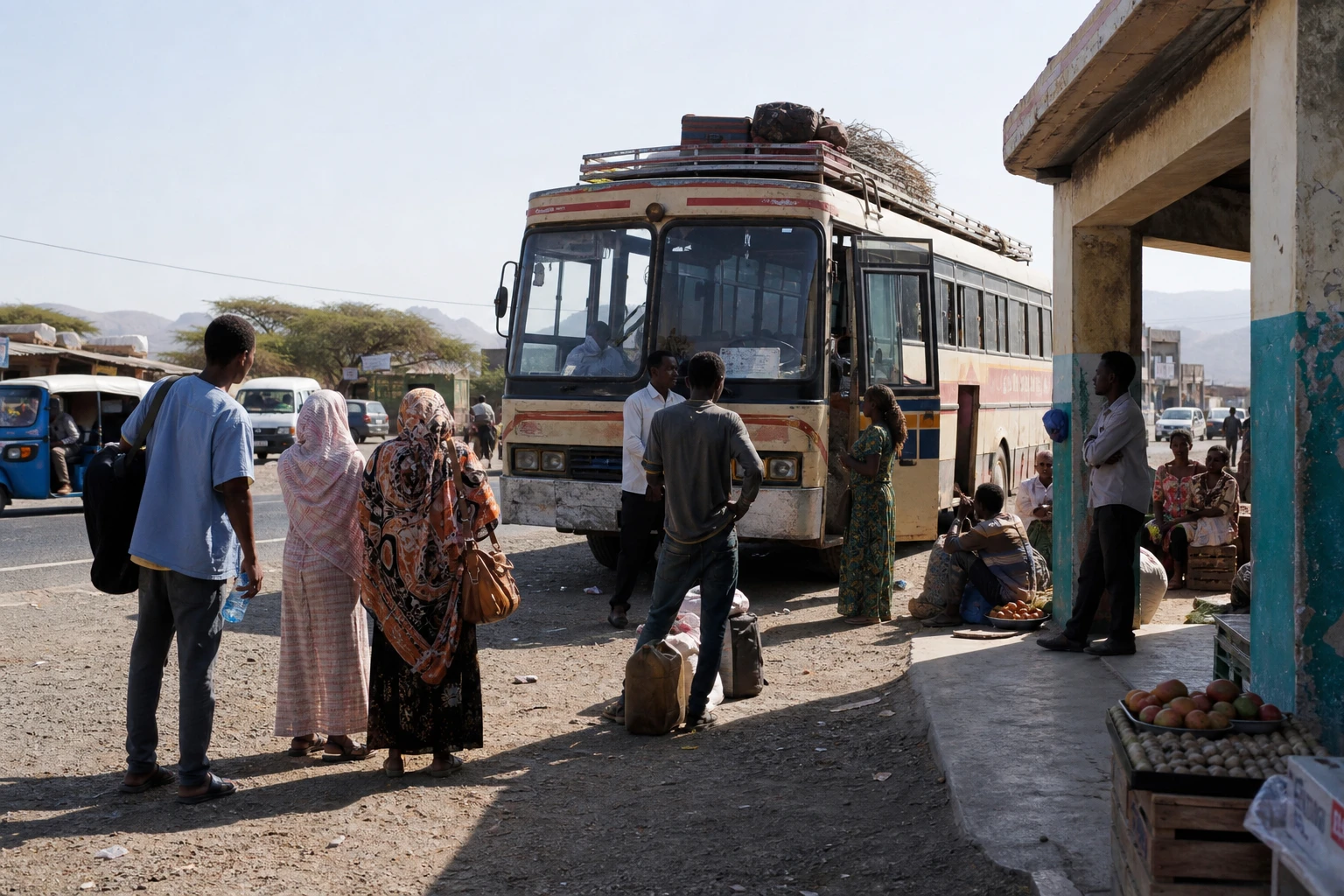
In Abala, in the Afar region, renewed clashes are once again bringing northern Ethiopia closer to open war. This strategic town, near the border with Tigray, lies at the crossroads of routes linking the Tigrayan highlands to the Afar plains. For residents, the immediate issue is less control of a military position than the safety of roads, markets and families already scarred by the previous war.
A new front opens on Tigray’s doorstep
On the night of Thursday 24 September 2026, Ethiopian federal forces clashed with fighters linked to the Tigray authorities around Abala. Several sources report that federal forces tried to prevent an advance towards the town. Other local accounts say Tigrayan fighters and their allies took control of some positions in the area.
This information remains difficult to verify independently. Communications are disrupted in several parts of the north, and the parties involved in the conflict have given differing accounts of the operations. However, the clashes have been reported by several separate sources, including Al Jazeera, Africanews and a field analysis by the ACLED network.
The federal government has not publicly confirmed all the casualty figures reported on the ground. The Ethiopian army, however, says it killed 272 Tigrayan fighters in 48 hours in the north of the Amhara region. This figure, reported by one party to the conflict, should be treated as a military claim, not an established toll.
The fighting is not confined to Abala. Clashes have also been reported in several areas of Tigray, Afar and Amhara. The Tigray Defence Forces, the main armed force linked to the Tigray authorities, have also been associated with movements around road routes and strategic infrastructure. The information available does not yet make it possible to determine the exact extent of the areas controlled by each side.
Fragile Pretoria agreement under pressure
This latest escalation comes less than four years after the agreement signed in Pretoria, South Africa, in November 2022. The text ended the war that broke out in November 2020 between the federal government and the Tigray People’s Liberation Front (TPLF), a political movement that had long dominated the ruling coalition in Addis Ababa.
The agreement provided for a cessation of hostilities, the gradual disarmament of Tigrayan forces and the restoration of federal authority in the region. Its implementation, however, has remained incomplete. The return of displaced people, the status of disputed territories and the reintegration of fighters continue to fuel tensions.
Tigray also continues to bear the human and economic consequences of the 2020–2022 war. Infrastructure has been damaged, agricultural activity disrupted, and many families still live on reduced incomes or with irregular humanitarian assistance. A new offensive therefore risks hitting a society that has not recovered its pre-war capacity.
The political climate grew more tense still in September 2026. The TPLF joined a coalition of armed groups and opposition organisations challenging Prime Minister Abiy Ahmed’s government. The alliance brings together forces from Tigray, Amhara, Oromia, the Somali region, Benishangul-Gumuz and Afar, among others, according to Associated Press.
This coalition does not necessarily amount to a unified military command. Its members have different aims and have sometimes fought one another. Their rapprochement nevertheless reflects a temporary convergence against the federal government. It increases the risk that several centres of violence could reinforce one another.
Why Abala matters to Afar and Tigray
Abala occupies a sensitive position between the Tigrayan highlands and Afar territory. The town lies on an important route for trade and population movements. Control of it could facilitate the movement of fighters, but also disrupt access to markets and essential services.
The Afar region was already directly affected by the Tigray war. Fighting took place there in 2021 and 2022, amid accusations of looting, violence against civilians and destruction. The return of clashes therefore stirs local memories and could trigger fresh displacement, particularly in villages near the regional border.
The consequences will not be the same for everyone. Traders depend on road routes to supply markets. Farmers and herders risk losing access to grazing land, water points and cultivated fields. In towns, residents may face movement restrictions and shortages. In rural areas, the lack of telecommunications makes evacuation and the verification of information more difficult.
For Addis Ababa, the stakes are also political. An expansion of the conflict into Afar and Amhara would force the federal government to spread its forces across several fronts. It could also undermine efforts to restore state authority and revive the national economy.
A regional risk to watch
Ethiopia does not have a regional economic organisation comparable to ECOWAS or SADC. It nevertheless plays a central role in the Horn of Africa and hosts the African Union headquarters in Addis Ababa. A new war in the north would therefore have repercussions far beyond Tigray’s borders.
Eritrea’s proximity is a cause for vigilance. Eritrean forces took part in the 2020–2022 war alongside the federal army. They were not party to the Pretoria agreement. Any direct or indirect involvement by outside actors could turn an internal crisis into a regional confrontation.
Neighbouring Sudan is itself experiencing a major war. Ethiopia’s western border is already exposed to the movement of weapons, fighters and refugees. A lasting deterioration in Tigray, Afar or Amhara would place additional pressure on border communities and humanitarian mechanisms.
The coming days will be decisive. The evolution of control over Abala, the accuracy of casualty figures and any opening of new fronts will need to be verified. The central question remains whether the Pretoria agreement can be preserved. Without credible political dialogue between Addis Ababa, the Tigray authorities and the other armed actors, northern Ethiopia risks sliding back into a cycle of war whose cost the population already knows.