Algeria
 Egypt
 Morocco
 Sudan
 Tunisia
 Benin
 Burkina Faso
 Cabo Verde
 Côte d'Ivoire
 Ghana
 Guinea
 Guinea-Bissau
 Liberia
 Mali
 Mauritania
 Niger
 Nigeria
 Senegal
 Sierra Leone
 The Gambia
 Togo
 Cameroon
 Central African Republic
 Chad
 DR Congo
 Equatorial Guinea
 Gabon
 Republic of the Congo
 São Tomé and Príncipe
 Burundi
 Comoros
 Djibouti
 Eritrea
 Ethiopia
 Kenya
 Madagascar
 Malawi
 Mauritius
 Mozambique
 Rwanda
 Seychelles
 Somalia
 South Sudan
 Tanzania
 Uganda
 Angola
 Botswana
 Eswatini
 Lesotho
 Namibia
 South Africa
 Zambia
 Zimbabwe
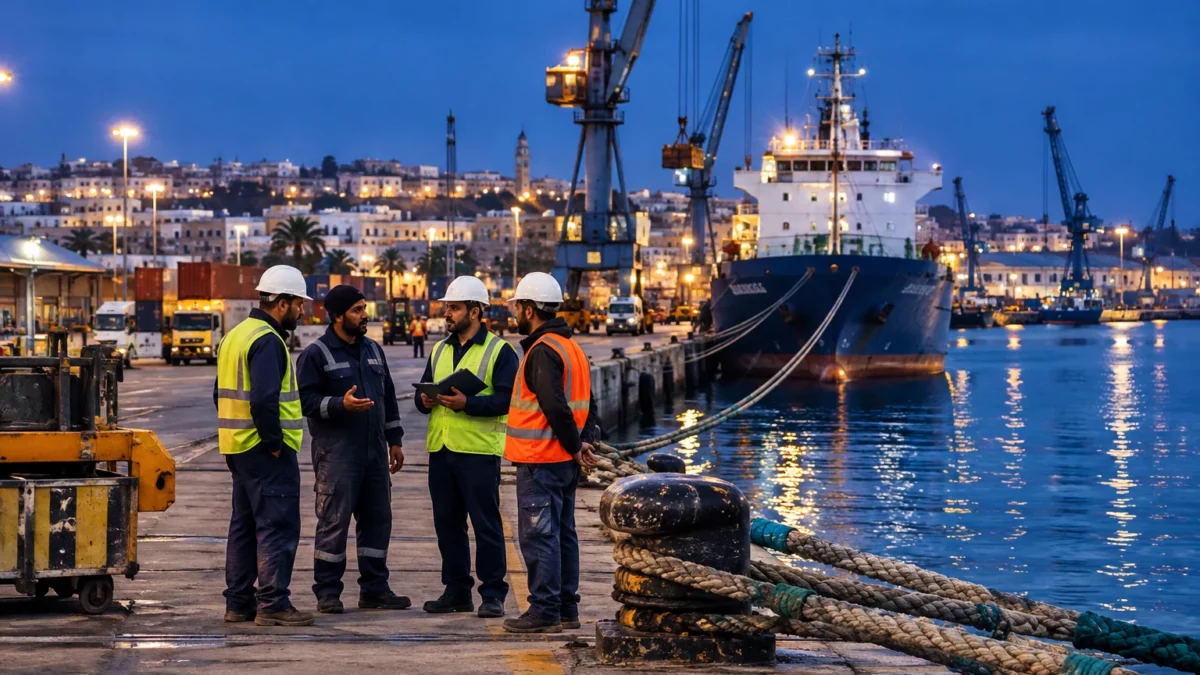
A strike thousands of kilometres from the Ukrainian front has put Libyan ports at the heart of tensions between Kyiv and Moscow. It raises an immediate question for Libyans: who decides how the country’s waters and facilities are used, while its institutions remain divided?
On 22 November 2026, maritime drones targeted Russian ships in Benghazi, in eastern Libya. Ukraine claimed responsibility for the operation. Two days later, Italian Foreign Minister Antonio Tajani said Rome had not been informed and had not approved it.
A port caught up in Libyan rivalries
Since the failure of the national elections scheduled for December 2021, Libya has remained divided between two centres of power. The Government of National Unity is based in the capital, Tripoli, while a rival administration has established itself in the east, with the backing of Khalifa Haftar’s forces. Benghazi, the country’s second-largest city, is under the influence of this eastern power.
This political divide is compounded by fragmented institutions and the presence of armed groups. The 2025 report of the United Nations Support Mission in Libya notes that competing administrations and parallel security forces complicate the country’s reunification. National elections have still not been held.
Both camps maintain relations with foreign partners. The eastern power has strengthened its ties with Moscow, while the authorities in Tripoli have developed contacts with Kyiv and Western states. Libya is therefore not merely an arena for internal rivalry: its position on the Mediterranean also makes it a coveted foothold in external power struggles.
What is known about the strike
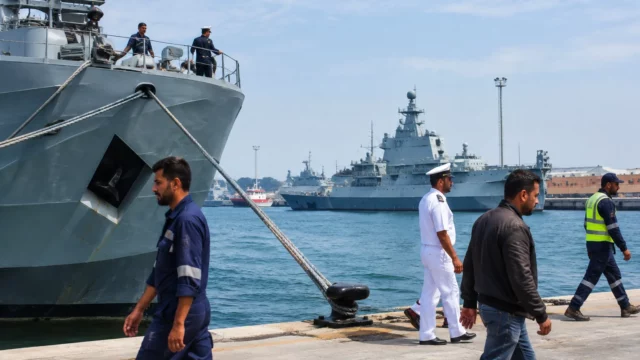
According to eastern Libyan military officials cited by the Associated Press, a Russian corvette, the Merkury, was hit while at a naval facility in Benghazi. The eastern authorities said the ship had stopped to refuel under a co-operation agreement with Russia.
Ukrainian President Volodymyr Zelensky later said the operation had also targeted the Russian cargo ship Angara. According to him, the vessel was carrying military equipment. These claims are attributed to the Ukrainian authorities: available public information does not make it possible to independently confirm the nature of the cargo. Accounts of the Merkury’s final condition also differ. Libyan officials spoke of heavy damage, while Kyiv announced that it had sunk.
The eastern-based government announced a joint investigation with Russia. For its part, the government recognised by the United Nations in Tripoli rejected the idea that Libyan territory or waters should serve as a theatre for the Russia-Ukraine war. The strike therefore did not just hit a military vessel: it exposed disagreements between Libyan authorities over national security and their foreign partnerships.
On 26 November, speaking before the Italian Parliament, Antonio Tajani said his government had not been notified. He said he had conveyed his concerns to his Ukrainian counterpart, Andrii Sybiha, during a phone call. The minister said that violating Libyan sovereignty was a mistake and did not serve Ukraine’s cause. The remarks, reported by Africanews, mark Rome’s distancing itself from the operation, without calling its support for Kyiv into question.
Sovereignty, a political and security issue
Italy’s response reflects its direct interests. Italy is linked to Libya by subsea energy transport infrastructure, and the Eni group operates fields and facilities in the west of the country. An expansion of military operations in the Mediterranean could therefore threaten economic interests, while also increasing risks to shipping and coastal infrastructure.
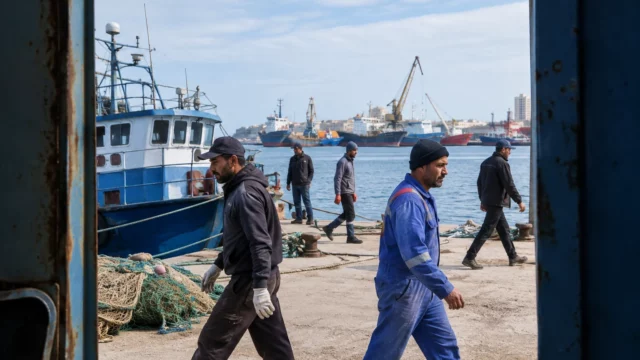
For Libyans, the issue goes beyond relations between powers. If foreign ships can be refuelled or struck in Libyan ports without unified national control, residents and port workers are exposed to the consequences of an escalation they do not decide. The authorities in Benghazi may seek to consolidate their partnership with Moscow; those in Tripoli, meanwhile, must respond to allegations of a Ukrainian presence in the west, which several officials cited by international media have mentioned but the government has not publicly confirmed.
The facts remain partly disputed. The AP reports statements by anonymous military officials that drones were launched from a base in western Libya. Kyiv, by contrast, claimed the attack, but this alone does not confirm the details put forward about the launch site, the damage or operations conducted from Libyan territory. This is an essential distinction to avoid presenting information still attributed to one side as established fact.
Repercussions beyond the Mediterranean
The strike comes in a country where rivalry between foreign powers is layered on top of a protracted institutional crisis. Russia maintains ties with the eastern authorities and seeks to preserve a strategic presence in North Africa. Ukraine, for its part, says it is targeting assets that support the Russian military effort. The two strategies are thus meeting in a space where the Libyan state is struggling to exercise unified authority.
The situation also affects neighbouring countries and regional organisations. Algeria has condemned the expansion of the war into Libya, according to information reported by Africanews, while Rome is urging the parties to refrain from further operations on Libyan territory and in its waters. For the African Union and the Maghreb countries, the risk is that foreign interventions will once again become normalised, while mediation efforts are still seeking to bring Libya’s institutions closer together.
What happens next will depend in particular on the findings of the investigation announced in Benghazi, the response of the authorities in Tripoli and developments in the foreign military presence. Without institutions capable of jointly controlling ports, bases and territorial waters, each external operation can deepen the political divide. The central question therefore remains a Libyan one: how can a sovereign, shared decision on the country’s security be restored?