Algeria
 Egypt
 Libya
 Morocco
 Sudan
 Tunisia
 Benin
 Burkina Faso
 Cabo Verde
 Côte d'Ivoire
 Ghana
 Guinea
 Guinea-Bissau
 Liberia
 Mali
 Mauritania
 Niger
 Nigeria
 Senegal
 Sierra Leone
 The Gambia
 Cameroon
 Central African Republic
 Chad
 DR Congo
 Equatorial Guinea
 Gabon
 Republic of the Congo
 São Tomé and Príncipe
 Burundi
 Comoros
 Djibouti
 Eritrea
 Ethiopia
 Kenya
 Madagascar
 Malawi
 Mauritius
 Mozambique
 Rwanda
 Seychelles
 Somalia
 South Sudan
 Tanzania
 Uganda
 Angola
 Botswana
 Eswatini
 Lesotho
 Namibia
 South Africa
 Zambia
 Zimbabwe
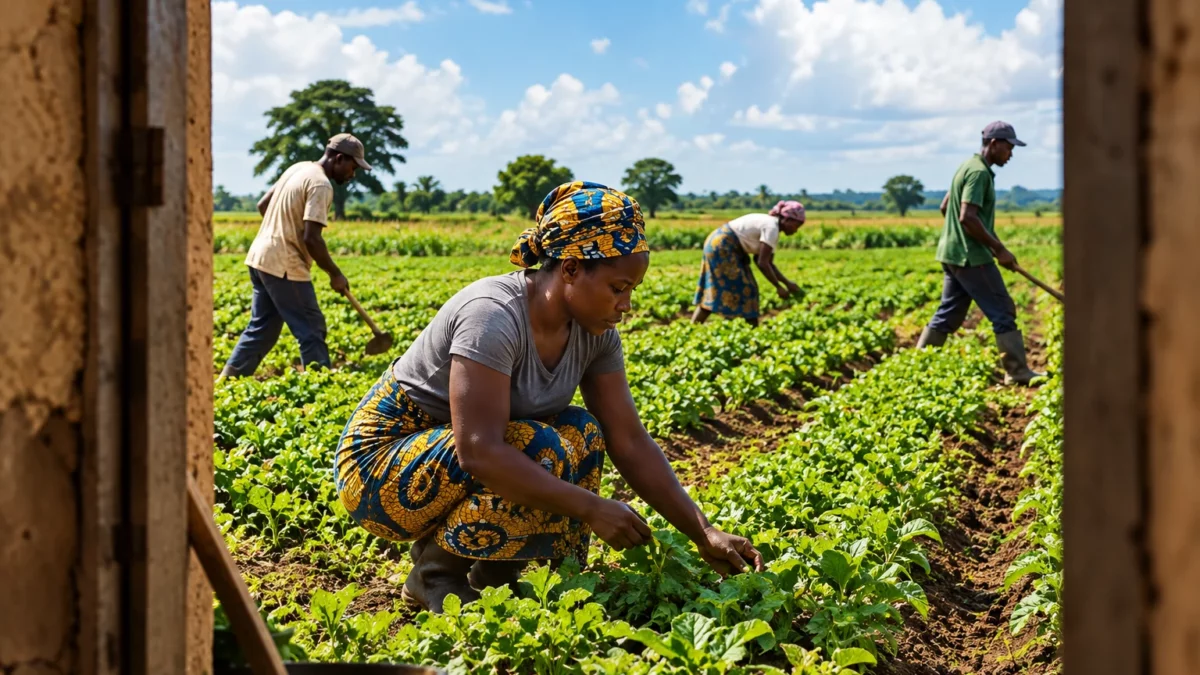
An agricultural law can set a course. On its own, it cannot guarantee that a woman farmer can keep her plot, finance her seeds or sell her harvest at a viable price. In Togo, the challenge starts now: to take a new legal framework from the statute book to fields, cooperatives and processing units.
A national framework for a changing West African agricultural sector
On 24 November 2026, Togo’s National Assembly gave final approval to the country’s first agricultural framework law. The text contains 207 articles. It covers the agro-sylvo-pastoral and fisheries sector, encompassing agriculture, forestry, livestock and fishing. The vote took place in Lomé, after MPs first adopted the bill on 22 October and the Senate voted on 19 November.
The law forms part of a broader effort by the authorities to develop production, rural incomes and the processing of harvests. It also comes within a regional context: ECOWAS, the Economic Community of West African States, is revising its common agricultural policy, ECOWAP. Member states, including Togo, have shared their achievements and difficulties as part of the process. The regional policy is then to be considered by ECOWAS institutions. The ECOWAS Regional Agency for Agriculture and Food outlines the stages of the revision.
At national level, the new text builds on policies already under way, notably the National Agricultural Investment and Food and Nutrition Security Programme. Its reach will therefore depend on its ability to make existing measures more coherent and respond to the diverse realities of Togolese farms.
Land, equipment and finance at the heart of the challenges
Addressing parliamentarians, Agriculture Minister Antoine Lékpa Gbégbéni presented the law as a lever to strengthen food sovereignty, secure land tenure and facilitate access to finance. The text also provides for support for mechanisation, irrigation, innovation, advice to producers and local processing. The minister also highlighted the role of young people and women in the sector’s future.
These priorities address well-documented constraints. Preliminary results from the fifth National Agricultural Census indicate that 78% of the farmers surveyed cultivate land without secure tenure. About 57% of farming households work two hectares or less, and only 6.24% use tractors. These figures, reported by the Togolese News Agency and corroborated by Togo First, show the gap between ambitions to modernise and the resources available to many farms. Preliminary agricultural census results presented by ATOP ; Togo First’s corroboration of the figures.
Insecure land tenure does not affect all actors in the same way. For a small farm, the absence of recognised rights can make long-term investment and access to credit more difficult. Women and young people, whose access to land and financial guarantees may be limited, risk being left behind if the new mechanisms do not take their circumstances into account. In rural areas, these issues are directly linked to household incomes; in Lomé, they also affect food supplies and prices.
Production volumes, but a challenge in adding value
Recent harvests illustrate both production capacity and its vulnerability to year-on-year fluctuations. According to figures cited by Togo First from BCEAO data, cereal production reached 1.53 million tonnes in 2024-2025, compared with 1.56 million the previous season. This slight decline is a reminder that a strong national total does not tell the whole story of incomes, yields or market access for each producer. Figures for Togo’s 2024-2025 cereal season.
Local processing is therefore an economic as well as a food-related issue. Better processing and storage of harvests can help producers capture more value, rather than relying solely on sales of raw products. But this requires reliable markets, suitable infrastructure and accessible financing, particularly for small businesses and cooperatives. The law sets a direction; its effects will depend on the practical rules and budgets that make it applicable.
Implementation will be the test
The parliamentary vote closes a legislative stage, not the agricultural task. The principles in the text still need to be translated into concrete measures: clarifying land procedures, making credit schemes accessible, organising technical advice and providing the institutions responsible for monitoring with sufficient resources. Senate debates also raised a question of fairness: should small-scale farmers be able to benefit from the same support and market opportunities as more structured agricultural organisations?
At West African level, the regional timetable lends added importance to implementation. The ECOWAP revision is to set new common directions, while each country defines its priorities and investments. For Togo, the next measure of success will therefore not be the number of articles in the law, but tangible progress in access to land, equipment, finance and markets, particularly for family farms. The regional timetable for revising ECOWAS agricultural policy will be an indicator to watch.