Algeria
 Egypt
 Libya
 Morocco
 Sudan
 Tunisia
 Benin
 Burkina Faso
 Cabo Verde
 Côte d'Ivoire
 Ghana
 Guinea
 Guinea-Bissau
 Liberia
 Mali
 Mauritania
 Niger
 Nigeria
 Senegal
 Sierra Leone
 The Gambia
 Togo
 Cameroon
 Central African Republic
 Chad
 DR Congo
 Equatorial Guinea
 Gabon
 Republic of the Congo
 São Tomé and Príncipe
 Burundi
 Comoros
 Djibouti
 Eritrea
 Ethiopia
 Kenya
 Madagascar
 Malawi
 Mauritius
 Mozambique
 Rwanda
 Seychelles
 Somalia
 South Sudan
 Tanzania
 Angola
 Botswana
 Eswatini
 Lesotho
 Namibia
 South Africa
 Zambia
 Zimbabwe
Can an army fighting alongside Congolese forces against an armed group also threaten to advance into the territory of the Democratic Republic of the Congo (DRC)? That is the question raised in Kinshasa after messages by the Ugandan army chief reignited concerns about Congolese sovereignty and military coordination in the east of the country.
Military cooperation put to the test
Since 2021, Uganda has been conducting Operation Shujaa with the Armed Forces of the DRC (FARDC) against the Allied Democratic Forces (ADF), an armed group active in eastern Congo and affiliated with the Islamic State organisation. The cooperation provides for Ugandan troops to be present on Congolese territory. It addresses a shared security threat, but makes close coordination with Kinshasa essential.
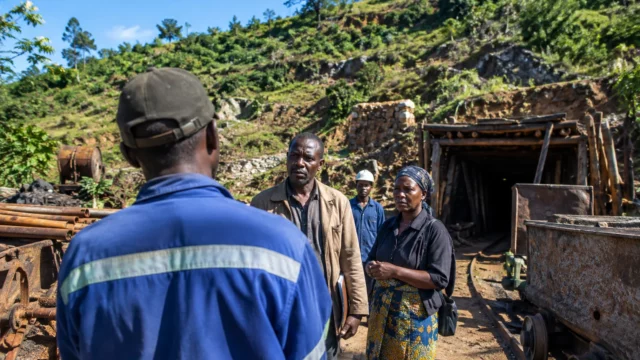
The operations are taking place in a region where several crises and interests intersect. In North Kivu, armed groups are fighting for control of territory and transport routes. In neighbouring provinces, the ADF remain a separate concern. The DRC is also a member of the East African Community (EAC), a regional organisation to which Uganda belongs, and the Southern African Development Community (SADC).
Cooperation against the ADF therefore does not erase political disagreements or the front lines between different groups. Nor does it amount to a general authorisation for a foreign force to take part in other operations or support a Congolese armed movement.
Messages prompt questions in Kinshasa
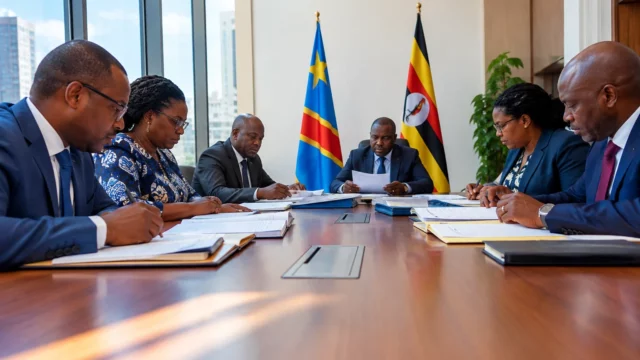
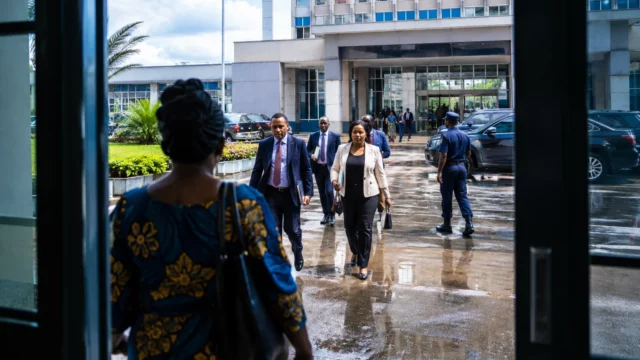
On 25 November, the Congolese government summoned the head of mission at the Ugandan embassy in Kinshasa to seek clarification. The move followed posts on X attributed to General Muhoozi Kainerugaba, the head of Uganda’s Defence Forces. The messages in question were no longer accessible when they were reported by the media.
According to available reports, the general allegedly said that Ugandan forces in North Kivu would not oppose a possible advance by the Front for the Refoundation of the Nation (FRN) towards Walikale. He also reportedly threatened that his own soldiers could take the locality if the movement delayed its advance. These reported remarks do not, on their own, constitute proof of an operational order or an official decision by Kampala.
The posts are also said to have referred to Isiro airport, in Haut-Uele, and demanded its surrender. They reportedly framed these positions in the name of the fight against the ADF and the protection of the Bahema community. The precise wording remains based on available reports: the original messages could no longer be accessed.
The FRN is described in these reports as a movement led by former Congolese president Joseph Kabila and associated with AFC/M23. Kinshasa regards the statements attributed to Muhoozi as an infringement of its sovereignty and is seeking official explanations and measures to prevent a recurrence.
Significance beyond social media
The controversy is sensitive because Muhoozi Kainerugaba is not a commentator outside the military institutions: he leads the Ugandan army and is the son of President Yoweri Museveni. But his posts on a social media platform should not automatically be equated with a decision by the Ugandan state. It is precisely the gap between the author’s position and the uncertain status of his posts that makes clarification from Kampala necessary.
Uganda’s presence in the DRC is part of a bilateral arrangement against the ADF. A statement suggesting that these troops might support another armed movement’s advance blurs the mission’s objectives. It also complicates the task of the FARDC, which must maintain a clear chain of command on its territory while several military actors are operating there.
For residents, these ambiguities have tangible effects. In Walikale, an announcement of a military advance can increase uncertainty around security and travel, without necessarily indicating an immediate change on the ground. In Isiro and Haut-Uele, mention of a strategic airport may alarm users and local authorities. In both cases, it is important to distinguish a published threat from an operation actually under way.
Previous episodes help explain Kinshasa’s vigilance. In 2024, statements attributed to the same general about mercenaries in Goma had already sparked diplomatic friction. In March 2025, his remarks about a possible intervention in Kisangani also prompted reactions. These precedents show that Muhoozi’s messages can weigh on bilateral relations, even when their official status remains disputed.
A test for regional mechanisms
The DRC and Uganda share a border, trade and security concerns. Cooperation against the ADF can benefit both countries, provided its mandate is defined and accepted by Kinshasa. A unilateral intervention, if one were decided upon, would trigger a crisis distinct from the fight against this armed group and directly call into question the territorial integrity of the DRC.
The EAC and SADC also have a role to play in seeking regional responses to crises in eastern Congo. Bringing their mediation efforts closer together, with the support of the African Union, is intended to prevent competing initiatives from heightening tensions. The affair is a reminder that public statements by military officials can undermine these efforts even before an incident occurs on the ground.
What happens next will therefore depend less on the deleted posts than on Kampala’s official response and exchanges between the two governments. The continuation of the Operation Shujaa framework and coordination between the Ugandan army and the FARDC will also need to be monitored. For Kinshasa, the immediate priority is to obtain a clear position: cooperation against the ADF cannot become an implicit mandate to intervene in conflicts involving other Congolese actors.