Algeria
 Egypt
 Libya
 Morocco
 Sudan
 Benin
 Burkina Faso
 Cabo Verde
 Côte d'Ivoire
 Ghana
 Guinea
 Guinea-Bissau
 Liberia
 Mali
 Mauritania
 Niger
 Nigeria
 Senegal
 Sierra Leone
 The Gambia
 Togo
 Cameroon
 Central African Republic
 Chad
 DR Congo
 Equatorial Guinea
 Gabon
 Republic of the Congo
 São Tomé and Príncipe
 Burundi
 Comoros
 Djibouti
 Eritrea
 Ethiopia
 Kenya
 Madagascar
 Malawi
 Mauritius
 Mozambique
 Rwanda
 Seychelles
 Somalia
 South Sudan
 Tanzania
 Uganda
 Angola
 Botswana
 Eswatini
 Lesotho
 Namibia
 South Africa
 Zambia
 Zimbabwe
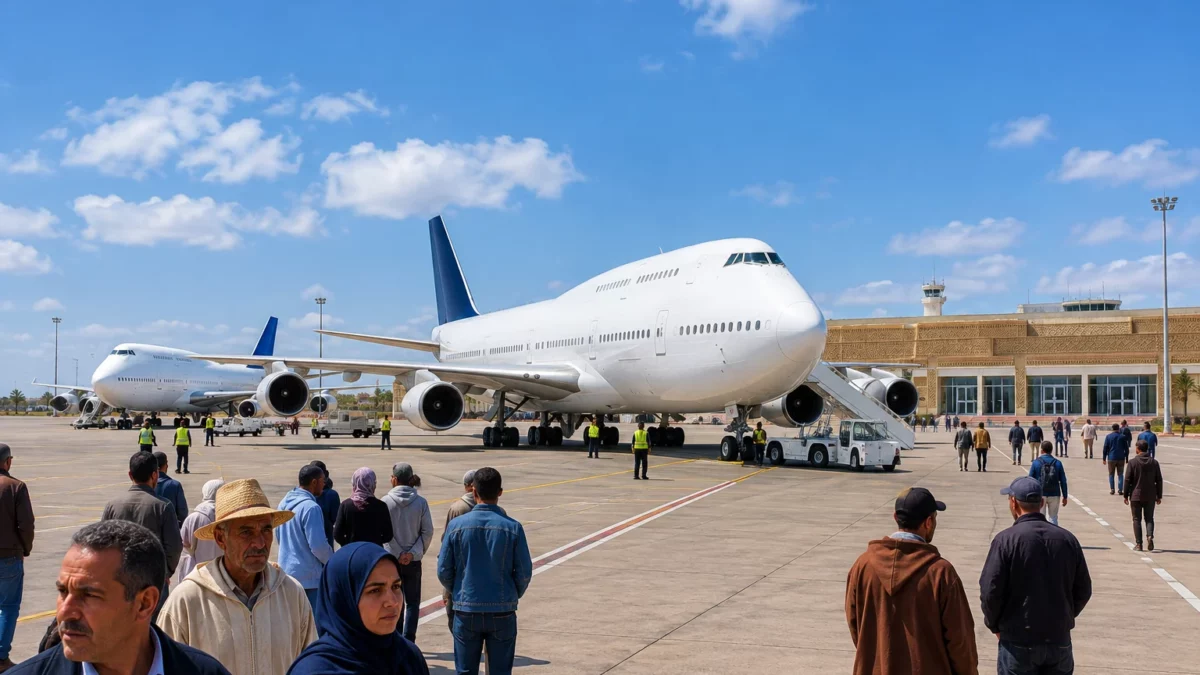
In Tozeur, in south-western Tunisia, two airliners grounded for more than three decades are set to change hands. Their sale ends a long wait on the tarmac, but does not mean they will take to the skies again: their technical condition remains uncertain and they are being offered without warranty.
An episode of Iraqi history rooted in Tunisia
The two aircraft belong to Iraqi Airways, Iraq’s national carrier. Built in the early 1980s, they were transferred to Tunisia in 1991, as the Gulf War loomed. Iraq sought to shelter part of its fleet from strikes by an international coalition after the invasion of Kuwait in August 1990.
The aircraft have remained at Tozeur-Nefta International Airport. One of them is a Boeing 747SP associated with official trips by Saddam Hussein, Iraq’s former president. The other is a Boeing 747-200. Their presence is a reminder of a period when international sanctions and war-related disputes complicated the return of Iraqi aircraft stationed outside the country.
United Nations documents dating from the 2000s already mentioned the Tozeur aircraft in the monitoring of Kuwaiti property said to have been carried aboard Iraqi Airways planes. At the time, these reports described a broader diplomatic and property dispute, without reducing the history of the two aircraft to their aviation value alone.
An as-is sale to be arranged from Tunis
According to information published by the Tunisian press and specialist media, Iraqi Airways has launched a direct sale process. Each aircraft is estimated to be worth about $900,000. A committee is due to review offers at the Iraqi embassy in Tunis from 21 December 2026 to 5 January 2027. The transaction remains subject to the terms set by the Iraqi authorities.
The distinction matters: the announced sum is an estimate for each aircraft, and not necessarily the combined value of the two planes. Potential buyers will also have to cover recovery and transport operations, as well as the administrative and customs charges stipulated. The aircraft are being offered without a technical warranty. There is therefore no basis for claiming that they could fly again.
Earlier estimates cited in coverage of the case put accumulated parking fees at several million euros. But available reports also indicate that an agreement between Baghdad and Tunis settled the issue of these fees in 2020. The old figure should therefore not be presented as a certain current debt: financial terms have changed and are not detailed in the announcements reviewed.
For Tozeur, occupied ground space and uncertain benefits
For Tozeur-Nefta airport, the sale could free up space long occupied by two out-of-service aircraft. Its local economic impact will depend on what happens next: whether they are actually removed, the timing, logistical costs and the buyers’ choices. Aircraft of this size may interest collectors or companies specialising in parts recovery, but no specific local project has been announced.
The estimated price is not enough to measure the operation’s real value. After decades grounded, the aircraft may require an assessment, complex dismantling or specialised transport. The associated costs may be beyond an individual’s means. Moreover, a sale to the highest bidder does not guarantee lasting benefits for businesses or workers in the region.
There is also a restriction on the symbolic use of the aircraft: they must not be used to glorify a personality. This condition underscores that the sale concerns both public assets and objects associated with Iraq’s former regime. The practical arrangements for enforcing this clause remain to be clarified in the published information.
A bilateral matter in a region with limited institutional ties
The decision is primarily a matter for Iraq and Tunisia. Tunisia is a member of the Arab Maghreb Union, a regional organisation in North Africa, but the union is not the operational framework for the sale. The matter falls mainly to the Iraqi authorities, their diplomatic representation in Tunis and the conditions under which the aircraft are hosted by the Tunisian airport.
For Tunisians, the immediate issue is therefore local: when the aircraft will leave the site and who will take responsibility for their removal. For Iraq, the sale aims to dispose of assets that have become unusable and close a case inherited from sanctions and regional conflicts. The two perspectives meet in a practical question: how can assets grounded abroad be transferred without imposing new costs on the host country?
The next step will be the review of offers, scheduled to take place in Tunis between 21 December 2026 and 5 January 2027. It will then be necessary to confirm whether a sale is concluded, whether the aircraft are actually removed from Tozeur and under what conditions. Until these steps are confirmed, the sale process marks the opening of a procedure, not yet the departure of the two planes.