Algeria
 Egypt
 Libya
 Morocco
 Sudan
 Benin
 Burkina Faso
 Cabo Verde
 Côte d'Ivoire
 Ghana
 Guinea
 Guinea-Bissau
 Liberia
 Mali
 Mauritania
 Niger
 Nigeria
 Senegal
 Sierra Leone
 The Gambia
 Togo
 Cameroon
 Central African Republic
 Chad
 DR Congo
 Equatorial Guinea
 Gabon
 Republic of the Congo
 São Tomé and Príncipe
 Burundi
 Comoros
 Djibouti
 Eritrea
 Ethiopia
 Kenya
 Madagascar
 Malawi
 Mauritius
 Mozambique
 Rwanda
 Seychelles
 Somalia
 South Sudan
 Tanzania
 Uganda
 Angola
 Botswana
 Eswatini
 Lesotho
 Namibia
 South Africa
 Zambia
 Zimbabwe

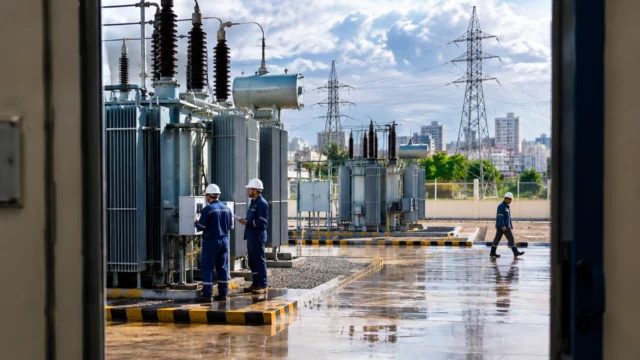
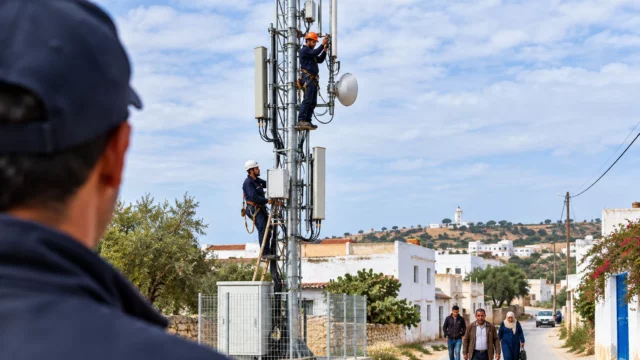
For a telecoms operator, electricity is no minor expense: it powers antennae, network equipment and technical centres. In Tunisia, the agreement announced by Orange Tunisia and Mobiserve therefore raises a practical question: how can solar power be developed without making a single company bear the full cost of installation?
A service contract rather than an equipment purchase
On 24 November 2026, the two companies announced a partnership based on the “Solar-as-a-Service” model. The agreement covers the development of solar solutions for Orange Tunisia. The partners say they aim to improve the operator’s energy performance, better manage its consumption and reduce its environmental footprint. According to their announcement, they have been working together for more than 15 years.
Under this type of model, the client company buys an energy service rather than necessarily financing all the panels and their installation itself. But the precise terms of this contract have not been made public: neither the sites involved, nor the planned capacity, timetable, price, or the division of operational and maintenance responsibilities. It is therefore too early to quantify the expected savings or emissions avoided.
The partners present the agreement as a way to help control costs and reduce carbon emissions. These are stated aims, not yet measured results. Verification will depend in particular on actual solar output, the amount of grid electricity displaced and how long the installations operate.
Tunisia’s transition also depends on business sites
The project forms part of a broader effort. Tunisia is seeking to reduce its dependence on fossil fuels and increase the share of renewables in electricity generation. Public targets have evolved depending on the announcements and timeframes used: the National Agency for Energy Management (ANME), for example, has set out a target of 35% renewable electricity by 2030. Achieving it will require investment, grid connections and the consistent implementation of projects.
Available figures show both progress and the scale of the challenge. The 2025 Energy Yearbook, published by the Tunisian Association of Petroleum and Gas, puts installed renewable capacity at 988 megawatts at the end of 2025. Renewables excluding biomass then accounted for 5.4% of the electricity generation mix. This national picture does not make it possible to infer the contribution of the new agreement: no capacity has been disclosed for the installations planned by Orange Tunisia.
Solar photovoltaic power is also expanding through self-generation, meaning electricity produced by a company or household for its own needs. For businesses, a service contract can reduce the amount that needs to be financed upfront and provide access to technical expertise. However, its value depends on terms that remain unknown in this case: the price of energy, the length of the commitment, performance guarantees and the conditions that apply in the event of a breakdown or lower output.
Benefits to be measured beyond the announcement
For Orange Tunisia, the issue is as much operational as environmental. A well-sized solar supply could limit some electricity purchases and make certain sites less exposed to price fluctuations. But photovoltaic solar power depends on sunlight. It does not therefore automatically replace the grid, particularly at night or when output falls. Storage, demand management and continuity of service are important considerations for a telecoms network.
For Mobiserve, the agreement opens up an opportunity in energy services. It could help develop local expertise in installation, monitoring and maintenance. That does not in itself mean all the equipment will be made in Tunisia or that many jobs will be created: the announcement includes no such information. The benefits will depend on the suppliers selected and how the contract is carried out.
The effects are not the same for all stakeholders. A large company can arrange a dedicated contract and spread its needs across several sites. Households, small businesses and farms are more reliant on self-generation programmes, financing and grid-connection rules accessible at their scale. A corporate project therefore does not, by itself, resolve the obstacles faced by these other users.
A national issue with a Maghreb dimension
In Tunis, energy policy decisions are made within a system in which the state and the Tunisian Company of Electricity and Gas (STEG) play a central role. The development of private producers and self-generation must therefore be aligned with permits, the grid and the rules governing the sale or feeding-in of electricity. The reach of the agreement will also depend on its ability to fit within this framework, not just on the installation of panels.
At regional level, Tunisia is a member of the Arab Maghreb Union, which also brings together Algeria, Libya, Morocco and Mauritania. The organisation provides a framework for co-operation between neighbouring countries, but the announcement by Orange Tunisia and Mobiserve makes no mention of a cross-border project. Its Maghreb relevance lies instead in its example of private investment in solar power generation, with lessons that could apply to other markets in the region.
The next step will be to learn the details needed to assess the contract: the number and location of sites, installed capacity, timetable, pricing terms and output indicators. Without this data, the agreement marks an intention and a new form of partnership, but not yet a quantifiable contribution to Tunisia’s energy targets.