Algeria
 Egypt
 Libya
 Morocco
 Sudan
 Tunisia
 Benin
 Burkina Faso
 Cabo Verde
 Côte d'Ivoire
 Ghana
 Guinea-Bissau
 Liberia
 Mali
 Mauritania
 Niger
 Nigeria
 Senegal
 Sierra Leone
 The Gambia
 Togo
 Cameroon
 Central African Republic
 Chad
 DR Congo
 Equatorial Guinea
 Gabon
 Republic of the Congo
 São Tomé and Príncipe
 Burundi
 Comoros
 Djibouti
 Eritrea
 Ethiopia
 Kenya
 Madagascar
 Malawi
 Mauritius
 Mozambique
 Rwanda
 Seychelles
 Somalia
 South Sudan
 Tanzania
 Uganda
 Angola
 Botswana
 Eswatini
 Lesotho
 Namibia
 South Africa
 Zambia
 Zimbabwe
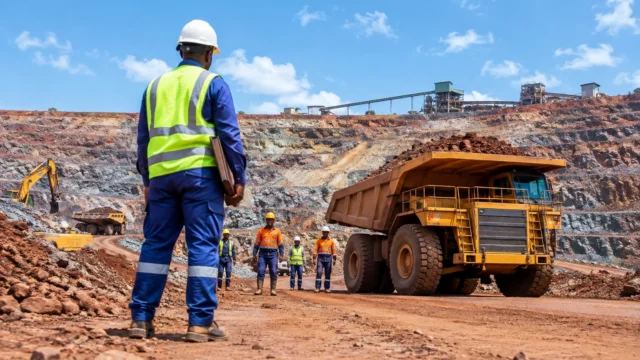
In Guinea, the interest of gold-mining groups is measured not only by the wealth beneath the ground. It also depends on permits, rules for sharing value and the benefits that remain in the areas concerned. The recent award of an authorisation for the Bankan project puts new emphasis on the ambitions Perseus Mining had expressed in the country.
Bankan reaches a decisive milestone
On 16 November 2026, Guinea’s authorities granted Hamana Gold SA, a subsidiary of PDI Gold, a mining permit for Bankan, in Kouroussa prefecture, in Upper Guinea. The company announced the decision the following day. The permit covers 98.6 km² for an initial period of 15 years. Two permits relating to the Mansounia deposit, linked to the Kiniéro site, were also issued.
The authorisation clears a significant regulatory hurdle, but does not mean construction at Bankan has begun. PDI Gold says it intends to accelerate engineering studies, equipment procurement and compensation work. The company plans to publish an updated timetable and estimates in early 2027. It now considers first production around mid-2028 possible, subject to the project’s progress.
The green light comes amid a reorganisation of Guinea’s mining sector. Since the September 2021 coup, the authorities have tightened their oversight of licences and promoted greater local value addition. Permit delays have also fuelled operators’ concerns, while Conakry says it wants to review applications before authorising new projects. Guinea is a member of ECOWAS, the West African regional organisation, but decisions on mining permits are the responsibility of national authorities.
A minority stake, a strategic interest
It was against this backdrop that Craig Jones, who took over as head of Perseus Mining in October 2025, described Guinea as a region with strong geological potential. In an interview about the group’s strategy, he referred to a stake of about 9.5% in Predictive Discovery, now PDI Gold, and reconnaissance permits in the Siguiri region. The minority stake allowed Perseus to follow Bankan without operating it.
Since then, the landscape has changed: the Bankan permit has now been granted to PDI Gold, which can prepare for the development phase. It is therefore important to distinguish between the interest expressed by Perseus and the actual management of the project. Guinea-based Hamana Gold holds the permit; its award does not, in itself, amount to an announcement that Perseus is taking control of Bankan.
According to the feasibility study released by PDI Gold, Bankan could produce an average of about 250,000 ounces of gold a year for 12 years. The announced initial investment is $463 million. These are company forecasts, not established results: they will depend in particular on construction, financing, costs and operating conditions. The environmental and social studies received a certificate of compliance in January 2025, before the mining permit was issued.
The question of local benefits
The debate goes beyond the expected volume of gold. It concerns public revenue, employment, local subcontracting, training and the impact on communities near the site. In his interview, Jones argued for stable fiscal frameworks, saying that unpredictable taxation could deter investment. He also presented value-sharing as a lasting requirement for mining companies.
This is the perspective of a company executive and should be attributed as such. For the authorities and local people, the challenge also lies in verifying that commitments translate into public revenue, jobs accessible to Guineans, contracts for suppliers in the country and measures to protect land and water resources. The permit’s award opens a new phase of oversight: economic announcements will need to be measured against what is delivered as construction progresses.
The local dimension is particularly important. Bankan is in a region where artisanal gold mining and industrial activities coexist. Changes in land use, compensation and access to livelihoods may therefore affect neighbouring villages, mine workers and business operators in different ways. Managing these effects cannot be reduced to a national production indicator.
A sector reshaped across the region
For Perseus, West Africa remains an operational base, with mines in Ghana and Côte d’Ivoire; the group is also developing Nyanzaga in Tanzania. Jones highlighted the extension of Yaouré through underground mining and the expected arrival of Nyanzaga. These projects show that groups are seeking to spread their assets across several countries, while governments want more revenue and local expertise.
In Guinea, the decision on Bankan is part of a broader ambition to structure the gold sector and strengthen local processing. But permits, construction and production are three distinct stages. The next indicators to watch will be PDI Gold’s revised timetable, the actual start of construction, compensation arrangements and the publication of verifiable commitments on employment and local procurement.
Across West Africa, the case illustrates a common tension: attracting capital to develop mines while increasing the economic benefits retained in the country. Guinea’s ability to apply its rules predictably, monitor commitments and involve communities will matter as much as the quality of the deposit in determining the project’s future.
PDI Gold announcement on the Bankan and Mansounia permits · Guinee360 report on the new mining permits · Reuters report on the authorisation and permit issues · PDI Gold’s overview of Bankan · Background on Guinea’s mining policy