Algeria
 Egypt
 Libya
 Morocco
 Sudan
 Tunisia
 Benin
 Burkina Faso
 Cabo Verde
 Côte d'Ivoire
 Ghana
 Guinea
 Guinea-Bissau
 Liberia
 Mali
 Mauritania
 Niger
 Nigeria
 Senegal
 Sierra Leone
 The Gambia
 Togo
 Cameroon
 Chad
 DR Congo
 Equatorial Guinea
 Gabon
 Republic of the Congo
 São Tomé and Príncipe
 Burundi
 Comoros
 Djibouti
 Eritrea
 Ethiopia
 Kenya
 Madagascar
 Malawi
 Mauritius
 Mozambique
 Rwanda
 Seychelles
 Somalia
 South Sudan
 Tanzania
 Uganda
 Angola
 Botswana
 Eswatini
 Lesotho
 Namibia
 South Africa
 Zambia
 Zimbabwe
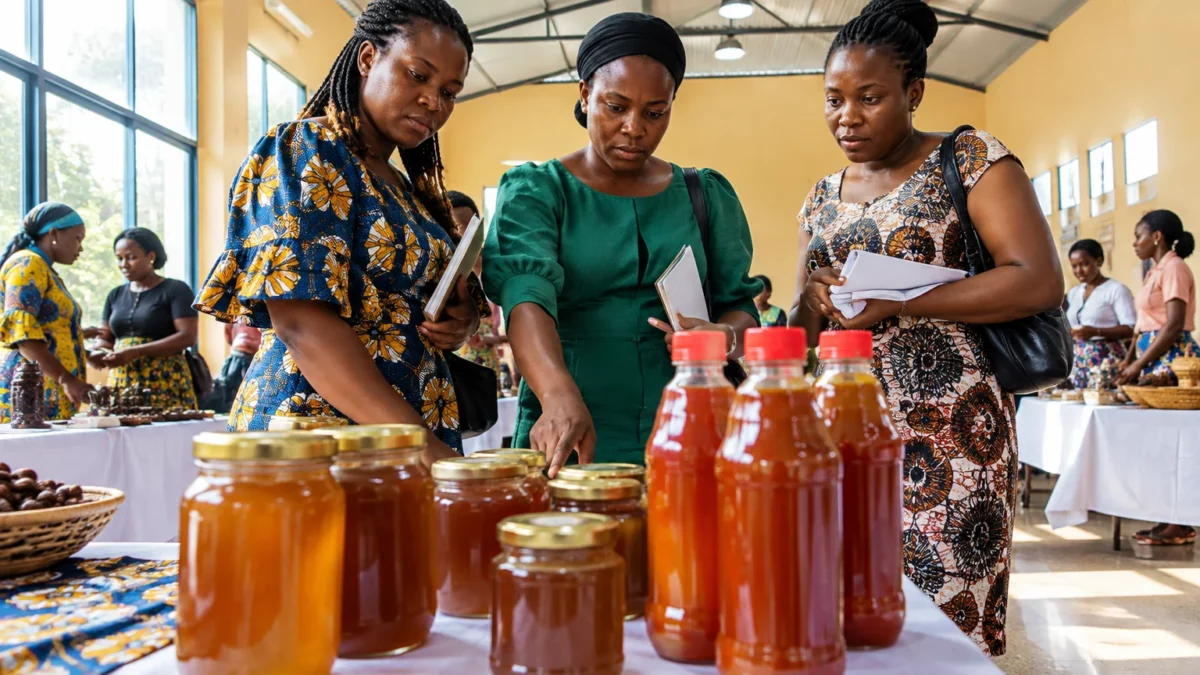
Can a jar of honey or a bottle of palm oil made in the Central African Republic become part of everyday life, and then cross the country’s borders? In Bangui, a campaign promoting local products is highlighting this ambition and the women entrepreneurs transforming the country’s resources.
From know-how to commercial opportunities
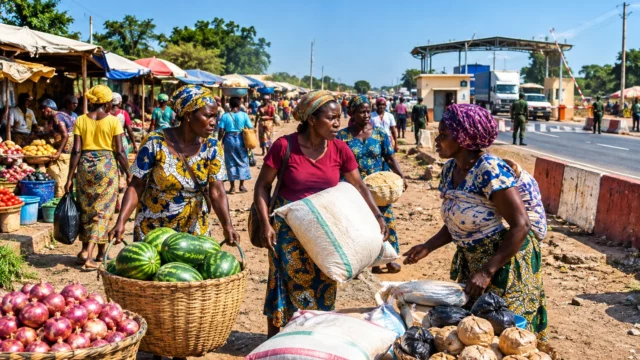
Sesame, cocoa, coffee, honey, processed fruit and palm oil: the products on display illustrate the range of activities run by Central African businesses. The “Consommons local” campaign brings together exhibitions, discussions and training. It is organised by the Federation of Associations of Women Entrepreneurs of the Central African Republic (FAFECA), with support from the ministry responsible for small and medium-sized enterprises.
The fourth edition is being held in Bangui from 2 to 30 November 2026, according to announcements by the federation and information published by a Central African media outlet. FAFECA describes the edition as an event to promote products made in the country and strengthen entrepreneurial capacity. FAFECA’s announcement of the fourth edition and Oubangui Médias’ report both confirm its launch in November.
At the stands, some women entrepreneurs are looking as much for advice on taking the next step as for customers. A producer of honey, juice and jam said she wanted to learn how to develop her business and reach new markets. Others turn local raw materials into handicrafts, such as jewellery and bags made from beads.
The message to consumers is direct: buying a product made in the Central African Republic supports local business. But this effort does not depend solely on individual choices. To last, businesses must also be able to produce regularly, control their costs and meet buyers’ quality requirements.
Training, equipping and structuring businesses
Training therefore plays a central role in the campaign. Participants are seeking to improve their processing methods and learn more about the equipment, financing and rules needed to grow their businesses. For small-scale enterprises, these skills can make the difference between occasional production and a supply capable of serving shops reliably over time.
FAFECA president Portia Deya Abazène advocates industrialisation as an objective to be prepared for step by step. This means identifying actual needs before investing in machinery, then working on quality and certification. ISO standards, mentioned in the campaign, are international benchmarks that set quality or management requirements. Their relevance depends, however, on the product, the target market and the resources available.
The gap between ambition and capacity remains a practical challenge. A machine is not enough if a business lacks financing, reliable electricity, a steady supply of raw materials, or storage and transport solutions. Similarly, certification can open doors, but its cost and related procedures can weigh more heavily on a small business than on an established player.
The impact is not the same for every woman entrepreneur. A seller based in Bangui can benefit directly from an urban exhibition. A producer living in a remote prefecture must also transport her products, access inputs and maintain links with buyers. The campaign will have greater reach if training, equipment and commercial opportunities are not confined to the capital.
A regional ambition to build
FAFECA has spoken of entering sub-regional and international markets from 2027. This deadline expresses an objective; it is not a guarantee that businesses will be ready to export. To achieve it, they will need to demonstrate consistent production, compliant products and the ability to transport goods at competitive cost.
The Central African Republic belongs to the Economic and Monetary Community of Central Africa (CEMAC), which brings together six countries in economic and monetary co-operation. This regional setting offers a wider commercial horizon than the domestic market alone. However, reaching customers in neighbouring countries requires distribution networks, an understanding of regulations and products suited to local expectations. Geographical proximity does not remove these obstacles.
The campaign is also part of a broader effort to structure women’s entrepreneurship. In a report on its 2025 activities, FAFECA says it organised the third edition of “Consommons local”. This chronology is consistent with the fourth edition announced for 2026. The report also mentions training and partnerships, but the material reviewed provides no independent measure of changes in participants’ sales or incomes. FAFECA’s 2025 annual report places the campaign in the context of this longer-term work.
Success will be measured less by the number of stands than by changes that can be seen after they close: new orders, equipment actually being used, better-preserved products and more stable incomes. For women entrepreneurs in Bangui and in rural areas alike, the challenge is to turn visibility into viable business. Only then can local consumption support Central African businesses and gradually prepare them to enter regional markets.