Algeria
 Egypt
 Libya
 Morocco
 Sudan
 Tunisia
 Benin
 Burkina Faso
 Cabo Verde
 Côte d'Ivoire
 Ghana
 Guinea
 Guinea-Bissau
 Liberia
 Mali
 Mauritania
 Niger
 Nigeria
 Senegal
 Sierra Leone
 The Gambia
 Togo
 Cameroon
 Central African Republic
 Chad
 Equatorial Guinea
 Gabon
 Republic of the Congo
 São Tomé and Príncipe
 Burundi
 Comoros
 Djibouti
 Eritrea
 Ethiopia
 Kenya
 Madagascar
 Malawi
 Mauritius
 Mozambique
 Rwanda
 Seychelles
 Somalia
 South Sudan
 Tanzania
 Uganda
 Angola
 Botswana
 Eswatini
 Lesotho
 Namibia
 South Africa
 Zambia
 Zimbabwe
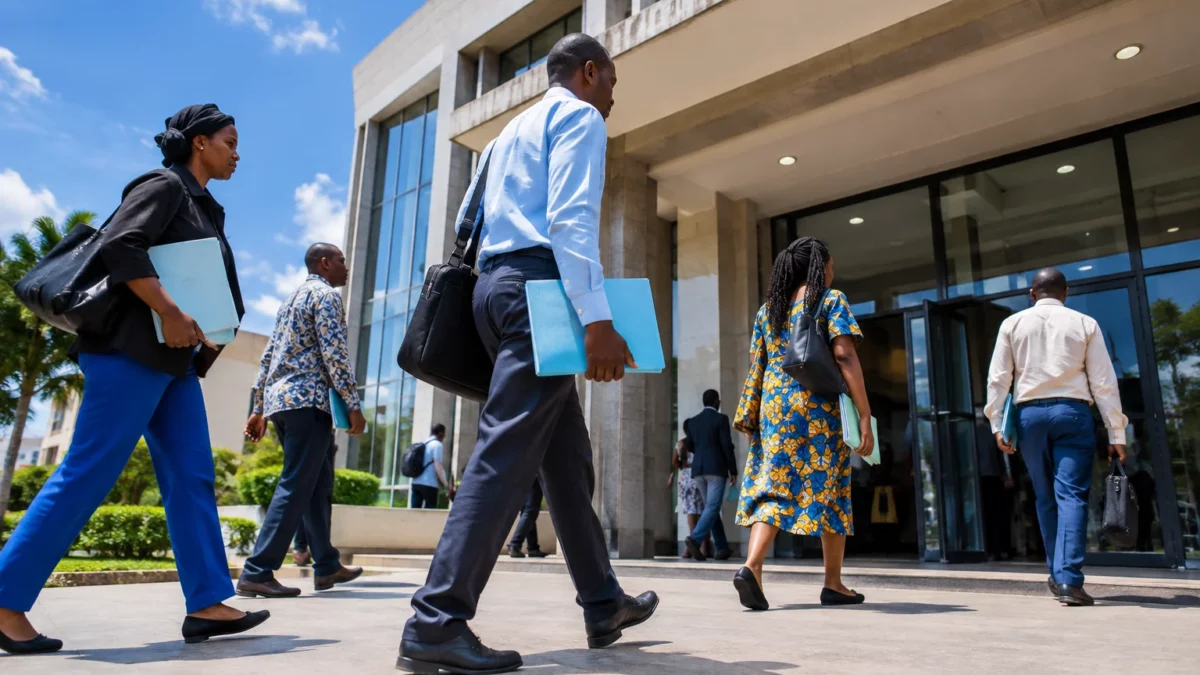
In the Democratic Republic of the Congo, preparations for the next election are already under way on two fronts: technical operations and the political battle over the rules of the game. In Kinshasa, the question is not yet whether a postponement has been decided, but whether the institutions can meet the announced timetable when several steps are running late.
An official timetable, preparations behind schedule
The Independent National Electoral Commission (CENI), which is responsible for organising elections, has set out its roadmap for the 2025-2029 cycle. Published on 4 April 2025, the document provides for presidential, parliamentary and provincial elections in December 2028. The CENI schedules the vote for December, without specifying a date for the combined election in the public document.
SYMOCEL, a Congolese civic election-monitoring platform, believes the holding of the election is exposed to a combination of risks: operational delays, uncertain funding and political tensions. In its report, received by the press on 7 November 2026, it says these difficulties do not prove that a postponement has been decided. They do, however, reduce the time available to put the process back on track.
The roadmap provided for a pilot voter identification and registration exercise from September 2025, followed by its extension to all operational areas between February and September 2026. Data processing and centralisation were then due to continue until March 2027. SYMOCEL notes, however, that several preparatory activities have not been carried out within the announced deadlines. The electoral register is an essential step: it determines who can vote and in which constituency.
The CENI, for its part, presented the roadmap as a planning tool following the constraints of the previous cycle. Its president, Denis Kadima, recalled in April 2025 that the 2023 timetable had been tight. The institution says it wants to plan earlier, but publishing a timetable alone does not guarantee the release of funds, access to territories or completion of technical operations.
Lessons from the past and current tensions
The precedent of 2016-2018 still weighs on the debate. Elections expected in 2016 ultimately took place only in December 2018, after a period of political contestation and deep mistrust. SYMOCEL warns that a further delay could undermine confidence in the institutions. It does not, however, say that this scenario will be repeated.
That memory is compounded by persistent insecurity in the east of the country. Fighting and access restrictions complicate the organisation of electoral operations in some areas. In May 2026, President Félix Tshisekedi said elections could not be held in 2028 if the war did not end, citing in particular the impossibility of voting in North Kivu and South Kivu. The statement points to a practical obstacle, but was also made in a political context in which the constitutional deadline is being debated.
The debate over the Constitution adds to the uncertainty. A referendum law promulgated on 9 November 2026 drew criticism from the opposition, which fears that a new Constitution could change the rules limiting the number of presidential terms. The Constitution currently in force provides for a five-year presidential term, renewable only once. The stakes of the electoral timetable therefore go beyond logistics: they concern succession at the head of state and confidence in the rules shared by all.
These elements should be distinguished. Delays at the CENI, security constraints and the constitutional debate are documented facts and risk factors. On their own, they do not amount to an official announcement of a postponement. SYMOCEL is calling on the commission to update its roadmap, state the progress made at each stage and publish the resources needed to make up for delays.
Consequences beyond Kinshasa
A credible timetable matters to voters, but also to provincial administrations, political parties and organisations preparing to observe the vote. In cities, the issues include voter registration, candidacies and access to information. In conflict-affected areas, it is also necessary to determine whether teams and equipment can move around, and how to safeguard the rights of people displaced or unable to reach polling stations.
Funding will affect each of these stages. SYMOCEL is urging Parliament to exercise its budgetary and oversight powers and monitor electoral appropriations. Without resources being released on time, the CENI could have less room to make up for delays. Conversely, a revised plan with verifiable deadlines and regular updates would allow Congolese people to assess progress without confusing a delay with an agreed postponement.
The issue also concerns regional stability. The DRC is a member of the Southern African Development Community (SADC) and the Economic Community of Central African States (ECCAS), two organisations that monitor peace and governance issues in their respective regions. Electoral difficulties in a country as vast as the DRC, where conflicts persist in the east, can affect regional relations and population movements. They also serve as a reminder that holding elections depends as much on institutional preparation as on security conditions that allow residents to take part.
The next steps to watch are therefore clear: a public update to the timetable by the CENI, progress on voter registration, funding for operations and guarantees of access in areas affected by fighting. For now, no official decision to postpone the elections has been confirmed. But the longer these milestones are delayed, the greater the pressure on Congolese institutions to explain how they intend to meet the 2028 deadline.
SYMOCEL warns of risks facing the 2028 elections. The electoral roadmap published by the CENI sets out the planned steps through to 2029.