Algeria
 Egypt
 Libya
 Morocco
 Sudan
 Tunisia
 Benin
 Burkina Faso
 Cabo Verde
 Côte d'Ivoire
 Ghana
 Guinea
 Guinea-Bissau
 Liberia
 Mali
 Mauritania
 Niger
 Nigeria
 Sierra Leone
 The Gambia
 Togo
 Cameroon
 Central African Republic
 Chad
 DR Congo
 Equatorial Guinea
 Gabon
 Republic of the Congo
 São Tomé and Príncipe
 Burundi
 Comoros
 Djibouti
 Eritrea
 Ethiopia
 Kenya
 Madagascar
 Malawi
 Mauritius
 Mozambique
 Rwanda
 Seychelles
 Somalia
 South Sudan
 Tanzania
 Uganda
 Angola
 Botswana
 Eswatini
 Lesotho
 Namibia
 South Africa
 Zambia
 Zimbabwe
In Senegal, departures by sea continue despite checks and rescue operations. For civil society organisations, this repetition raises a concrete question: what have migration policies pursued over the past 20 years achieved, and who checks their results?
The debate goes beyond coastal surveillance. It concerns young people’s choices, livelihoods in coastal communities and commitments made with foreign partners. It also concerns how the state protects people rescued at sea.
Shipwrecks close together reignite debate
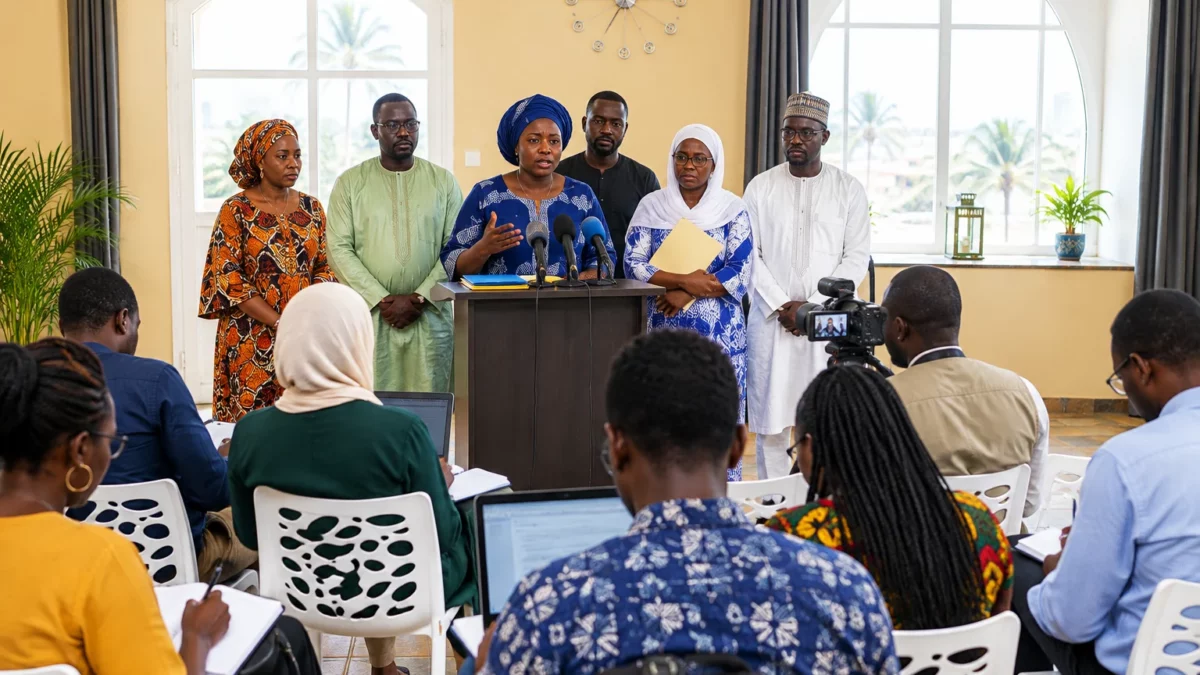
On 22 November, a coalition of Senegalese organisations called on Dakar to reassess migration policy. It also demanded greater transparency over funding and projects carried out with cooperation partners.
The statement came after several tragedies. Off Lompoul, in the Louga region, a shipwreck in early November killed at least 39 people, according to the provisional toll released by the authorities. The African Commission on Human and Peoples’ Rights repeated that figure and recalled the obligations to protect people and search for those missing.
Another capsizing was reported off Yenne, south of Dakar. The first information available remains incomplete: the town hall’s secretary-general reported that one body had been found and people were missing, while accounts cited by the Senegalese press reported other bodies recovered in neighbouring localities, without establishing with certainty that they were linked to the same shipwreck. The tolls should therefore remain attributed and subject to change.
These events are fuelling shared concern, but the proposed responses differ. The government is emphasising the fight against smuggling networks, maritime surveillance and cooperation with neighbouring countries. The coalition, by contrast, is calling for the effectiveness of existing strategies to be measured before their tools are renewed.
Assess measures and clarify funding
The coalition wants the migrant reception and guidance offices, as well as the National Strategy to Combat Irregular Migration, to be examined. These tools have been presented as ways to inform and support people. The associations say their results, budgets and the concrete changes they have enabled should be published.
On 11 November, Action for Human Rights and Friendship (ADHA) called on the National Assembly to open a parliamentary inquiry into migration policy since 2006. As of the date of the press conference, no public response had been reported. Adama Mbengue, a member of the organisation, argues that successive governments have repeated similar strategies without objective evaluation. This is ADHA’s criticism; it calls for a public examination of the results rather than a conclusion being taken for granted.
Transparency is also at the heart of questions about four centres for people rescued at sea, announced as part of a project with the European Union. The sites mentioned include Saint-Louis, Mbour, Dakar’s port and airport. The coalition is seeking details about how they will operate, how they will be funded and what safeguards will be offered to people accommodated there.
Lawyer Coumba Niasse raises practical questions in particular: will women and men be accommodated in the same places? Will these facilities be able to restrict freedom of movement? A person rescued at sea cannot automatically be treated as a smuggler or trafficker. Rules for reception, access to legal assistance and the possibility of seeking protection must therefore be clarified before the centres open.
Balancing departure controls and rights protection
The government is defending a tough line against smugglers and wants to strengthen judicial cooperation in West Africa. This priority responds to the activities of networks that organise dangerous crossings. But interceptions alone do not explain why people continue to attempt the journey, or whether public measures meet their needs.
Senegalese authorities have also referred to raising awareness among young people and taking action on employment, training and entrepreneurship. These measures address different realities: bereaved families are waiting for reliable information about their loved ones; coastal communities are directly affected by departures and rescue operations; and young people seeking income assess their options in circumstances that vary from one locality to another.
The Atlantic route links Senegal to the Canary Islands, Spanish territory off the coast of West Africa. The available figures do not consistently confirm the 39% increase in arrivals in Spain cited in some reports. Data reported by the Senegalese press from Spain’s interior ministry indicate 24,364 sea arrivals in the Canaries between 1 January and 15 November 2026, compared with 14,690 over the same period in 2025, an increase of 65.9%. This total covers all nationalities and does not, on its own, measure departures from Senegal.
At regional level, cooperation with neighbouring countries is necessary for rescue operations, investigations into networks and information-sharing. It must, however, be accompanied by rights safeguards. The African Commission on Human and Peoples’ Rights, an organ of the African Union, says that checks must not prevent rescue operations or expose migrants further to dangerous routes. It also calls for regular and accessible migration pathways to be developed.
The next test will be verifiable action
The controversy now centres on observable decisions: will a parliamentary inquiry be opened? Will the results of the reception offices and national strategy be published? Will details of the centres be made public before they open? The answers will make it possible to distinguish announcements from changes actually implemented.
For Senegal and its regional partners, the challenge is not to choose between security and fundamental rights. It is to combat criminal networks while protecting people, and to evaluate policies using accessible data. The next reports on maritime operations and further details about the planned centres will provide an initial measure of this consistency.