Algeria
 Egypt
 Libya
 Morocco
 Sudan
 Tunisia
 Benin
 Burkina Faso
 Cabo Verde
 Côte d'Ivoire
 Ghana
 Guinea
 Guinea-Bissau
 Liberia
 Mali
 Mauritania
 Niger
 Nigeria
 Senegal
 Sierra Leone
 The Gambia
 Togo
 Cameroon
 Central African Republic
 Chad
 DR Congo
 Equatorial Guinea
 Gabon
 Republic of the Congo
 São Tomé and Príncipe
 Burundi
 Comoros
 Djibouti
 Eritrea
 Ethiopia
 Kenya
 Madagascar
 Malawi
 Mauritius
 Mozambique
 Rwanda
 Seychelles
 Somalia
 South Sudan
 Tanzania
 Uganda
 Angola
 Botswana
 Eswatini
 Lesotho
 Namibia
 Zambia
 Zimbabwe
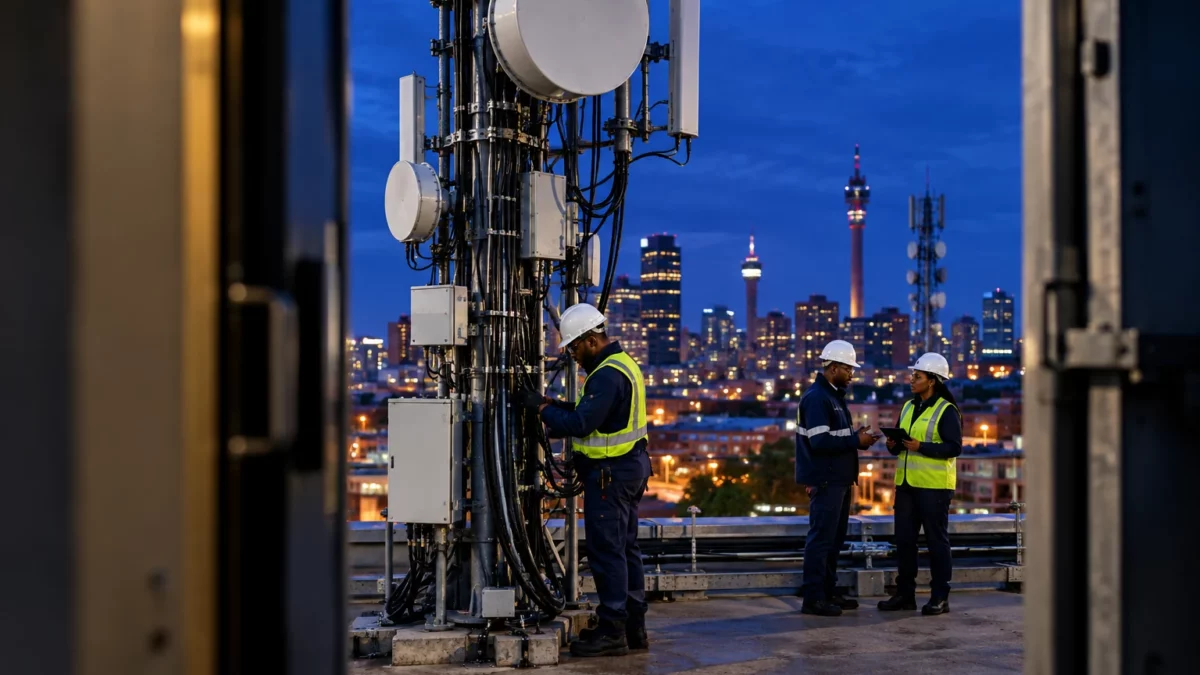
The towers that carry mobile networks have become a strategic asset as well as a financial one. In South Africa, MTN wants to take control of some of this infrastructure, but the deal still depends on regulatory decisions in several countries and regions.
A regional deal, not just a South African one
MTN Group is headquartered in Johannesburg and runs its operations from South Africa, whose capital is Pretoria. But the plan concerns an infrastructure network spread across several African markets. IHS Towers operates sites in countries including Nigeria, South Africa, Cameroon, Côte d’Ivoire and Zambia.
This regional reach explains the number of authorities involved. In addition to national bodies, MTN cites COMESA, the Common Market for Eastern and Southern Africa; ECOWAS, the West African regional integration organisation; and CEMAC, which brings together several Central African countries. Telecoms infrastructure crosses borders, but ownership and competition rules are still largely assessed country by country.
The sector has also shifted towards infrastructure sharing. Operators have often transferred their towers to specialist companies, then leased sites on which to install antennas and equipment. This arrangement allows some costs to be shared among several customers. However, it makes the relationship between operators and tower owners critical to network maintenance and expansion, as well as access charges.
New deadline to meet outstanding conditions
On 14 November 2026, MTN and IHS agreed to push back the deadline under their agreement to 17 December. The document filed with the US Securities and Exchange Commission was made public on 16 November. It provides additional time to meet the closing conditions or, where the contract allows, obtain waivers. The companies did not detail the outstanding obstacles in the document.
The agreement, reached on 17 February 2026, covers the approximately 75.3% of IHS that MTN does not yet own. The announced price is $8.50 a share. The enterprise value is estimated at about $6.2bn, including debt. The transaction therefore remains a proposal: shareholder approval does not mean the transfer has been completed.
IHS shareholders approved the transaction on 4 August. According to MTN’s third-quarter update, approval has also been obtained from the Nigerian authorities and COMESA. The group says, however, that approval from South Africa’s Competition Tribunal, ECOWAS and the CEMAC Commission is still pending.
In Nigeria, authorisation from the Federal Competition and Consumer Protection Commission comes with a requirement reported in documents relating to the case: MTN will have to progressively sell up to 30% of IHS’s Nigerian business to local investors. The condition is intended to preserve competition in infrastructure. It illustrates regulators’ focus on the concentration of essential assets, beyond the financial position of the two groups alone.
Control of towers and competitors’ access
For MTN, ownership would bring investment decisions closer to its network needs. The group could better co-ordinate equipment deployment, maintenance and rental costs. But MTN is not the only user of the towers. In the third quarter of 2026, IHS reported operating 28,599 towers and hosting 42,941 tenants, an average of several pieces of equipment or customers per site.
This sharing is at the heart of the competition issue. If the operator that owns infrastructure also hosts its rivals, authorities will want to ensure that access remains fair and that commercial terms do not disadvantage other players. The commitments imposed in Nigeria offer an indication of this concern, without prejudging the decisions expected in South Africa, West Africa or Central Africa.
The effects will extend beyond the companies’ headquarters. Competing operators depend on access to towers to expand their coverage. Businesses and individuals, in urban centres as well as less densely served areas, in turn rely on network quality and availability. The transaction alone does not guarantee better service: that will depend on investment, access rules and how they are enforced.
A deadline to watch in southern Africa and beyond
The planned takeover marks a turning point in MTN’s infrastructure strategy, following its earlier sale of towers to specialist companies, including IHS. It comes as mobile networks support not only traditional telecommunications but also digital and financial services. Control of physical assets can therefore influence costs and investment decisions across several African markets.
The timetable nevertheless remains subject to approval by the authorities. MTN and IHS have set 17 December 2026 as the new deadline, without saying in their filing that the deal had been completed. The South African group said in its quarterly update that it was still awaiting three regional or national approvals, while IHS said it was aiming to complete the deal before the end of the year, subject to the remaining conditions.
The next decisions will show whether regulators consider the safeguards for access to shared infrastructure sufficient. For South Africa, the issue is a national group extending its control over assets across the continent. For neighbouring markets, the central question will be how to preserve effective competition when one of the largest operators also becomes the owner of a significant share of the towers used by the sector.