Algeria
 Egypt
 Libya
 Morocco
 Sudan
 Tunisia
 Benin
 Burkina Faso
 Cabo Verde
 Côte d'Ivoire
 Ghana
 Guinea
 Guinea-Bissau
 Liberia
 Mali
 Mauritania
 Niger
 Nigeria
 Senegal
 Sierra Leone
 The Gambia
 Togo
 Cameroon
 Central African Republic
 Chad
 DR Congo
 Equatorial Guinea
 Gabon
 Republic of the Congo
 São Tomé and Príncipe
 Burundi
 Comoros
 Djibouti
 Eritrea
 Ethiopia
 Kenya
 Malawi
 Mauritius
 Mozambique
 Rwanda
 Seychelles
 Somalia
 South Sudan
 Tanzania
 Uganda
 Angola
 Botswana
 Eswatini
 Lesotho
 Namibia
 South Africa
 Zambia
 Zimbabwe
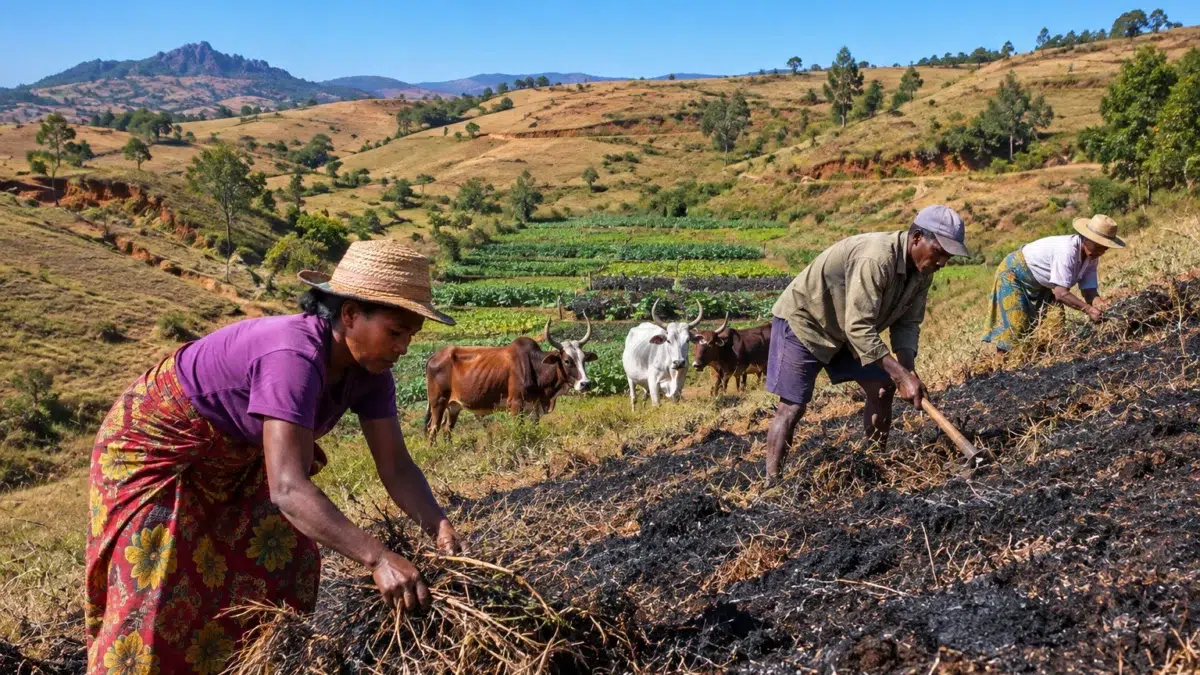
As the rains approach, a burnt hillside can promise fresh grass or a field ready for cultivation. But in Bongolava, west of Antananarivo, the practice also exposes crops, soils and water sources to flames. The challenge is to reduce fires without depriving rural families of their livelihoods.
Useful in the short term, costly when a fire gets out of control
In this Malagasy region, fires are lit in particular to clear plots and encourage grass to regrow for zebu cattle. These uses meet practical constraints: working the land without costly mechanical equipment and maintaining pasture. Yet a fire can quickly threaten neighbouring crops and fruit trees.
Accounts gathered in Bongolava describe residents trying to contain flames with branches, sometimes without support. Some fires are reportedly lit at night, making them harder to detect and tackle. No one readily claims responsibility for starting them, even though the practice remains widespread.
The effects are not limited to burnt land. One farmer quoted in the report speaks of water sources drying up and soils becoming less fertile. These are local observations, not scientific measurements that can be attributed to each fire. They nevertheless point to concrete concerns about harvests and access to water.
Rules are not enough if alternatives remain out of reach
Malagasy law distinguishes between several uses of fire and regulates the lighting of fires. Decree No. 87-271 sets conditions for burning pasture and agricultural plots in the national forest domain. Requirements and penalties therefore depend on the location and applicable rules; it would be inaccurate to present all fires as equally prohibited.
In practice, enforcing the rules is hampered by the size of the territories and the difficulty of identifying those responsible. A response based solely on penalties also risks overlooking the material reasons for using fire. The coordinator of the Vahatra reforestation project, quoted in the report, links the practice to the cost of agricultural equipment.
The same project is counting on income from fruit trees to make wooded plots more worthwhile to protect. According to information provided in the report, 900,000 trees were reportedly planted in the region over three years. This figure could not be independently verified and should therefore remain attributed to the project. Selling mangoes can create an economic incentive to protect trees, but cannot by itself guarantee an end to fires.
A region shaped by land and water concerns
Bongolava is about 200 kilometres west of Antananarivo, Madagascar’s capital. This rural area combines crop farming, livestock rearing and woodland. Fires used to prepare a plot or pasture can therefore affect different activities and groups: farmers, herders, orchard owners and communities that depend on local resources.
The region also contains a forest corridor and habitats whose conservation is documented by Malagasy biodiversity protection organisations. The pressure from recurring fires therefore affects more than trees that are harvested or planted. It also raises questions about the continuity of natural environments and the species that depend on them.
Nationally, Malagasy NGO Indri estimates that nearly 27,000 hectares of wooded areas burned in 2025, almost twice the 2024 total. This estimate covers the country’s wooded areas and should not be confused with the area affected by bush fires in Bongolava alone.
Prevention requires a combination of monitoring and local solutions
Madagascar is a member of the Southern African Development Community (SADC), a regional organisation for economic and political cooperation. Fire prevention connects with shared concerns, including water management, land protection and the resilience of agricultural activities. But its effectiveness depends first and foremost on the resources available in communes and fokontany, local neighbourhood and administrative units.
For residents, the issue is immediate: protecting crops and pasture without compromising the resources needed for the following seasons. Fruit tree plantations can help strike this balance when they provide a genuine income. They cannot, however, replace early warning, firebreak maintenance or affordable agricultural solutions for farmers.
Monitoring should focus on two points: the ability to respond before a fire spreads to neighbouring plots, and the economic viability of the alternatives offered to farmers and herders. The 2025 national figures are a reminder of the potential scale of losses, but responses must be adapted to the realities of each Malagasy region.