Algeria
 Egypt
 Libya
 Morocco
 Sudan
 Tunisia
 Benin
 Burkina Faso
 Cabo Verde
 Ghana
 Guinea
 Guinea-Bissau
 Liberia
 Mali
 Mauritania
 Niger
 Nigeria
 Senegal
 Sierra Leone
 The Gambia
 Togo
 Cameroon
 Central African Republic
 Chad
 DR Congo
 Equatorial Guinea
 Gabon
 Republic of the Congo
 São Tomé and Príncipe
 Burundi
 Comoros
 Djibouti
 Eritrea
 Ethiopia
 Kenya
 Madagascar
 Malawi
 Mauritius
 Mozambique
 Rwanda
 Seychelles
 Somalia
 South Sudan
 Tanzania
 Uganda
 Angola
 Botswana
 Eswatini
 Lesotho
 Namibia
 South Africa
 Zambia
 Zimbabwe
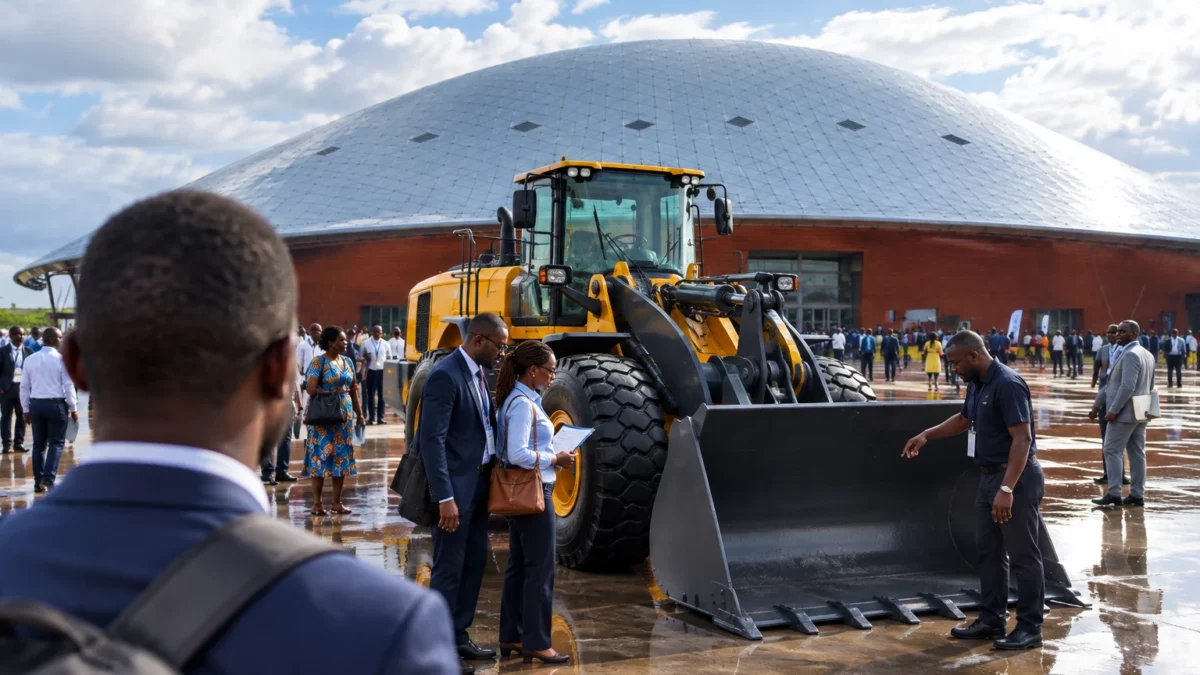
In mining and energy, equipment is of no use if it does not arrive at the right place at the right time. In Côte d’Ivoire, where extractive and power projects are expanding, logistics is becoming a tangible part of the country’s industrial ambitions.
A trade fair focused on infrastructure
The second edition of the International Exhibition of Extractive Resources and Energy (SIREXE) is being held from 18 to 22 November 2026 at the Abidjan Exhibition Centre. Its theme is the infrastructure needed for economic development in Africa. Botswana, a mining power on the continent, is the guest country. Côte d’Ivoire is a member of ECOWAS, the West African regional organisation that coordinates, among other things, electricity exchanges between its member states.
The event is part of a national trajectory in which hydrocarbons, gold and electricity are playing an increasingly important role. The Ivorian government presented the first edition of SIREXE in 2024 as a way to bring together players in these sectors. Since then, energy and mining projects have increased demand for specialist transport, equipment and services around operating sites.
Logistics needs at every stage of projects
AGL Côte d’Ivoire and AYIMAN Logistics Côte d’Ivoire are taking part in the trade fair to present their services to the mining, oil, gas and energy sectors. Their teams are expected at Hall 1, in the sector’s Partners Pavilion, at stands 20, 21 and 22. The companies have announced their participation and locations; these do not, in themselves, constitute an independent assessment of their capabilities.
AGL describes an offering covering domestic and international transport, customs clearance, warehousing, heavy handling and exceptional-load transport. These operations support projects from the delivery of equipment through to the construction and operation of sites. In areas far from major routes, coordination between roads, ports, stocks and deadlines can have a direct bearing on construction schedules.
According to the company’s presentation, AYIMAN Logistics specialises in onshore and offshore energy logistics. It also highlights its majority Ivorian ownership and the development of local content: employment, training, skills transfer and partnerships with companies or training institutions in the country. These commitments are objectives stated by the company; their impact can be measured in the jobs actually created, the skills acquired and the contracts awarded to local suppliers.
AGL Côte d’Ivoire managing director Dieudonné Gaibai describes the trade fair as a forum for discussion on changing industry needs. He says his company intends to offer solutions tailored to more complex projects and support the development of local skills. The statement sets out AGL’s strategy but does not detail the investments involved or their expected results.
Local content: beyond the announcements
For decision-makers and operators, reliable logistics can limit delays and construction costs. For Ivorian companies, the challenge is different: gaining access to markets, securing contracts and acquiring transferable skills. Benefits are not automatically shared between company headquarters, local service providers and people living near the sites.
Local content is therefore not simply a matter of having a national company in a supply chain. It also depends on supplier selection criteria, training that is genuinely accessible and jobs that continue after construction. The information available on this participation in SIREXE does not specify either the number of jobs associated with these services or the share of contracts intended for Ivorian companies.
Territorial reach is also a key factor. AGL says it employs more than 1,500 Ivorian staff and has agencies in Abidjan, San Pedro, Bouaké, Ferkessédougou and Ouangolodougou. This stated presence connects the port and logistics activities of the economic capital with hubs in the interior. But the benefits for the regions will depend on the operations actually carried out there and the skills developed locally.
Issues extending beyond Côte d’Ivoire’s borders
Côte d’Ivoire is also seeking to become a West African energy hub. Electricity produced in the country is part of a regional market in which interconnections and exchanges coordinated by the West African Power Pool, linked to ECOWAS, matter as much as generation capacity. In 2025, the Ivorian government announced funding intended, among other things, to modernise the grid and support this regional market.
In this context, the SIREXE debate is not only about resource extraction. It also concerns the infrastructure connecting production sites to ports, electricity grids and neighbouring markets. The central question remains how much value is created in the country: contracts, training and local jobs will show whether the expansion of the mining and energy sectors also benefits Ivorian businesses and workers.
The first edition of the trade fair was held in 2024; this second edition runs until 22 November 2026. Announcements made in Abidjan will now need to be measured against project delivery and tangible benefits for local suppliers. At regional level, the development of the ECOWAS electricity market will also provide a concrete indicator of the position Côte d’Ivoire manages to secure.