Algeria
 Egypt
 Libya
 Morocco
 Sudan
 Tunisia
 Benin
 Burkina Faso
 Cabo Verde
 Côte d'Ivoire
 Ghana
 Guinea
 Guinea-Bissau
 Liberia
 Mali
 Mauritania
 Niger
 Nigeria
 Sierra Leone
 The Gambia
 Togo
 Cameroon
 Central African Republic
 Chad
 DR Congo
 Equatorial Guinea
 Gabon
 Republic of the Congo
 São Tomé and Príncipe
 Burundi
 Comoros
 Djibouti
 Eritrea
 Ethiopia
 Kenya
 Madagascar
 Malawi
 Mauritius
 Mozambique
 Rwanda
 Seychelles
 Somalia
 South Sudan
 Tanzania
 Uganda
 Angola
 Botswana
 Eswatini
 Lesotho
 Namibia
 South Africa
 Zambia
 Zimbabwe
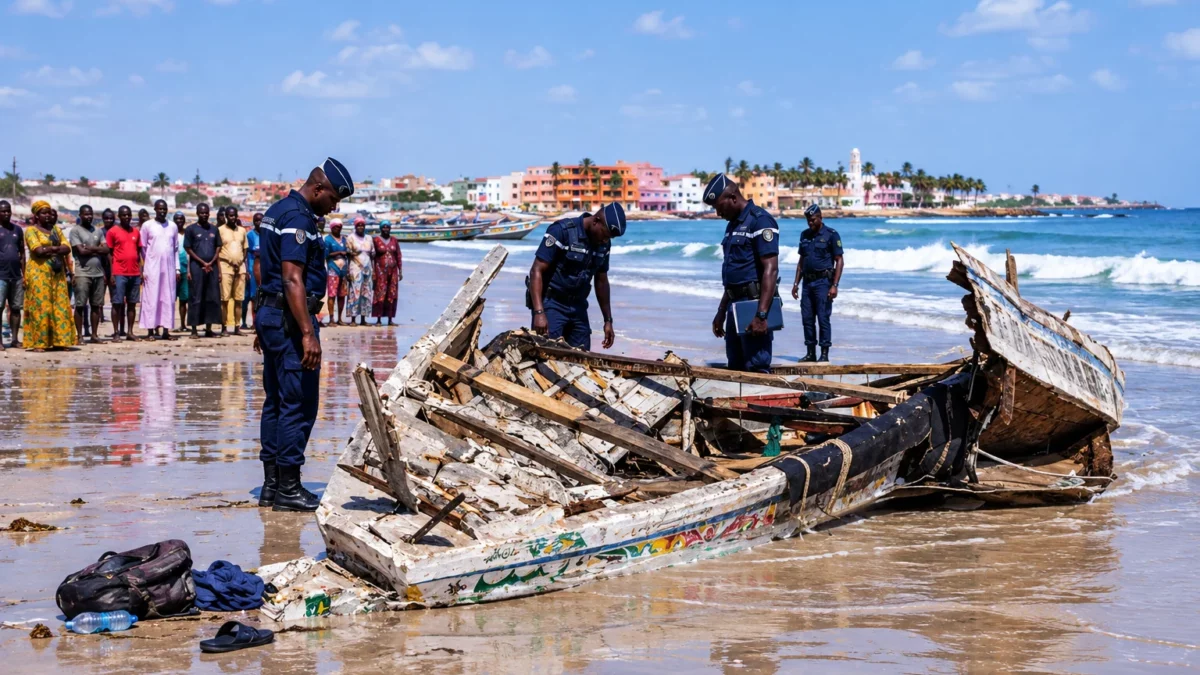
In Yenne, on the coast south of Dakar, the search at sea is no longer just about finding missing people. It is also revealing how difficult it is to quickly establish who was aboard a pirogue bound for Europe. After it capsized on the night of 17 to 18 November, the initial death toll changed as bodies were found on several beaches.
A toll that is still evolving, between Yenne and Sendou
The boat sank off Yenne after hitting rocks, according to the town’s mayor, Massamba Mbengue, and a local political official. Residents said the capsize occurred at around 2am. The passengers’ cries were reportedly heard from the beach.
Information released on 18 November reported that one or two bodies had been found, according to the local sources cited. A situation update subsequently published by Seneweb reported that four bodies had been found in Yenne and Sendou. It said that only one survivor had been identified and that several people remained missing. The toll is still provisional: the victims’ identities and the number of passengers have not been established.
The survivor reportedly told gendarmes that about 100 people were on board, including five women. This estimate is attributed to him and has not been confirmed by an independent count. The search and investigation are continuing.
The pirogue, described as badly damaged, washed up on the beach. Gendarmes found personal belongings, mobile phones, eight identity documents and a school document associated with a secondary school pupil from Kabrousse, in Casamance. These items may help identify passengers, but are not enough to confirm their number or fate.
A new tragedy after the one at Thiéppe
The Yenne capsize comes less than two weeks after another boat sank off Thiéppe, in the Kébémer department in the country’s north-west. On 11 November, the Senegalese Press Agency reported a provisional toll of 42 dead and one survivor, as the search continued. Later reports gave a higher toll. Figures should therefore be attributed to the date and source on which they are based.
The succession of tragedies highlights the dangers of Atlantic crossings to the Canary Islands. The International Organization for Migration (IOM) recorded eight departures from the Senegalese coast in April and May 2026 involving 1,295 people, as well as a pirogue spotted at sea carrying 180 passengers. Its monitoring system also recorded 17 incidents involving risks to life and 15 people reported missing. These figures are based on local monitoring and are not intended to cover every departure.
The IOM also reports the use of overloaded or poorly maintained boats and recruitment in several coastal areas. The phenomenon therefore affects locations far apart from one another, rather than a single departure point. In the case of Yenne, a local elected official says recruiters come to find pirogue pilots. This describes a possible mechanism, but does not in itself characterise all departures from the town.
Responses that go beyond coastal surveillance
President Bassirou Diomaye Faye asked the interior minister to prepare a report on migration and possible responses at the cabinet meeting on 18 November. According to reports, he also emphasised agriculture and fishing, as well as education, vocational training, youth employment and women’s economic empowerment.
These measures address different realities. Maritime patrols and investigations target organisers and departures. Employment and training policies, meanwhile, concern the opportunities available to young people in cities and coastal areas. But a national policy cannot on its own resolve disparities in access to visas, jobs and regular mobility routes between West Africa and Europe. A young resident of the area’s appeal to Spain, reported after the shipwreck, also reflects this dimension.
Senegal belongs to the Economic Community of West African States (ECOWAS), which brings together countries linked by trade and regional mobility. The Atlantic route also involves Gambia and other coastal countries. It therefore calls for coordination on sea rescues, action against smuggling networks and the protection of people, rather than a response limited to border surveillance.
The immediate priority: finding and identifying people
In the short term, the priority remains to continue the search and establish the identities of those found. The difference between the initial toll reported and the four bodies subsequently recorded shows why figures should remain attributed until the authorities have finalised their count. For families, identification is as essential as the recovery of the bodies: it confirms a death and enables the necessary procedures to begin.
At regional level, the Yenne shipwreck comes as Senegalese authorities again examine irregular departures, following the tragedy at Thiéppe. What happens next will depend in particular on the findings of the report requested by the head of state, the results of the local investigation and developments in the search. For now, neither the total number of passengers nor the final death toll has been confirmed.