Algeria
 Egypt
 Libya
 Morocco
 Sudan
 Tunisia
 Benin
 Burkina Faso
 Cabo Verde
 Côte d'Ivoire
 Ghana
 Guinea
 Guinea-Bissau
 Liberia
 Mali
 Mauritania
 Niger
 Nigeria
 Senegal
 Sierra Leone
 The Gambia
 Togo
 Cameroon
 Central African Republic
 Chad
 DR Congo
 Equatorial Guinea
 Gabon
 Republic of the Congo
 São Tomé and Príncipe
 Burundi
 Comoros
 Djibouti
 Eritrea
 Ethiopia
 Kenya
 Madagascar
 Malawi
 Mauritius
 Mozambique
 Rwanda
 Seychelles
 Somalia
 South Sudan
 Tanzania
 Uganda
 Angola
 Botswana
 Eswatini
 Lesotho
 Namibia
 South Africa
 Zambia
 Zimbabwe
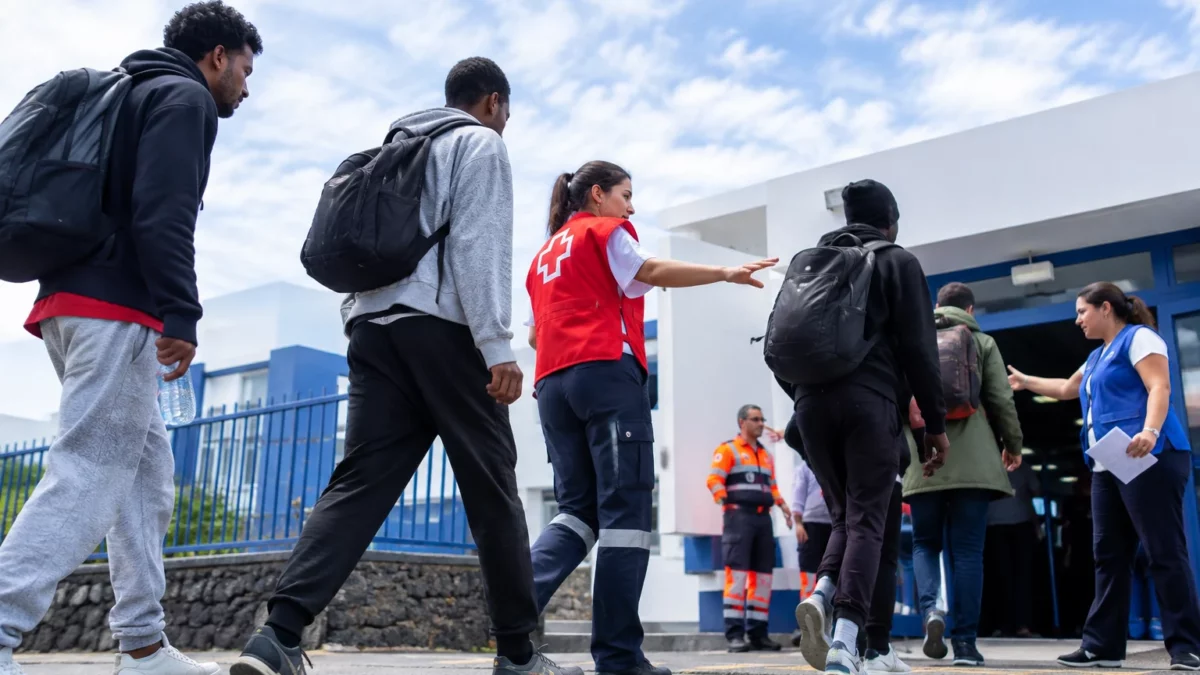
El Hierro has around 12,000 inhabitants. In just a few days, the island has had to receive thousands of people rescued on the Atlantic route. The immediate challenge is humanitarian and logistical: sheltering new arrivals without leaving local services to face such rapid pressure alone.
An Atlantic route on the rise again
The Canary Islands are a Spanish archipelago off the north-west coast of Africa. The sea route linking them to the West African coast is long and dangerous. People set off, among other places, from countries such as Senegal, Gambia and Mauritania. Routes and nationalities vary; the available data do not allow departures to be reduced to a single cause.
Migration across the Atlantic moves in cycles. Arrivals rose sharply in 2024 before slowing in 2025. The new peak in November 2026 therefore comes after a period of decline, and is a reminder of how quickly the figures can change from one season to the next. For the authorities, this makes it harder to prepare reception and rescue capacity.
The phenomenon affects several territories. Departures may take place from the West African coast, while the Canary Islands are part of Spain and the European Union. Management therefore involves the Spanish authorities, the archipelago’s institutions, rescue services and, further upstream, countries of transit and departure. These responsibilities are not interchangeable.
More than 11,000 arrivals in 15 days
From 1 to 15 November, 11,037 people arrived irregularly in the Canary Islands, according to figures from Spain’s Interior Ministry reported by regional public television. The tally covers the first half of the month. It does not mean that everyone who arrived remained in the archipelago: transfers to other islands or to mainland Spain are organised.
The Spanish government declared a migration emergency in the archipelago on 10 November. Madrid announced an additional €15.18 million, intended in particular to open places in state reception centres and fund transfers. The Canary Islands government said the measures responded to several requests from the regional executive, including additional healthcare support from the Red Cross.
Pressure is particularly concentrated on El Hierro, where many boats have landed. On the small island, the increase in arrivals is stretching rescue teams, accommodation facilities and health services. Those rescued first need care, registration and shelter. Capacity cannot be expanded at the same pace as arrivals.
The Spanish and Canary Islands authorities have also announced additional rescue resources. These emergency responses do not, however, resolve the underlying questions: how people are distributed among territories, how minors are cared for, and how support continues after the first few days. The gap between the responsibilities of the state and those of the autonomous community regularly fuels disagreements over who should fund and organise reception.
A humanitarian issue at the heart of the campaign
The increase comes ahead of Spain’s general election on 29 November 2026, a date confirmed by the electoral authorities. Immigration is an important issue in the campaign. Parties are debating border controls, reception policies and regularisation. The subject forms part of a broader national debate, fuelled in particular by arrivals in Ceuta, a Spanish territory in North Africa, in July.
The proximity of the election increases the risk that migrants will become a campaign talking point rather than individuals with diverse circumstances. Arrival figures alone do not show who is seeking international protection, who is fleeing danger, or what journeys preceded the crossing. Decisions on protection and status follow separate procedures that require time and individual assessment.
On the islands, the impact is tangible for residents and new arrivals alike. Emergency services must balance the needs of people who have landed with the usual healthcare needs of the local population. Island communities, with smaller populations and fewer facilities than major urban centres, cannot absorb alone arrivals concentrated over a few days. This is why transfers and a clear sharing of resources between Madrid, the Canary Islands and Spain’s other regions are important.
For West African countries, the crossing also highlights the effects of migration-control and cooperation policies. Agreements between the European Union and states in the region influence the monitoring of departures and opportunities for movement. But they do not eliminate the factors that prompt some people to leave: the search for work, family ties, instability or the absence of safe and regular routes. These journeys are neither identical nor reducible to a single explanation.
Decisions to watch next
At European level, the debate centres on solidarity between territories of first arrival and other member states. The Canary Islands are far from mainland Spain, but the archipelago lies on the EU’s external borders. The ability to share responsibilities, assess protection claims and co-ordinate rescues will shape the response to this surge.
In the short term, the key question will be whether the announced funds quickly translate into reception places, staff and effective transfers. Monitoring arrivals after 15 November will also show whether the peak continues or eases. Finally, commitments made between the Spanish government and the Canary Islands executive will need to be measured against their implementation, beyond campaign announcements.
This episode is a reminder of a reality often obscured by political debate: a sea crossing does not end on arrival. It opens a phase of rescue, accommodation and administrative assessment that requires sustained co-ordination. For the islands, the question is not only how many people arrive, but how responsibilities and resources are shared among territories.