Algeria
 Egypt
 Libya
 Morocco
 Sudan
 Tunisia
 Benin
 Burkina Faso
 Cabo Verde
 Côte d'Ivoire
 Ghana
 Guinea
 Guinea-Bissau
 Liberia
 Mali
 Mauritania
 Niger
 Nigeria
 Senegal
 Sierra Leone
 The Gambia
 Togo
 Cameroon
 Central African Republic
 Chad
 DR Congo
 Equatorial Guinea
 Gabon
 Republic of the Congo
 São Tomé and Príncipe
 Burundi
 Comoros
 Djibouti
 Eritrea
 Ethiopia
 Kenya
 Madagascar
 Malawi
 Mauritius
 Mozambique
 Rwanda
 Seychelles
 Somalia
 South Sudan
 Tanzania
 Uganda
 Angola
 Botswana
 Eswatini
 Lesotho
 Namibia
 South Africa
 Zambia
 Zimbabwe
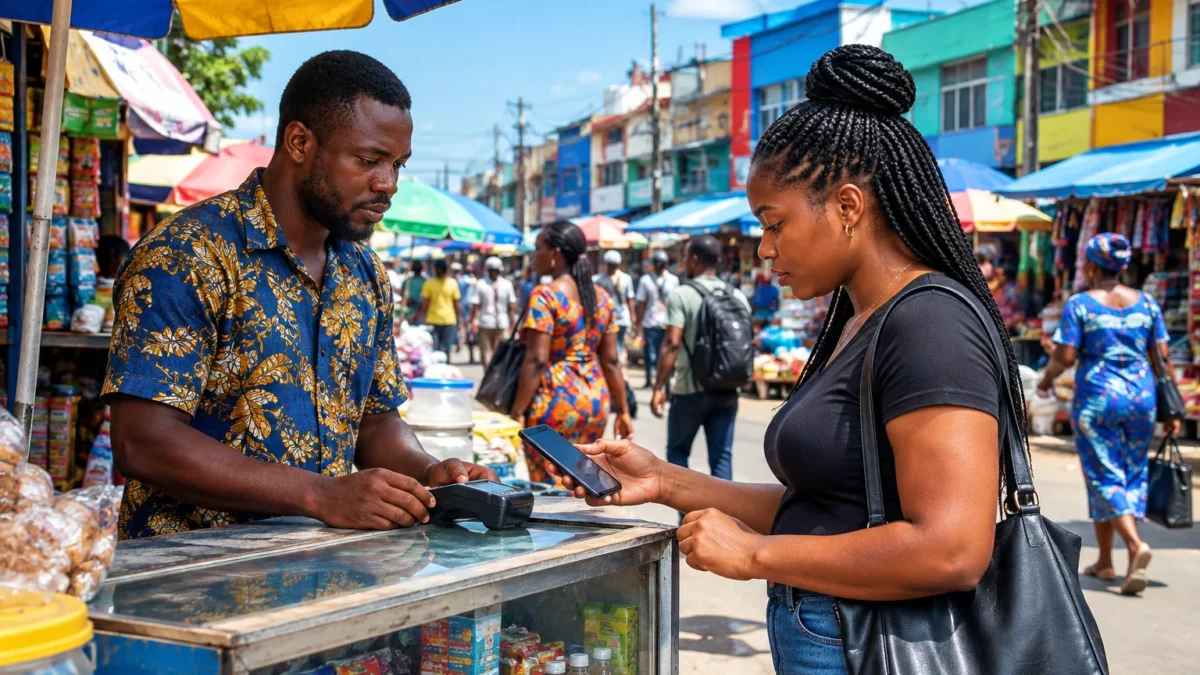
A company that collects payments in Ghana, pays a supplier in Nigeria and delivers goods in Benin faces more than a transfer problem. Every fintech supporting it must also navigate different licensing and supervision rules. A proposed regulatory recognition scheme between countries could reduce these obstacles without taking supervisory powers away from central banks.
Close markets, different rules
Nigeria and Ghana belong to the Economic Community of West African States (ECOWAS). Benin, along with seven other countries in the region, is part of the West African Economic and Monetary Union (WAEMU), which shares a currency, the CFA franc, and a central bank, the BCEAO. These regional frameworks do not replace the national rules that apply to financial service providers.
For a young financial services company, setting up in a neighbouring country can therefore require new procedures, checks and legal expenses. The burden is particularly heavy for smaller businesses. It can delay the launch of a service for traders, small businesses or families sending money across borders.
Demand for digital services is already significant. The BCEAO says WAEMU had 284.8 million electronic money accounts at the end of 2025, up 14.5% year on year. Only 92.7 million were active during the period under review. These are accounts, not distinct people: one customer may hold several. The figures show both the scale of the infrastructure and the gap between accounts opened and actual use.
Recognising checks, not scrapping rules
The proposal put forward by fintech associations in Nigeria, Ghana and WAEMU is to test a “passport” for certain licensed providers. In practice, a host authority could take account of checks already carried out in the home country, including those on governance, IT security and compliance. The scheme would not mean automatic permission to operate everywhere.
Each central bank would retain responsibility for protecting customers in its market and enforcing its own requirements. Authorities would need to agree on what information to share, the conditions for admission and the procedure to follow in the event of fraud, an outage or a complaint. Payment and money transfer services could form an initial scope. Lending and investment pose different risks and would require tailored rules.
A concrete precedent exists between Ghana and Rwanda, in East Africa. Their central banks signed a memorandum of understanding on 25 February 2025 aimed at developing recognition of fintech licences and payment interoperability. The Bank of Ghana’s 2025 annual report says the two authorities subsequently launched a pilot with payment providers from both countries. This work shows that regulatory cooperation can be tested, but does not yet prove that an identical model would suit West Africa.
Interoperable payments are not enough
The region already has tools to move money. In WAEMU, the BCEAO launched PI-SPI, an interoperable instant payment platform, on 30 September 2025. It allows participating institutions to connect and make transfers. On a different scale, the Pan-African Payment and Settlement System (PAPSS) aims to enable cross-border payments in local currencies. It connects, among others, banks in Ghana and Nigeria.
These technical infrastructures address a different question from licensing. They can route a payment between connected institutions; by themselves, they do not give a fintech the right to provide a service in a country where it is not licensed. The regulatory passport and payment networks could therefore complement one another, provided that fees, conversions between the naira, cedi and CFA franc, available liquidity and final settlement of transactions are clarified.
For businesses trading between Lagos, Accra and Cotonou, the benefits would be measured in concrete terms: the time needed to enter a new market, the total cost of a payment, settlement speed and the rate of incidents. Larger companies can more easily absorb compliance costs. Small businesses, often reliant on less integrated payment channels, could be hit harder by delays and costs. But regulatory opening does not in itself guarantee lower fees: these will also depend on competition and exchange-rate conditions.
Customer trust at the heart of the test
Faster recognition of licences cannot work without common safeguards. Customers need to know who holds their funds, how their data is protected and which authority to contact in the event of a dispute. Anti-money laundering measures, system security, fee transparency and complaint handling should therefore feature among the pilot’s criteria.
The continental initiative launched by Africa Fintech Network on 25 May 2026 aims to develop a passport framework for payment services. Its timetable provides for a white paper to be prepared in 2027, followed by pilot arrangements. A West African trial would fit into this work, but remains a proposal: the information available does not point to an agreement reached between the central banks of Nigeria, Ghana and WAEMU.
The Next Fintech Forum, announced for Cotonou on 26 and 27 November 2026, is expected to provide a platform for regulators and industry professionals to discuss the issue. What happens next will depend above all on their ability to define a limited scope, clear responsibilities and verifiable results. For ECOWAS, the challenge is not to erase differences between financial systems, but to decide whether some checks can be recognised across borders while maintaining effective user protection.