Algeria
 Egypt
 Libya
 Morocco
 Sudan
 Tunisia
 Benin
 Burkina Faso
 Côte d'Ivoire
 Ghana
 Guinea
 Guinea-Bissau
 Liberia
 Mali
 Mauritania
 Niger
 Nigeria
 Senegal
 Sierra Leone
 The Gambia
 Togo
 Cameroon
 Central African Republic
 Chad
 DR Congo
 Equatorial Guinea
 Gabon
 Republic of the Congo
 São Tomé and Príncipe
 Burundi
 Comoros
 Djibouti
 Eritrea
 Ethiopia
 Kenya
 Madagascar
 Malawi
 Mauritius
 Mozambique
 Rwanda
 Seychelles
 Somalia
 South Sudan
 Tanzania
 Uganda
 Angola
 Botswana
 Eswatini
 Lesotho
 Namibia
 South Africa
 Zambia
 Zimbabwe
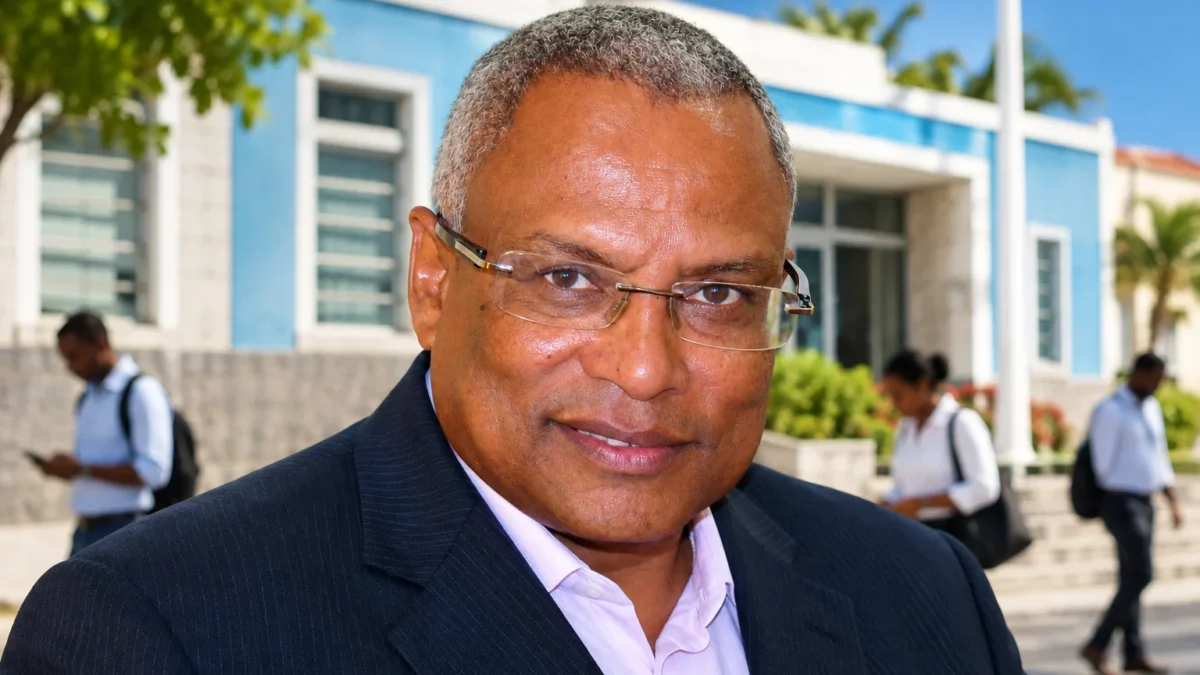
In Cabo Verde, José Maria Neves begins a second term with a clear lead in the provisional results, but one question remains: how can citizens be brought closer to the ballot box and their everyday concerns addressed? The 15 November 2026 election points both to political continuity and to a challenge over participation.
An election in a changing political landscape
Cabo Verdeans voted as their institutional landscape had just changed. In the legislative elections of 17 May 2026, the African Party for the Independence of Cabo Verde (PAICV), a left-wing party backing Neves, won 37 of the 72 seats in the National Assembly. The majority ended ten years of government by the Movement for Democracy (MpD), the centre-right party that backs Joana Rosa. The National Electoral Commission proclaimed the results final in May.
Cabo Verde is a West African archipelago and a member of the Economic Community of West African States (ECOWAS), the regional organisation that promotes economic and political cooperation. Since the introduction of multiparty politics in 1991, the PAICV and the MpD have alternated in power. This contest, settled at the ballot box, contrasts with the constitutional ruptures seen in several countries in the region, without exempting the archipelago from social debates and the expectations of its population.
A provisional victory, high abstention
The day after the vote, on 16 November, provisional figures gave José Maria Neves 63.8% of the vote. His main rival, lawyer and former justice minister Joana Rosa, had 31.6% in the count reported while counting was still under way. She conceded defeat and congratulated the incumbent president. The figures remain provisional: the National Electoral Commission is due to publish the final results.
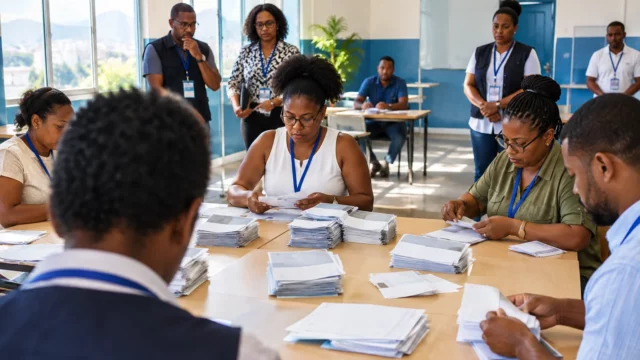
Abstention, estimated at nearly 68% in the provisional count, is the other major feature of the election. On its own, it does not allow one to conclude that voters wanted to punish the leaders. The figure nevertheless raises questions about barriers to participation and the relationship between institutions and citizens. Neves cited the mobility of Cabo Verdeans and the possibility of modernising the electoral system, including through electronic voting. Any reform will, however, have to guarantee access to the vote and confidence in the count, including for voters living abroad.
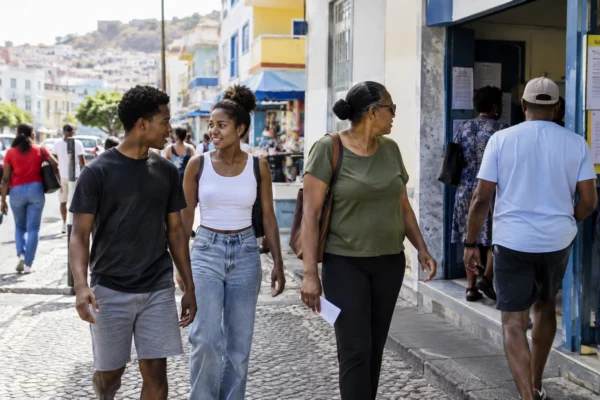
In Praia, the capital, the president pledged to defend freedoms, democracy and the rule of law. He also spoke of “inclusive” growth, linked to improving wages and family incomes. These commitments address concerns raised during the campaign: the cost of living, fuel prices, youth employment and inequality. In an archipelago, travel between islands and its cost also affect access to services and exchanges. The effects of these constraints are not the same for residents of Praia, those on other islands and families in the diaspora.
A president as arbiter faces social expectations
The role of the president is distinct from that of the head of government. The president represents the country, upholds the Constitution and has institutional powers, while the government directs public policy. The PAICV’s parliamentary majority therefore gives Neves’s party a central role in government decisions. The president’s second term will also depend on his ability to engage in dialogue with an opposition that has just lost legislative power but retains an important place in political life.
Joana Rosa was the first woman to stand for the presidency of the Republic of Cabo Verde. Her candidacy, backed by the MpD, did not win the election, but it brought the question of women’s representation at the highest level of the state to the fore. The result invites a distinction between voting for a candidate, partisan choice and support for a programme: the figures alone cannot establish the relative weight of these factors.
A regional test of democratic participation
The provisional result confirms continuity at the head of state, but the level of abstention requires political leaders to look beyond the victory. For the government formed after the legislative elections, expectations concern incomes, jobs and services in an island country. For the presidency, the challenge is to preserve its role as mediator and representative without confusing its powers with those of the cabinet.
At ECOWAS level, the election offers another example of political competition organised by civilian institutions. Its significance lies not only in the image of stability: it will also be measured by the publication of the final results, acceptance of the procedures and the ability of elected officials to address concerns expressed through abstention. The next indicator, then, will be less a new speech than a verifiable change in participation and public policy.