Algeria
 Egypt
 Libya
 Morocco
 Sudan
 Tunisia
 Benin
 Burkina Faso
 Cabo Verde
 Côte d'Ivoire
 Ghana
 Guinea
 Guinea-Bissau
 Liberia
 Mali
 Mauritania
 Niger
 Nigeria
 Senegal
 Sierra Leone
 The Gambia
 Togo
 Cameroon
 Central African Republic
 Chad
 DR Congo
 Equatorial Guinea
 Gabon
 Republic of the Congo
 São Tomé and Príncipe
 Burundi
 Comoros
 Djibouti
 Eritrea
 Ethiopia
 Kenya
 Malawi
 Mauritius
 Mozambique
 Rwanda
 Seychelles
 Somalia
 South Sudan
 Tanzania
 Uganda
 Angola
 Botswana
 Eswatini
 Lesotho
 Namibia
 South Africa
 Zambia
 Zimbabwe
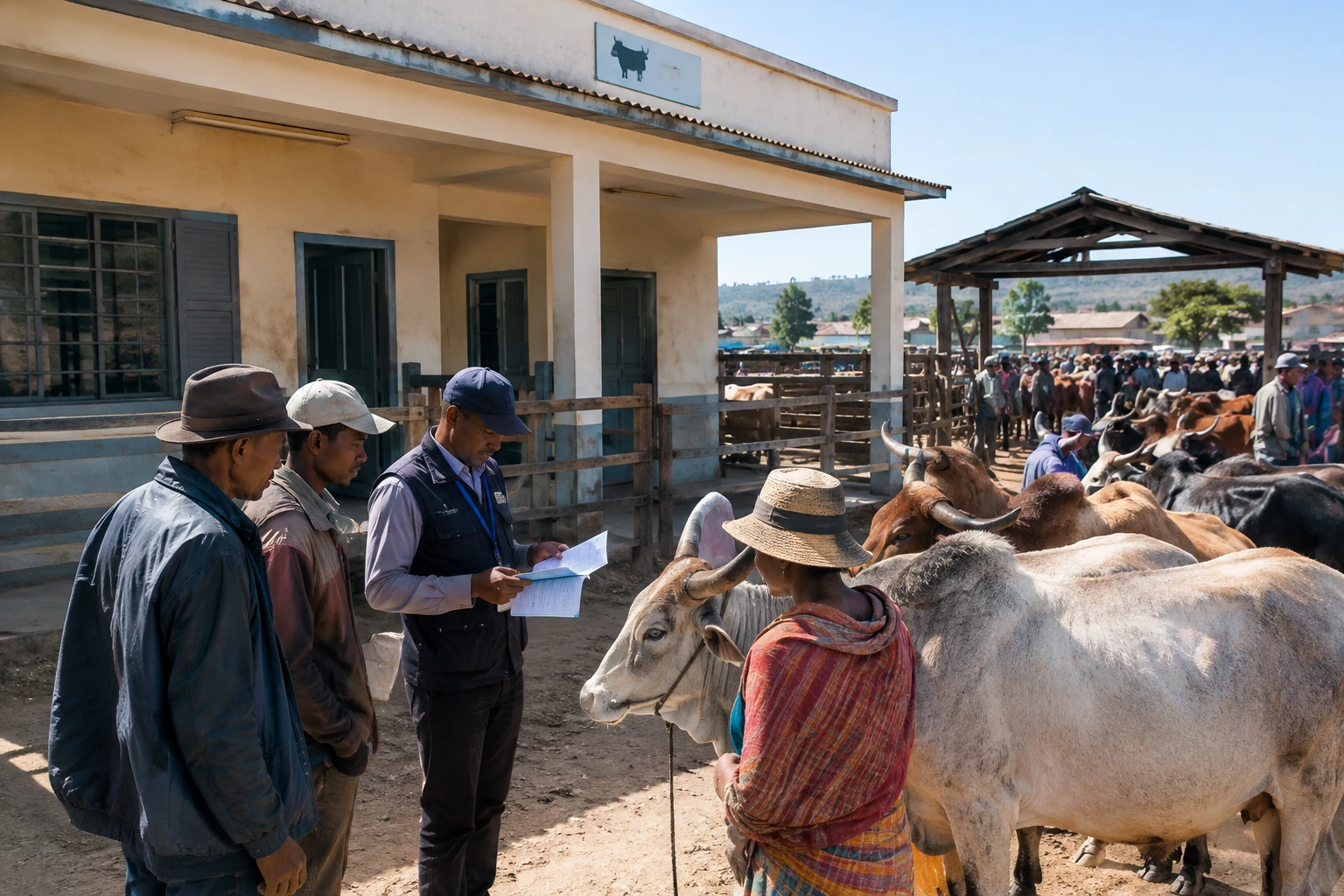
In Tsiroanomandidy, every zebu sale supports herders, drovers and traders. But transporting the animals to market can also expose their owners to armed attacks. In this town in Bongolava, in western Madagascar, security therefore has a direct bearing on economic activity.
A market at the heart of trade between the west and the Highlands
The zebu serves several purposes in Malagasy life. It helps with agricultural work, features in commercial exchanges and has a place in some family ceremonies. For many herders, it is also a store of value. Losing an animal can therefore reduce both a household’s income and its ability to farm.
Tsiroanomandidy, the regional capital of Bongolava, connects western livestock-rearing areas with buyers in the central Highlands. Herds arrive there early in the morning. Some of the animals go to the slaughterhouses that supply, among other places, Antananarivo, the capital. Others are bought by farmers for work in the fields.
This movement supports a local economy that extends beyond market transactions alone: it involves herders, drovers, transporters and sellers. But every stage — gathering, moving and selling the animals — can become an opportunity for theft when herds are targeted.
Risk follows the herds
Groups locally known as “dahalo” are associated with cattle theft, sometimes carried out by armed groups. One drover cited in the report describes journeys accompanied by about a dozen members of the security forces. He says the attackers can be far more numerous. This account reflects one person’s experience, but does not in itself provide a general measure of the resources or frequency of attacks.
The threat has tangible consequences for workers in the sector. Herders can lose a substantial part of their assets. Drovers, meanwhile, do work that takes them away from home and exposes them on routes that can be difficult to secure. Insecurity can also disrupt sales and increase the cost of moving animals.
The problem is not confined to the district. An analysis published by the United Nations on gender-sensitive conflicts in Madagascar describes cattle theft as a persistent concern in several rural regions, while highlighting the lack of recent data to measure national trends precisely. This limitation calls for a distinction between local accounts and assessments made at national level.
Identifying animals and checking transactions
In Tsiroanomandidy, the authorities rely in particular on an individual cattle identification form. The document records details such as sex, colour, place of birth and the declared owner. Checks can take place at the market, in enclosures or along routes used by herds. The system is intended to make it harder to resell stolen animals and to detect forged documents.
Traceability, however, cannot replace the presence of security forces or investigative work. It also depends on documents being accessible, properly completed and verifiable. In May 2025, the National Assembly announced that it had adopted a proposal to amend the legal framework for punishing cattle theft. The parliamentary debate also addressed complicity and the networks that may facilitate these activities.
The public response therefore combines several measures: securing journeys, checking animals and tackling resale networks. Figures cited locally should remain attributed. In the report, the commander of the Tsiroanomandidy gendarmerie refers to seven attacks recorded in his district during the first three quarters of the year in question, half the number recorded over the same period the previous year. As the year is not specified in the available information, this figure cannot be presented as a current tally.
A matter of security and livelihoods
Combating cattle theft involves more than protecting herds. It affects confidence in markets, rural incomes and supplies for consumers. Herders with the resources to strengthen surveillance are not in the same position as smallholders. Similarly, checks can protect legitimate transactions, but their effectiveness depends on consistent implementation in markets and on roads.
Geography also matters. The market connects distant areas, while security forces must cover villages and extensive transport routes. A one-off operation may recover animals or arrest suspects without dismantling the networks that organise the thefts and the sale of stolen cattle. Reports of incidents in Tsiroanomandidy in 2025 show that attacks and operations to recover cattle continued to be reported in the region. They are not, however, enough to establish a general trend in crime.
Madagascar is a member of the Southern African Development Community (SADC), a regional organisation for political and economic co-operation. The dahalo issue remains primarily a national and local concern; it nevertheless serves as a reminder that the security of livelihoods, the movement of goods and trust in institutions also relate to regional development priorities. In Tsiroanomandidy, the clearest measure will be whether herders and drovers can transport and sell their animals without fearing they will lose everything along the way.