Algeria
 Egypt
 Libya
 Morocco
 Sudan
 Tunisia
 Benin
 Burkina Faso
 Cabo Verde
 Côte d'Ivoire
 Ghana
 Guinea
 Guinea-Bissau
 Liberia
 Mali
 Mauritania
 Niger
 Nigeria
 Senegal
 Sierra Leone
 The Gambia
 Togo
 Cameroon
 Central African Republic
 Chad
 Equatorial Guinea
 Gabon
 Republic of the Congo
 São Tomé and Príncipe
 Burundi
 Comoros
 Djibouti
 Eritrea
 Ethiopia
 Kenya
 Madagascar
 Malawi
 Mauritius
 Mozambique
 Rwanda
 Seychelles
 Somalia
 South Sudan
 Tanzania
 Uganda
 Angola
 Botswana
 Eswatini
 Lesotho
 Namibia
 South Africa
 Zambia
 Zimbabwe
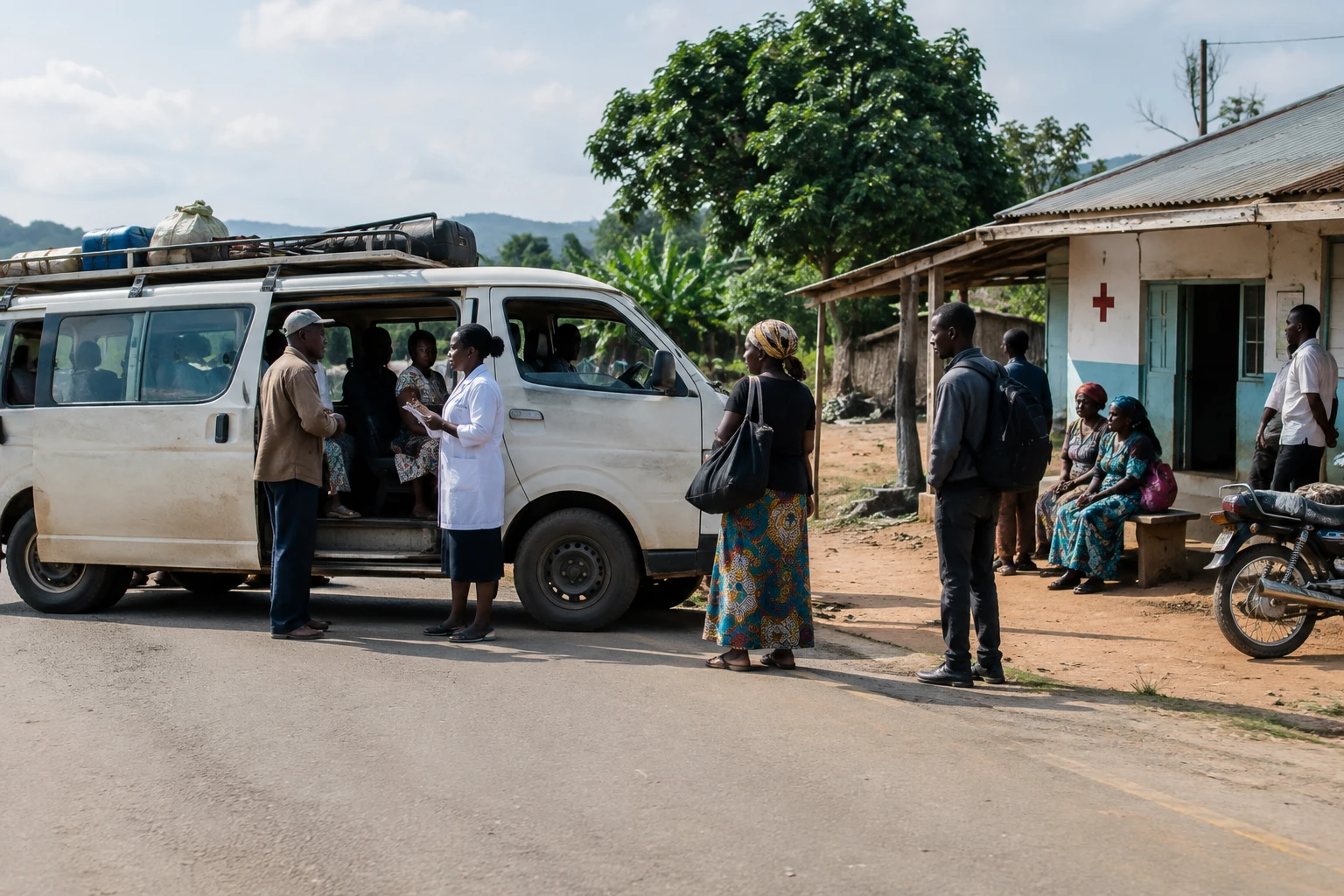
In Mambasa territory, violence and the Ebola outbreak intersect along the same roads. When villages become inaccessible, residents flee, families are separated and health teams sometimes lose track of people exposed to the virus. Attacks attributed to the Allied Democratic Forces (ADF) are worsening a crisis that is already affecting civilians and healthcare services.
Attacks reported in several parts of Mambasa
Between 9 and 12 November 2026, at least 44 civilians were reportedly killed in a series of attacks targeting villages in Mambasa territory, in Ituri province. The toll is provisional and attributed to local sources and civil society. Bodies still needed to be searched for in some hard-to-reach areas. On 11 November, Radio Okapi reported at least 12 deaths in four villages in the Babila Babombi chiefdom. Information gathered subsequently raised the toll.
The figure cited is not a definitive official count. In an initial toll published on 11 November, two civil society and human rights monitoring organisations reported at least 22 deaths in eight localities in Mambasa, as well as abductions and houses set on fire. The figures subsequently changed as new attacks were reported and victims found. This changing picture is a reminder of why tolls must remain attributed until the authorities and organisations on the ground have been able to verify all the localities.
The raids come days after a deadly attack in Cantine-Aloya, in Beni territory, North Kivu. On 5 November, civilians were killed there, including three health workers involved in the Ebola response. Africa CDC, the African Union’s public health agency, warned of the consequences of the attack for patients and teams. Tolls published in the following days reported 66 victims.
Insecurity undermines the health response
The Democratic Republic of the Congo is facing its 17th Ebola outbreak since the virus was identified in 1976. The current outbreak, caused by the Bundibugyo virus, was declared in May 2026. According to the latest figures from the health ministry cited on 13 November, 11 197 cases and 5 471 deaths had been recorded. The ratio of deaths to recorded cases is close to 49 %. This is a provisional indicator: it may change as cases are confirmed and data updated.
Ituri is one of the main centres of the outbreak. Neighbouring North Kivu is also affected. The attacks pose not only an immediate danger to residents and healthcare workers. They can disrupt consultations, sample collection and the monitoring of people who have been in contact with a patient. After the attack in Cantine-Aloya, patients fled the facility. Africa CDC said that more than a thousand contacts were no longer being monitored, complicating disease surveillance.
The director-general of the World Health Organization, Tedros Adhanom Ghebreyesus, described instability as a major obstacle to the response in the DRC. On the ground, this obstacle has practical consequences: a team cannot always reach a community, and displaced residents may hesitate to go to a healthcare centre. Remote rural areas therefore face a double constraint: insecurity and difficulty accessing health services.
The national precedent shows the scale of the challenge, without making the two outbreaks directly comparable. The Ebola outbreak in the east of the country from 2018 to 2020 caused about 2 300 deaths among some 3 500 cases. The current outbreak has exceeded those figures. Health authorities must therefore maintain testing and care despite access difficulties and the risks faced by teams.
Military operations have not eliminated the threat
The ADF is an armed group that emerged from a Ugandan rebellion and has been present in eastern Congo for years. The group pledged allegiance to the Islamic State organisation in 2019. It is accused of repeated attacks on civilians in Ituri and North Kivu. This affiliation provides context, but does not replace the establishment of responsibility for each attack: recent incidents remain attributed to the ADF by local sources and monitoring organisations.
The Congolese and Ugandan armies have been conducting joint operations against the group since 2021. They have not prevented further attacks in Mambasa and Beni territories. In Mambasa, military authorities said operations were continuing. The presence of units in the region therefore does not, by itself, guarantee the safety of villages, roads or health centres.
For residents, the consequences go beyond loss of life. Displacement can cut off access to fields, markets and healthcare. Businesses and local travel are also at risk when roads become dangerous. The information available does not yet make it possible to assess the scale of displacement linked to the November attacks. Reported damage must therefore be distinguished from consequences that remain to be documented.
A Congolese issue with regional consequences
Ituri lies in eastern DR Congo, within the Great Lakes region. It borders Uganda, whose army is operating alongside Congolese forces against the ADF. This cooperation gives security a regional dimension, while population movements and disease surveillance extend beyond the boundaries of a single province. The East African Community, a regional organisation of which the DRC and Uganda are members, also provides a framework for cooperation between neighbouring states, although the military operations in question are bilateral.
The immediate priority is to verify the tolls, protect civilians and maintain healthcare. In the coming days, health data and information from Mambasa will help clarify the scale of the losses and disruptions to the response. The ability of teams to resume contact tracing and reach isolated villages will be a concrete indicator of the lasting impact of these attacks.
The outbreak figures and attack tolls follow different timelines: the former are updated by health authorities, while the latter remain provisional when access to the field is limited. Presenting them with their dates and sources is essential. In Kinshasa, as in the provinces concerned, the response depends both on public health resources and on the effective security of the communities and personnel working there.