Algeria
 Egypt
 Libya
 Morocco
 Sudan
 Tunisia
 Benin
 Burkina Faso
 Cabo Verde
 Côte d'Ivoire
 Ghana
 Guinea
 Guinea-Bissau
 Liberia
 Mali
 Mauritania
 Niger
 Nigeria
 Sierra Leone
 The Gambia
 Togo
 Cameroon
 Central African Republic
 Chad
 DR Congo
 Equatorial Guinea
 Gabon
 Republic of the Congo
 São Tomé and Príncipe
 Burundi
 Comoros
 Djibouti
 Eritrea
 Ethiopia
 Kenya
 Madagascar
 Malawi
 Mauritius
 Mozambique
 Rwanda
 Seychelles
 Somalia
 South Sudan
 Tanzania
 Uganda
 Angola
 Botswana
 Eswatini
 Lesotho
 Namibia
 South Africa
 Zambia
 Zimbabwe
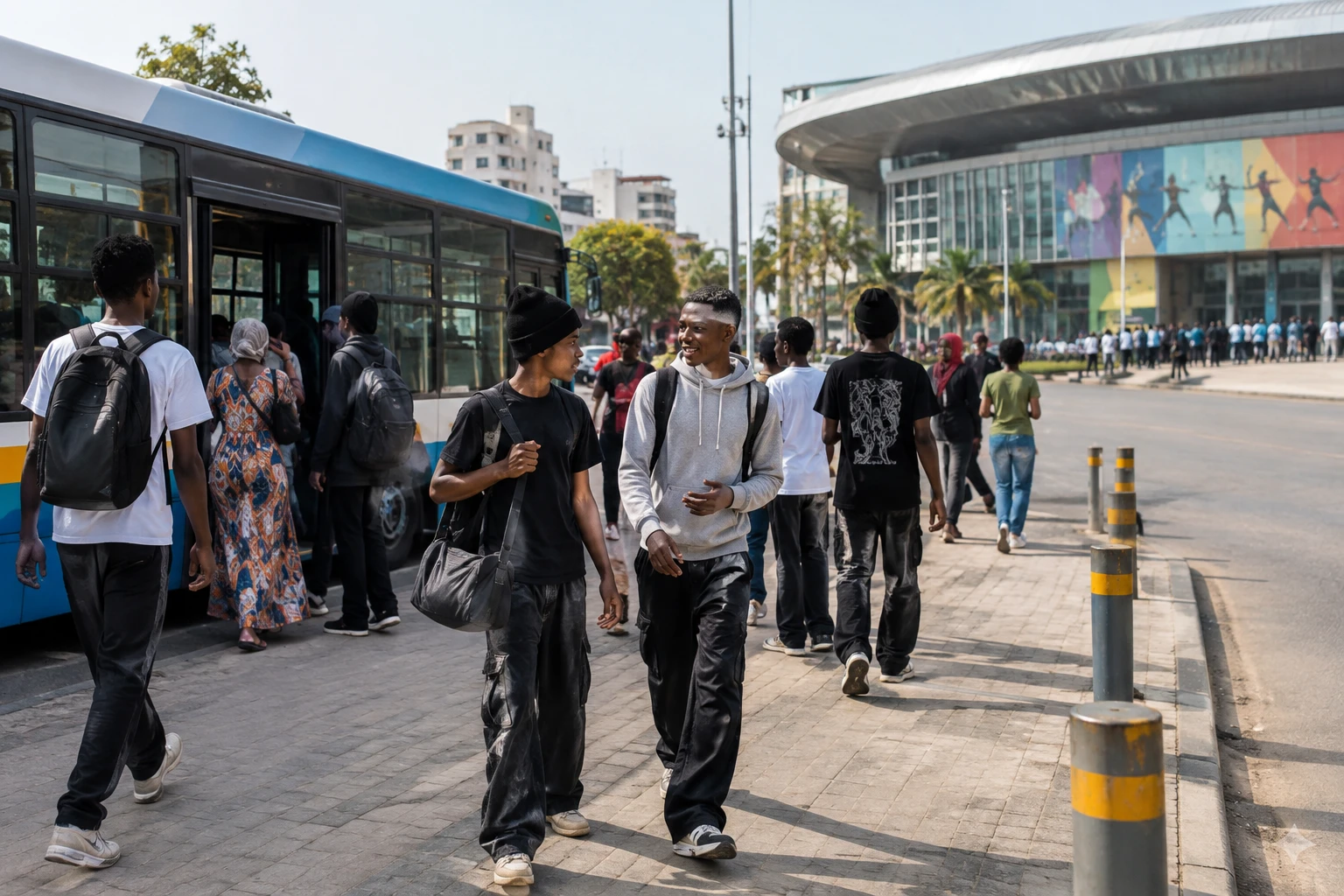
In Dakar, breaking found an audience even before the medals were at stake. On Thursday 12 November, at the Tour de l’Œuf Complex, spectators watched the first clashes between the B-Girls, dancers who combine rhythm, acrobatic moves and improvisation. From the stands, cheers accompanied each performance. For young Senegalese people, the Olympic stage has also become an invitation to dance.
A competition that speaks to young people
Twelve athletes aged 14 to 17 took part in the first women’s events. The day on 12 November was devoted to group-stage qualifiers and head-to-head battles. The quarter-finals and medal contests were scheduled for Friday 13 November. The official Games timetable confirms this two-stage progression.
Breaking differs from disciplines in which each athlete presents a performance prepared in advance. The dancers respond to music they hear for the first time. They alternate floor moves, balances and power moves, while seeking to impose their own style. Judging considers technique, musicality, creativity and how they respond to their opponent.
In the crowd, a ten-year-old schoolgirl who had come with her class said she was discovering the discipline for the first time and wanted to dance. This kind of reaction gives the competition another measure of its impact: beyond the rankings, the event brings an artistic and sporting practice into direct contact with young people in the host country.
Senegalese breaking was represented by Suzz, who faced, among others, France’s Queen Lolita in the group stage. Morocco’s Nawel, aged 15 and competing internationally for the first time, also took part in the qualifiers. Results published by the organisers and pan-African sports outlet Sport News Africa confirm the athletes’ presence and the course of the battles. Their campaigns did not, however, come down to a single duel: the dancers competed in several rounds before the quarter-final places were decided.
Dakar, the first African city to host the Youth Olympic Games
The events form part of a historic occasion for Senegal. Dakar is hosting the Summer Youth Olympic Games from 31 October to 13 November 2026, the first Olympic competition to be held on the African continent. Events are taking place in Dakar, Diamniadio and Saly. Breaking is being held at the Tour de l’Œuf Complex, a venue adapted to host several urban sports.
For Dakar, the challenge goes beyond welcoming delegations. The Games bring venues into view and bring international competitions closer to residents. People attending with schools or relatives can discover disciplines that are less established in traditional sports programmes. But this visibility alone does not guarantee that local clubs will later have more time slots, coaching or equipment.
At regional level, the Youth Olympic Games put Senegal at the centre of an event followed by delegations from around the world. The country is a member of ECOWAS, the economic and political organisation of West African states. Although breaking is not an ECOWAS competition, its presence in Dakar provides a regional showcase for a discipline practised in several African countries, including Morocco and Senegal. The presence of young African women in the battles is a reminder that the scene is not limited to the usual major sporting capitals.
An Olympic discipline seeking continuity
Breaking made its Olympic debut in Paris in 2024. It is not included in the programme published for Los Angeles 2028. Its absence has prompted questions among dancers and federations about the discipline’s Olympic continuity. In Dakar, Nawel argued for its return at the Brisbane 2032 Games, emphasising breaking’s appeal to young people who want to dance and be active.
This demand highlights a challenge particular to emerging sports: an Olympic presence can speed up recognition, attract partners and encourage the creation of training structures. But it can also leave a gap between editions if the discipline disappears from the programme. For athletes, the uncertainty concerns visibility as much as career prospects and access to top-level competitions.
Breaking also takes shape at the intersection of sport and urban culture. Its improvisational dimension sets it apart from a discipline governed entirely by rules, even though judges apply common criteria to distinguish between performances. A dancer who had come to support his brother, competing for Senegal, summed up this difference by pointing to the freedom and the chance to break down established rules. This personal expression is an essential part of breaking’s appeal, without diminishing the physical and technical demands of the battles.
After the applause, the question of legacy
The public turned out in force: the World DanceSport Federation said tickets for the breaking events had sold out, making the discipline the first sport at the Dakar 2026 Youth Olympic Games to be declared a sell-out. This points to genuine interest in the spectacle. It does not yet show whether that enthusiasm will endure in Senegalese neighbourhoods and associations.
The next milestone is imminent: the Youth Olympic Games finals take place on 13 November, before the Games close. After that, attention will turn to breaking’s place in international circuits and to the ability of local stakeholders to sustain the momentum created in Dakar. For young spectators, the legacy could also be simpler and more tangible: finding a place to learn, train and perform.