
 Algeria
 Egypt
 Libya
 Morocco
 Sudan
 Tunisia
 Benin
 Burkina Faso
 Cabo Verde
 Côte d'Ivoire
 Ghana
 Guinea
 Guinea-Bissau
 Liberia
 Mali
 Mauritania
 Niger
 Nigeria
 Sierra Leone
 The Gambia
 Togo
 Cameroon
 Central African Republic
 Chad
 DR Congo
 Equatorial Guinea
 Gabon
 Republic of the Congo
 São Tomé and Príncipe
 Burundi
 Comoros
 Djibouti
 Eritrea
 Ethiopia
 Kenya
 Madagascar
 Malawi
 Mauritius
 Mozambique
 Rwanda
 Seychelles
 Somalia
 South Sudan
 Tanzania
 Uganda
 Angola
 Botswana
 Eswatini
 Lesotho
 Namibia
 South Africa
 Zambia
 Zimbabwe
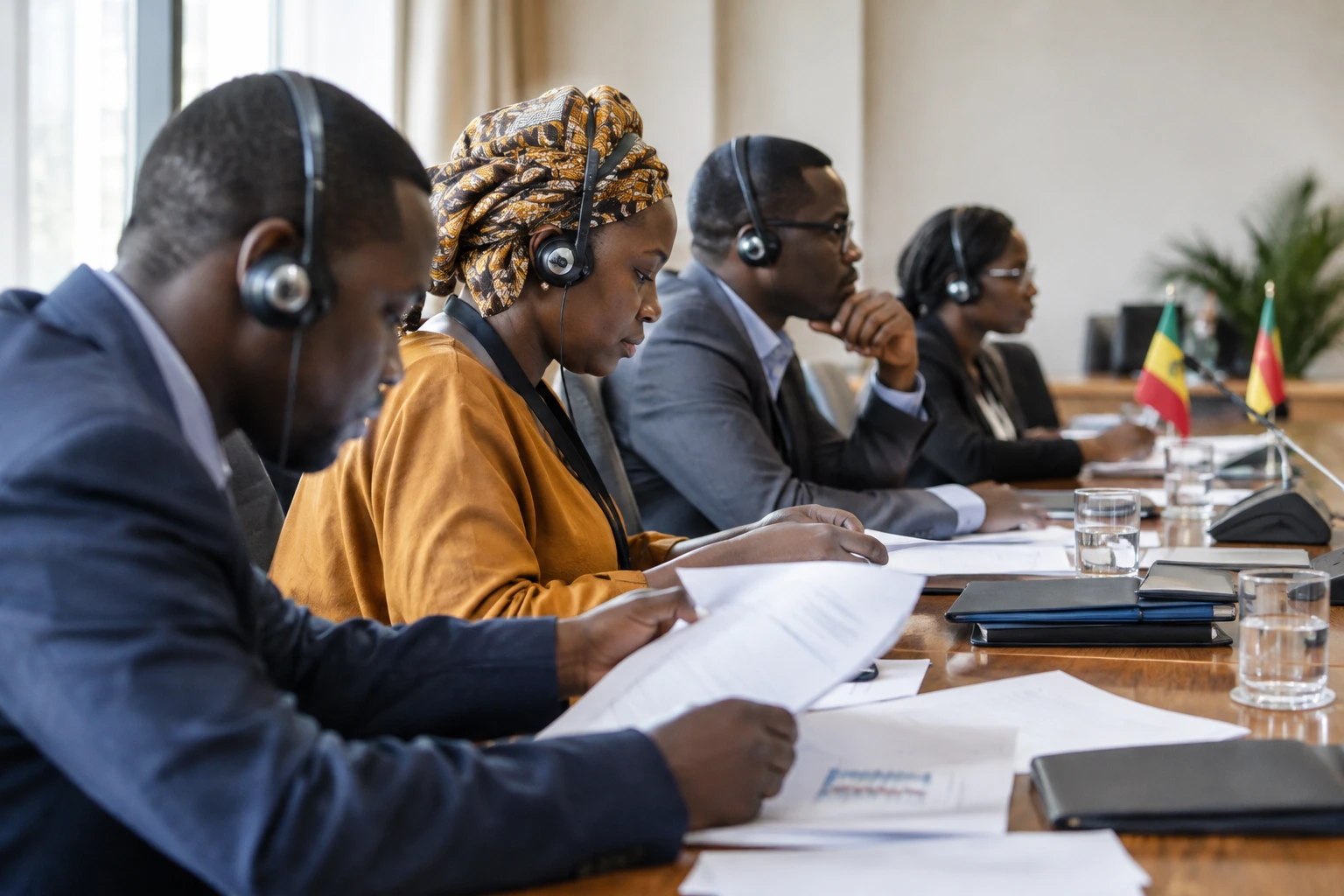
In Dakar, the budget debate is no longer just about the state’s priorities. It also concerns Senegal’s ability to finance its spending and restore confidence in its public accounts. The committee’s rejection of the 2027 budget bill opens a new test of relations between the government and its parliamentary majority.
A dispute that goes beyond the figures
The National Assembly’s Finance and Budgetary Control Committee rejected several parts of the initial 2027 finance bill. On 7 November, it notably rejected revenue and public debt forecasts, as well as several institutional budgets. In the following days, ministerial budgets were also rejected, according to reports by the Senegalese Press Agency (APS) and local media.
The dispute is part of a broader sequence of events. On 3 November, the National Assembly had rejected the 2026 supplementary finance bill. MPs from Pastef, the majority party, cited doubts about the reliability of the forecasts and called for documents on debt and investment execution. The government disputes the challenge to the 2027 budget and argues that rejecting the supplementary bill is not enough to invalidate the assumptions underpinning the following year’s proposal.
The disagreement is therefore both financial and institutional. MPs are demanding information to scrutinise the executive’s choices. The government, for its part, is defending a recovery timetable and says its projections remain consistent. These positions have been reported by both sides and do not, in themselves, demonstrate whether the figures are valid or invalid.
Heavy debt, a programme still conditional
The proposed budget forecasts revenue of about CFAF 5,653.9bn and spending of CFAF 7,005.6bn, a gap of nearly CFAF 1,352bn. This projected deficit gives a sense of the effort required of the state. It should not, however, be confused with the deficit already recorded: it is a forecast for the 2027 financial year.
The burden also stems from the legacy of the public accounts. The Senegalese government has said that consolidated public sector debt stood at about 132% of gross domestic product at the end of 2024, after additional liabilities were taken into account. This level, reported by the authorities, makes financing more costly and reduces the scope available for investment and public services.
On 1 September 2026, International Monetary Fund (IMF) staff and the Senegalese authorities reached a staff-level agreement on a 36-month programme worth about $2.2bn. This staff-level agreement does not yet amount to approved financing: the IMF says it remains subject to consideration by its management and executive board. The Fund also cited corrective measures relating to previous fiscal reporting and the need to secure financing assurances from Senegal’s partners.
The parliamentary budget is therefore an important part of the process, but the public information reviewed does not support the claim that its adoption alone would trigger the loan. The issue is broader: presenting an economic framework that is credible, documented and implementable within Senegal’s institutions. This distinction matters because it avoids reducing discussions with the IMF to a single vote or condition.
What the deadlock could mean in everyday life
A budget sets out the state’s revenue, spending and borrowing authorisations. When its assumptions are disputed, uncertainty can affect public administrations, companies awaiting payment for public contracts and local authorities that depend on transfers. Households may also feel the effects of spending decisions, particularly if investment or social spending is delayed.
The government has justified its budget choices by citing a fall in some revenues and an increase in costs, while some MPs question the basis for the calculations and are calling for more supporting documents. These disagreements have a tangible consequence: even before the final vote, they make state spending less predictable and fuel uncertainty about the pace of payments and projects.
For businesses, the question is not limited to the amount of external financing. Clear accounts and the ability to meet announced commitments also affect the terms on which the state can borrow. For MPs, budgetary scrutiny is a constitutional power. For the executive, continuity of public services requires a financial framework to be adopted on time. Any compromise will need to meet both requirements without confusing parliamentary oversight with a prolonged deadlock.
A development being watched across the region
Senegal is a member of the West African Economic and Monetary Union (WAEMU), which shares the CFA franc and applies common economic convergence rules. It is also a member of the Economic Community of West African States (ECOWAS), a framework for regional co-operation. Senegal’s budget tensions do not determine the situation of these organisations on their own, but they are a reminder of the importance of transparent accounts and access to financing for the region’s economies.
Senegal’s trajectory is attracting particular attention following the disclosure of discrepancies in debt and deficit data from previous years. The authorities must now reconcile recovery, parliamentary scrutiny and the maintenance of spending that supports economic activity. The next step will be to see whether the government and MPs can agree on updated assumptions while advancing the corrective measures and assurances required for the IMF programme.
The available facts are reported by the Senegalese Press Agency on the dispute over the budget, in the IMF statement on the staff-level agreement and in Senegalese documents presenting the 2027 budget.



