Algeria
 Egypt
 Libya
 Morocco
 Sudan
 Tunisia
 Benin
 Burkina Faso
 Cabo Verde
 Côte d'Ivoire
 Guinea
 Guinea-Bissau
 Liberia
 Mali
 Mauritania
 Niger
 Nigeria
 Senegal
 Sierra Leone
 The Gambia
 Togo
 Cameroon
 Central African Republic
 Chad
 DR Congo
 Equatorial Guinea
 Gabon
 Republic of the Congo
 São Tomé and Príncipe
 Burundi
 Comoros
 Djibouti
 Eritrea
 Ethiopia
 Kenya
 Madagascar
 Malawi
 Mauritius
 Mozambique
 Rwanda
 Seychelles
 Somalia
 South Sudan
 Tanzania
 Uganda
 Angola
 Botswana
 Eswatini
 Lesotho
 Namibia
 South Africa
 Zambia
 Zimbabwe
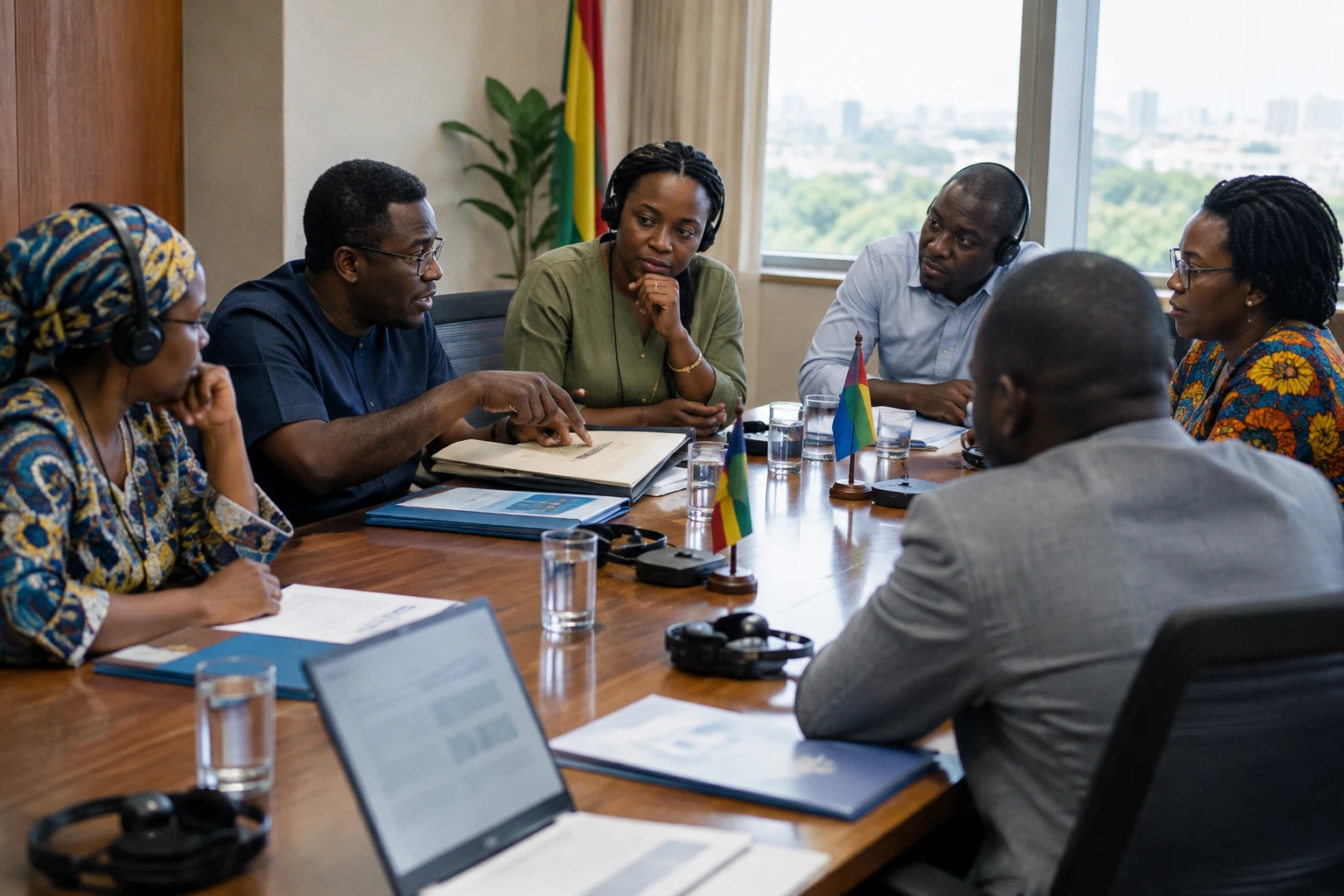
In northern Ghana, Pwalugu’s stakes go beyond electricity generation. Farmers are waiting for better-managed water, while riverside communities are seeking to reduce their exposure to floods. But after years of delays, the $1bn announcement raises a practical question above all: how can a budget pledge be turned into a lasting construction project?
A project at the intersection of water, energy and agriculture
The dam is planned on the White Volta in the north-east of the country, within a basin shared with Burkina Faso. The river crosses a border where water management has direct consequences downstream. Releases from Burkina Faso’s Bagré Dam can contribute to flooding in riverside areas of Ghana. Pwalugu must therefore meet local needs while forming part of cross-border management.
In Ghana, the infrastructure is presented as a tool for agricultural transformation. Irrigation could serve about 25,000 hectares, according to figures set out in the 2027 budget. The aim is to support year-round vegetable production rather than rely solely on rainfall. The project would also combine aquaculture, flood protection and water supply.
This ambition is set against a mixed economic reality. The northern regions have significant agricultural land and activity, but reliable access to water, electricity, storage and markets remains crucial to producers’ incomes. Irrigation alone does not guarantee higher incomes: roads, markets, storage facilities and buyers are also needed.
A new deadline after prolonged delays
On 12 November 2026, Ghana’s Finance Minister, Cassiel Ato Forson, presented the 2027 budget to Parliament and announced a public investment of $1bn to complete Pwalugu. The government is targeting a first phase in early 2029, followed by full completion in December 2030.
The announced specifications do not all match the initial plans. The project outlined in the budget provides for 70 megawatts of hydropower. It also includes 1,000 aquaculture cages in the reservoir and irrigation covering about 25,000 hectares. These figures differ from some information circulating about the project: the budget figures are the reference here for the new announcements.
The initial plan, launched in 2019 under President Nana Akufo-Addo, combined a 60-megawatt hydroelectric power station with a 50-megawatt solar installation. The Volta River Authority, the state body responsible, among other things, for electricity generation, had presented a project combining energy, irrigation and flood control. The current scope of the solar component remains to be clarified in light of the specifications announced in 2026.
Construction has not followed its original timetable. In March 2026, Energy and Green Transition Minister John Abdulai Jinapor told Parliament that the preliminary investigation had found no payment to the contractor for work carried out. This statement conflicts with earlier disputes over about $11.9m linked to the project. The Ghana Irrigation Development Authority had previously explained that the sum was a mobilisation advance backed by a bank guarantee. The financial circumstances should therefore be presented with caution: public accounts differ, and the announced investigation is expected to establish responsibility.
The government now plans to implement the project in stages, giving priority to energy infrastructure first. However, the announcement of an overall allocation does not yet specify its disbursement timetable, the share to be funded from domestic resources or any potential partners. These factors will affect the credibility of the deadlines, in a country that must weigh up its investments while ensuring the sustainability of its public finances.
Benefits will depend on delivery
For farmers, the main expected benefit is a more reliable water supply, with the possibility of expanding or diversifying crops. Hydropower could also supply processing facilities, irrigation systems and cold-storage warehouses. Such equipment can reduce post-harvest losses and make it possible to sell processed products rather than depend solely on sales of raw crops.
But the benefits will not be distributed automatically. Farms close to canals or infrastructure could benefit sooner than more distant producers if secondary networks are slow to be built. Small farms and informal businesses will also depend on rules governing access to water, the cost of services and their ability to reach markets. Planning will need to involve affected communities and take account of local uses of the river and the risks associated with displacement or changes to land.
The promise of flood protection also warrants a measured assessment. A dam can regulate some flows, but it does not eliminate all flood risks. Its effectiveness will depend on reservoir management, downstream warnings, maintenance of the infrastructure and coordination with Burkina Faso. In a transboundary basin, sharing hydrological information matters as much as the dam’s technical capacity.
Regional significance, evidence still to come
The project directly concerns cooperation between Accra and Ouagadougou over the White Volta. It highlights how national water infrastructure affects areas beyond national borders and why regional coordination mechanisms are essential. Ecowas, the Economic Community of West African States, provides a framework for regional dialogue, but day-to-day management of the basin primarily requires technical exchanges between the authorities concerned.
For Ghana, Pwalugu tests the state’s ability to turn a major announcement into measurable services: kilowatt-hours generated, land actually irrigated, agricultural losses avoided and operational flood warnings. The next milestone will be the first phase announced for early 2029. Until then, contracts, detailed financing, visible construction work and water-management arrangements will show whether the project is on track to meet its revised timetable.