Algeria
 Egypt
 Libya
 Morocco
 Sudan
 Tunisia
 Benin
 Burkina Faso
 Cabo Verde
 Côte d'Ivoire
 Ghana
 Guinea-Bissau
 Liberia
 Mali
 Mauritania
 Niger
 Nigeria
 Senegal
 Sierra Leone
 The Gambia
 Togo
 Cameroon
 Central African Republic
 Chad
 DR Congo
 Equatorial Guinea
 Gabon
 Republic of the Congo
 São Tomé and Príncipe
 Burundi
 Comoros
 Djibouti
 Eritrea
 Ethiopia
 Kenya
 Madagascar
 Malawi
 Mauritius
 Mozambique
 Rwanda
 Seychelles
 Somalia
 South Sudan
 Tanzania
 Uganda
 Angola
 Botswana
 Eswatini
 Lesotho
 Namibia
 South Africa
 Zambia
 Zimbabwe
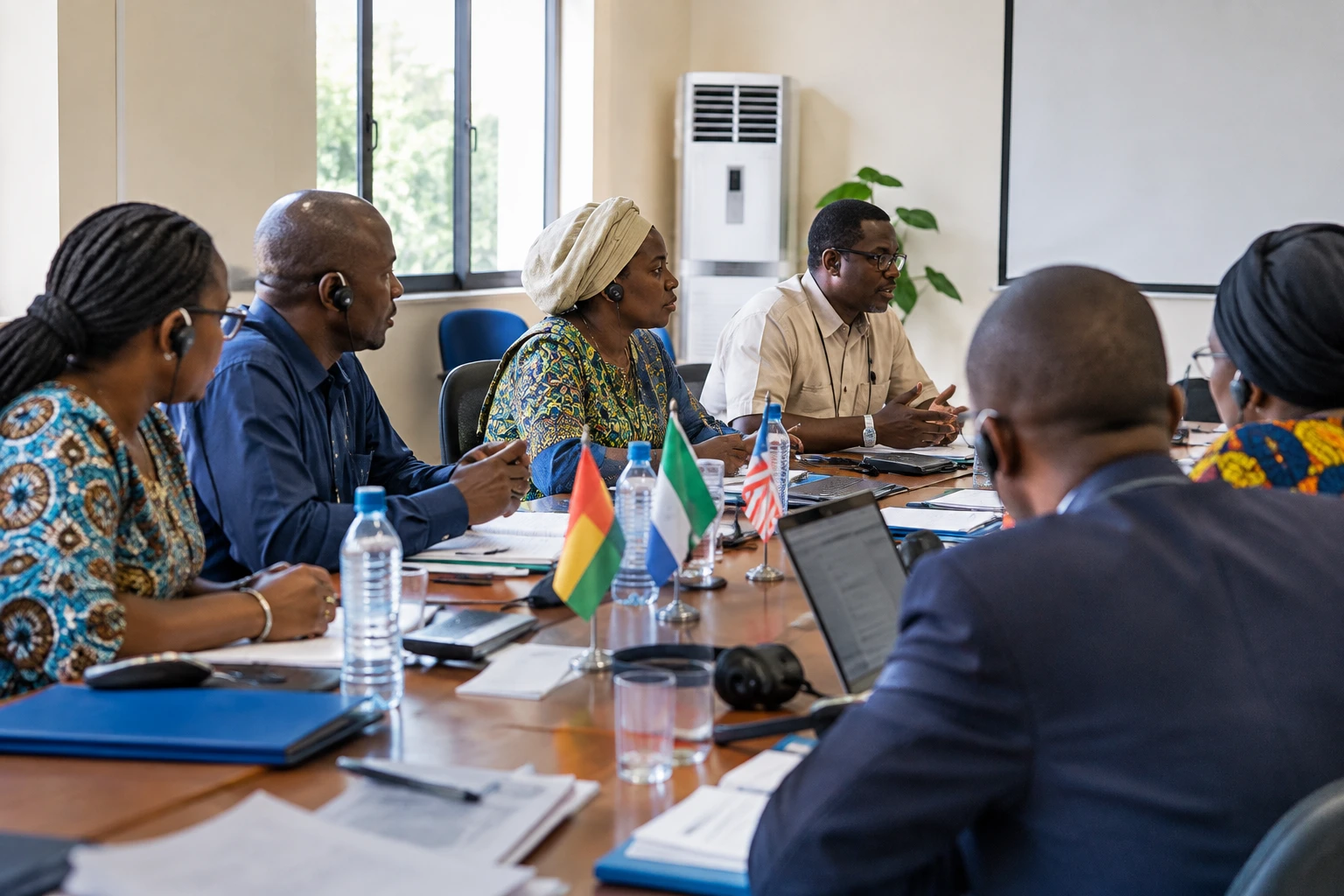
In Guéckédou, a city in south-eastern Guinea marked by the 2014 Ebola epidemic, health cooperation extends beyond borders. For residents of areas where cross-border travel is a daily occurrence, rapid alerts and shared information can matter as much as checks at major entry points.
Monitoring borders together
Guinea, Liberia and Sierra Leone are members of the Mano River Union, a regional cooperation organisation that also includes Côte d’Ivoire. Their borders link communities and markets. They are therefore not just lines of control: they shape the movements of families, traders and workers.
From 11 to 13 November 2026, representatives of the three countries are meeting in Guéckédou at the initiative of Guinea’s Ministry of Health and Public Hygiene, through the National Health Security Agency (ANSS). The ministry says discussions are to focus on border alerts, the sharing of health information and a joint roadmap. Details of the roadmap have not been made public in the information consulted.
The meeting comes as an outbreak of Bundibugyo virus disease, a species of Ebola virus, affects several countries in central and eastern Africa. The World Health Organization (WHO) says an imported case was confirmed in Nigeria on 20 October, in a woman who had recently arrived from Uganda. As of 9 November, according to the Nigeria Centre for Disease Control and Prevention (NCDC), no other cases had been confirmed. Of 62 identified contacts, 34 had completed their 21-day follow-up and 28 remained under monitoring.
In the Democratic Republic of the Congo (DRC), the main outbreak centre, figures depend on the date on which they were compiled. The WHO reported 10,668 confirmed cases and 5,198 deaths as of 3 November, across eight provinces. These figures, which change as investigations and laboratory confirmations proceed, should not be confused with more recent totals or those compiled using a different method.
A regional response built over time
The Guéckédou meeting is part of a long-standing regional experience. In 2014, during the major West African Ebola epidemic, the heads of state of the Mano River Union met in Conakry. Their joint declaration provided, among other things, for coordination in border areas and improved information-sharing. The WHO considers the 2014-2016 epidemic to have been the largest Ebola outbreak recorded since the virus was discovered.
Cooperation is not limited to Ebola. In June and July 2022, health officials from Guinea, Liberia and Sierra Leone met in Guéckédou to discuss Lassa fever. The meeting resulted in a roadmap and preparatory work towards an information-sharing agreement. This precedent is a reminder that a meeting produces lasting effects only if agreed procedures are funded, understood and implemented by local teams.
The current context presents another challenge: the virus in circulation is Bundibugyo. Available tools for other species of Ebola virus do not automatically apply to this strain. Surveillance, the rapid identification of symptoms, treatment and contact tracing therefore remain essential. A delayed alert can complicate the response by health teams, particularly in places far from major centres.
From protocol to resources on the ground
For Guinea, the challenge is to ensure that information flows between national services and staff based near the borders. For Liberia and Sierra Leone, coordination with Conakry can help identify a health alert earlier on the other side of a border. But this cooperation does not replace local healthcare: it must also direct sick travellers to facilities able to treat them without delay.
The effects of measures can vary from one area to another. Airports and major roads are easier to monitor than the crossings used by residents of border areas. Poorly explained checks risk disrupting travel and commercial activity. Conversely, clear guidance, trained teams and trusted local contacts can make it easier to report concerns without reducing communities to an epidemic risk.
Nigeria’s experience also illustrates the value of precise follow-up: the authorities distinguish between the imported case, contacts being monitored and people who have completed their monitoring period. This information helps assess the situation without conflating the risk of importation with local transmission. In Kenya, the WHO has also documented cases linked to an initial imported infection, while Uganda announced the end of its outbreak in August 2026.
A test for West African cooperation
The Guéckédou meeting does not mean that Ebola is present in Guinea. It reflects preparedness in response to documented regional spread, including the imported case in Nigeria. The distinction matters: providing information without causing alarm helps preserve trust, which is essential if people are to report exposure or symptoms promptly.
ECOWAS, which brings together West African states, provides a broader regional framework for health consultations. But the Mano River Union’s arrangements are particularly relevant here: they bring together countries directly linked by borders and a shared history of response. The initiative’s impact will depend on how it is connected to national and regional mechanisms, and on whether information continues to be exchanged after the meeting.
The next step to watch will be the publication and implementation of the announced roadmap: who sends the alert, to which authorities, within what timeframe, and with what resources? Without operational answers, coordination risks remaining at the level of commitments. With tested procedures, well-equipped teams and information accessible to the public, the three countries can strengthen their ability to act early, without waiting for an emergency to cross their borders.
WHO data on the Bundibugyo outbreak · Contact monitoring by Nigeria’s NCDC · 2014 Mano River Union declaration