
 Algeria
 Egypt
 Libya
 Morocco
 Sudan
 Tunisia
 Benin
 Burkina Faso
 Cabo Verde
 Côte d'Ivoire
 Ghana
 Guinea
 Guinea-Bissau
 Liberia
 Mali
 Mauritania
 Niger
 Nigeria
 Senegal
 Sierra Leone
 The Gambia
 Togo
 Central African Republic
 Chad
 DR Congo
 Equatorial Guinea
 Gabon
 Republic of the Congo
 São Tomé and Príncipe
 Burundi
 Comoros
 Djibouti
 Eritrea
 Ethiopia
 Kenya
 Madagascar
 Malawi
 Mauritius
 Mozambique
 Rwanda
 Seychelles
 Somalia
 South Sudan
 Tanzania
 Uganda
 Angola
 Botswana
 Eswatini
 Lesotho
 Namibia
 South Africa
 Zambia
 Zimbabwe
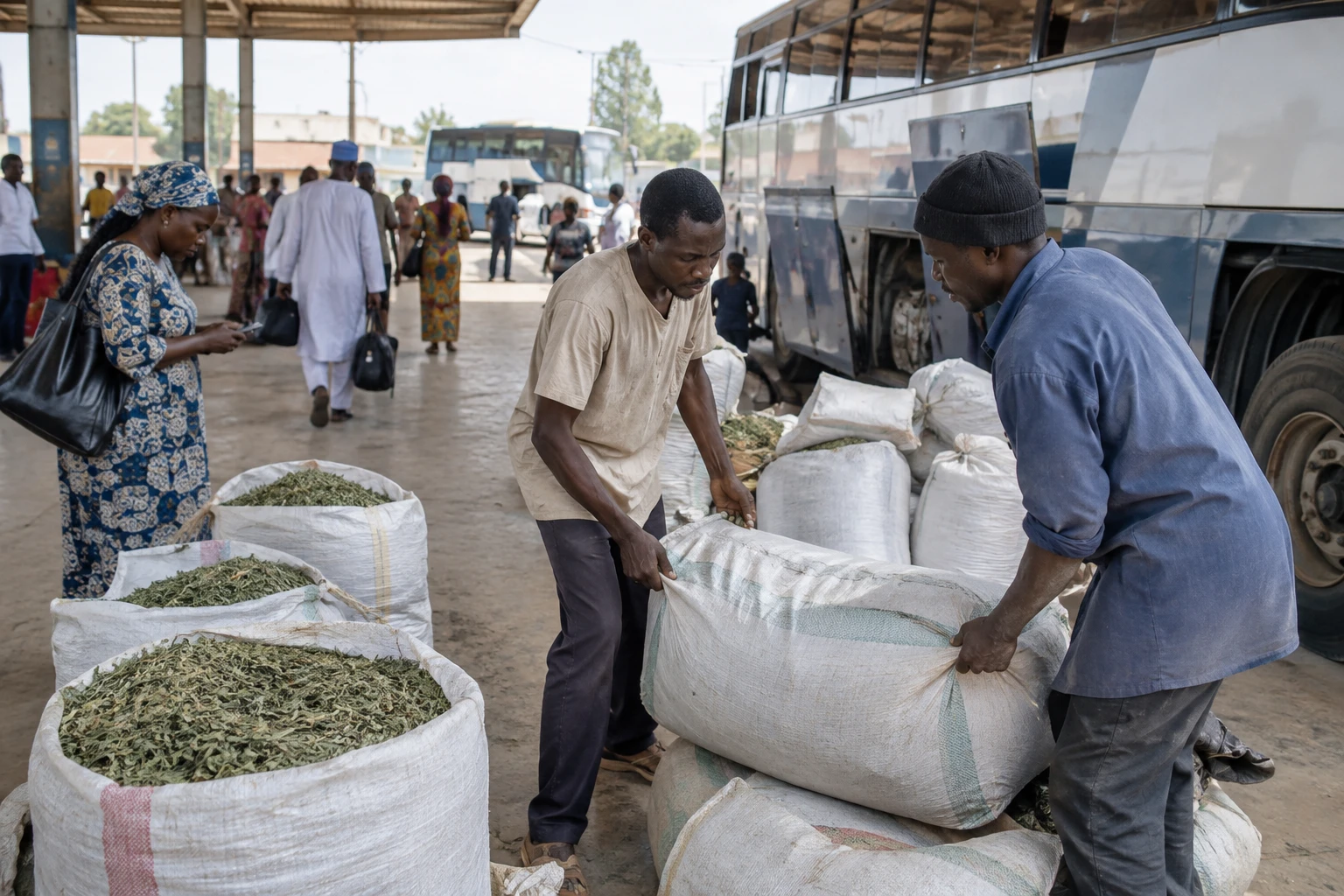
Between moringa fields in northern Cameroon and the shelves of a shop near Toulouse, a small-scale supply chain is taking shape. It links farming families, a diaspora entrepreneur and consumers in France. But shipping a plant is not enough: its quality, processing and access to markets must also be managed.
An enterprise linking Garoua with the diaspora
The Les Saveurs de Keha brand was founded by Caline Ngo Biyong, a Cameroonian entrepreneur based in the Toulouse region. Her business draws on plants and spices from Cameroon, as well as Côte d’Ivoire and Senegal. Moringa, hibiscus, lemongrass and Penja pepper are among the products she processes or sells.
In northern Cameroon, families grow and dry the moringa sold to the brand. One supplier quoted in the report says orders can range from a 20-kilogram sack to several hundred kilos. He describes a tangible market outlet for producers working at family scale. This account illustrates an activity, but is not enough on its own to establish how many people benefit or what their incomes are.
Moringa has long been present in the Garoua region. The National Museum of Natural History holds a specimen of the plant collected in the Benue Valley, near Garoua, in 1964. More recently, a FAO document on non-timber forest products in Central Africa describes groups in Cameroon that grow, process and market moringa, particularly in the north of the country. These details place the initiative within an existing body of local expertise and economic activity.
The botanical collection of the National Museum of Natural History and a FAO report on forest-product supply chains in Central Africa document this presence and processing activities in northern Cameroon.
From family tradition to commercial product
The founder says she learnt how to combine plants from her mother, who has used them for a long time in Yaoundé. She says she began by offering infusions before expanding her range to spices and condiments as demand grew. Her journey from Yaoundé to Tunis and then France thus brings together family tradition and training in the sociology of food.
This personal story gives the brand its identity. It does not, however, replace the requirements for selling food products. Plants must be sorted, dried, stored and transported in suitable conditions. The final product must also be properly labelled and comply with the rules of the market where it is sold.
The company says it has bacteriological analyses and pesticide-residue tests carried out on its products in France. This process is described on the company’s website. This is a statement by the brand, rather than publicly available test results for each batch. The distinction matters: European controls set requirements for imported products, while private testing can help a company check its supplies.
The European Commission says imported plant-based foodstuffs must comply with European Union rules on pesticide residues. Official controls may also target products entering the Union. For a small business, compliance is therefore both a food-safety issue and an operating cost: testing, documents, traceability and batch management.
Value added at every stage of the supply chain
The model brings together several stages: growing in Cameroon, preparation and drying upstream, importing, checks, packaging and sales in France. Processing and marketing make it possible to sell more than a raw commodity. But the value created does not automatically go to growers. It depends on purchase prices, the regularity of orders, transport costs and the terms negotiated between suppliers and buyers.
For the families who grow the crop, an order of several sacks can provide a useful market outlet. It does not, however, guarantee a steady income throughout the year. Small-scale producers remain exposed to fluctuations in harvests, drying difficulties and logistical challenges. More predictable contracts, quality criteria that everyone understands and transparent payment can strengthen the supply chain beyond a one-off commercial relationship.
In France, specialist shops and online sales provide access to products associated with African cuisines and consumption habits. A shop assistant in Muret describes her customers’ interest in infusions and spices. Her account offers insight into the experience of this outlet, but does not allow conclusions to be drawn about the market as a whole.
The brand also says it works with families growing moringa in Cameroon and promotes several products of Cameroonian origin. These details are presented on its official website. The company also sells products from other African countries, so its offer is not the same as an exclusively Cameroonian supply chain.
A regional issue beyond one brand
For Cameroon, the significance of this initiative lies less in its volume, which has not been publicly established, than in the possibility of better linking agricultural production with external markets. The country belongs to CEMAC, the Economic and Monetary Community of Central Africa. Across the region, the development of small-scale processed-product supply chains raises shared questions: standards, infrastructure, access to finance and the ability to negotiate a larger share of the value.
Sales in France offer a showcase, but also create dependence on a distant market and its requirements. Further processing in Cameroon, pooling checks and diversifying buyers could reduce this dependence. These are development options, not results already demonstrated by the company’s experience.
The next stage will depend on the ability to maintain quality, secure regular orders and make supply conditions clear to producers. For Cameroonians, the question is whether such initiatives can strengthen local incomes and lead to more processing at home. For the diaspora, they show that commercial links with the country of origin can also be built around everyday products, without reducing Cameroonian agriculture to a mere export promise.



