Algeria
 Egypt
 Libya
 Morocco
 Sudan
 Tunisia
 Benin
 Burkina Faso
 Cabo Verde
 Côte d'Ivoire
 Ghana
 Guinea-Bissau
 Liberia
 Mali
 Mauritania
 Niger
 Nigeria
 Senegal
 Sierra Leone
 The Gambia
 Togo
 Cameroon
 Central African Republic
 Chad
 DR Congo
 Equatorial Guinea
 Gabon
 Republic of the Congo
 São Tomé and Príncipe
 Burundi
 Comoros
 Djibouti
 Eritrea
 Ethiopia
 Kenya
 Madagascar
 Malawi
 Mauritius
 Mozambique
 Rwanda
 Seychelles
 Somalia
 South Sudan
 Tanzania
 Uganda
 Angola
 Botswana
 Eswatini
 Lesotho
 Namibia
 South Africa
 Zambia
 Zimbabwe
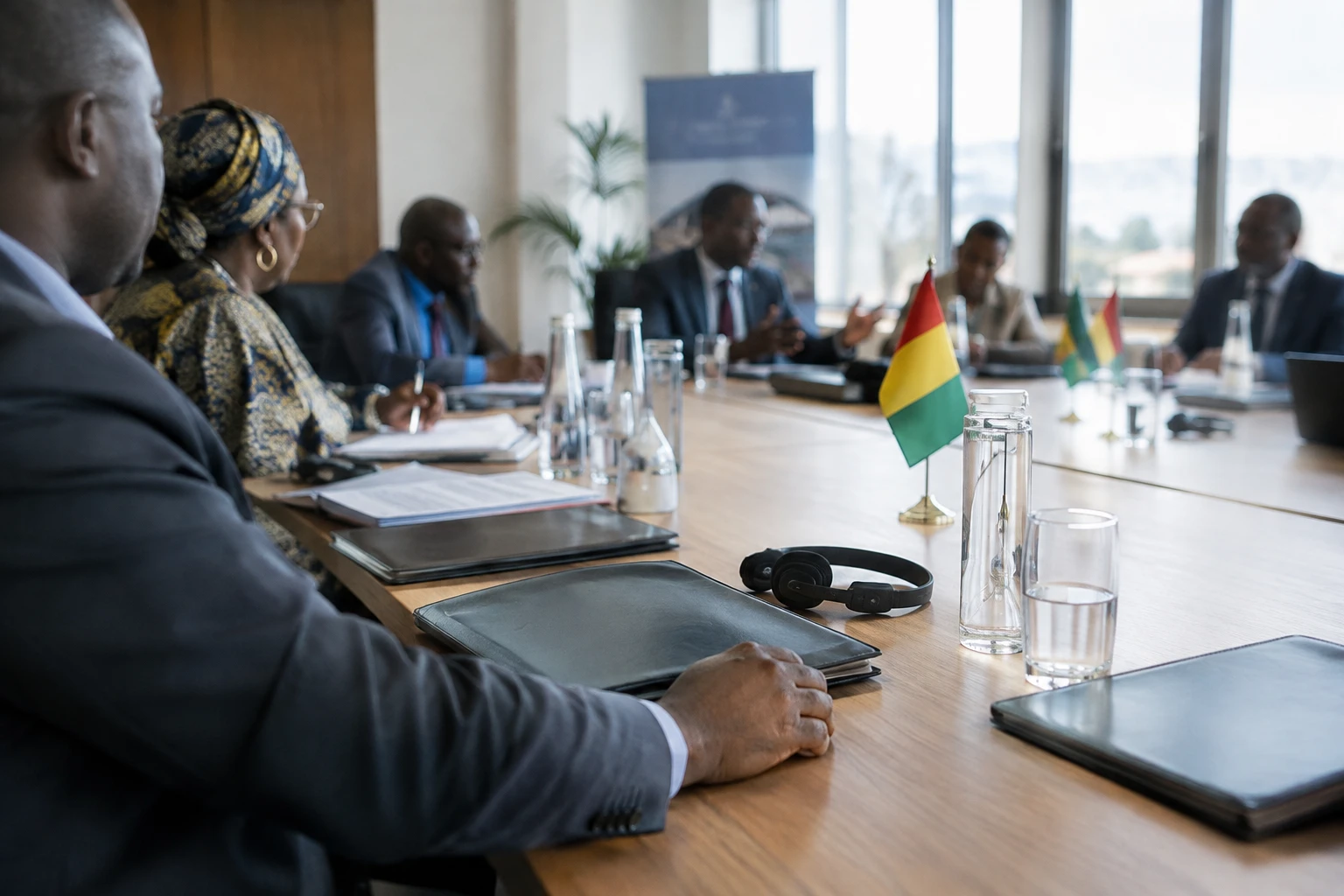
Funding schools, roads and hospitals without weakening public finances: this is the balance Conakry will have to strike as it prepares the 2027 budget. Economy Minister Mariama Ciré Sylla has cited a state deficit of around 2.5% of gross domestic product (GDP), higher than the level forecast for 2026.
A rising deficit, but one still to be clarified
The figure announced on 12 November at the Simandou Mining Summit remains a forecast. The 2027 draft finance bill, expected in the coming weeks, will have to specify the amount in Guinean francs and explain the choices behind it. It will also be necessary to distinguish the state budget from the accounts of all public administrations: these perimeters do not cover the same spending or revenue.
For 2026, the revised budget forecasts a deficit of 7,861 billion Guinean francs, or 2.01% of GDP, compared with 2.07% in the initial finance law. Guinean media also reported these figures after the bill was examined by the National Assembly. The comparison with 2027 therefore suggests a gap of about half a percentage point, but this will need to be checked when detailed budget documents are published. The Guinean report on the 2026 revised budget details the main trade-offs.
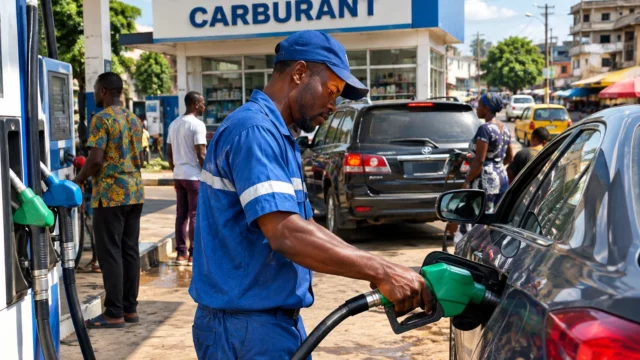
In 2026, the increase in current spending was notably linked to keeping pump prices for fuel unchanged amid rising global oil prices. At the same time, investment allocations were postponed. The minister explained that some projects were not sufficiently prepared, partly because studies or site development work were still needed. Postponement can avoid launching poorly planned operations; it also delays infrastructure expected by residents and businesses.
Public revenue and project financing
The government is counting on improved tax collection to widen its room for manoeuvre. The digitisation of tax and customs procedures makes it easier to track payments, while tighter controls aim to limit fraud. The results announced for 2025 will need to be compared with detailed budget documents: rising revenue alone is not enough to measure the state’s ability to fund its priorities sustainably.
Mobilising domestic savings is another lever. The bond issue launched in 2026 attracted subscriptions worth 4,579 billion Guinean francs, according to Guinea’s Ministry of Economy, Finance and Budget. This exceeds the initial target of 2,500 billion. The operation shows that domestic financing can contribute to public investment, but it also creates an obligation for the state to repay the principal and interest. The official results of Guinea’s bond issue indicate a five-year maturity and an annual rate of 11%.
Conakry is also preparing its first borrowing on international markets, often called a eurobond when issued in foreign currency. This source could broaden available financing, but it would expose the budget more to market conditions and exchange-rate fluctuations. The timetable and terms of the operation have not yet been made public. They will be decisive in assessing its real cost and how it fits with debt contracted on the domestic market.
The minister is also awaiting a decision by the International Monetary Fund’s executive board on a financing programme worth about $425 million. IMF staff announced a 41-month agreement in principle under the Extended Credit Facility in August 2026; final approval was then up to the executive board. A programme of this kind provides financing, but also comes with an economic policy and monitoring framework. The IMF statement on the agreement reached with Guinea sets out the broad policy directions discussed.
Simandou, growth and social trade-offs
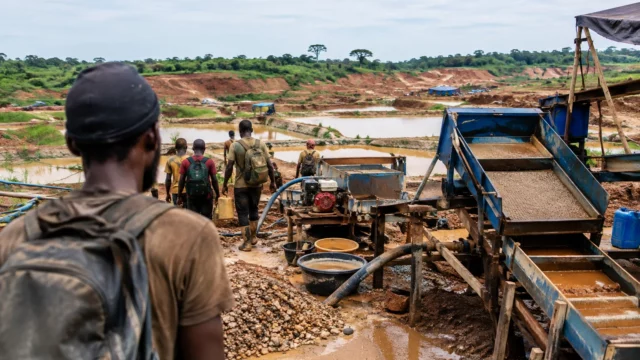
These budget choices are part of an economic transformation driven in part by the Simandou mining project and the infrastructure intended to connect it to the coast. Expected growth could increase public revenue, particularly from mining. But the benefits will also depend on the ability to diversify the economy, develop local businesses and turn revenue into services and facilities accessible beyond major projects.
The deficit estimated by the minister should not be confused with projections covering all public administrations. The African Development Bank, for its part, forecasts a public deficit of 3.7% of GDP in 2027, partly because of infrastructure needs, subsidies and transfers. These figures are not directly comparable with the 2.5% rate cited for the state budget alone. The AfDB’s economic outlook for Guinea gives this broader perimeter.
For households, the issue lies in how spending is allocated in practice: support for purchasing power, access to healthcare and education, local roads or energy projects. For businesses, the consistency of public investment and payments matters as much as announcements of new financing. And for the state, the challenge is to maintain revenue and control borrowing costs while preparing projects before they are included in the budget.
A regional question of resource management
Guinea’s trajectory is also of interest to West Africa. Guinea is a member of the Economic Community of West African States (ECOWAS), which brings together countries facing major infrastructure needs and the need to mobilise sustainable financing. The development of Simandou strengthens this regional dimension: its economic impact will depend on transport links, trade and the role given to local suppliers and workers.
The next step will be the publication of the 2027 budget. It will allow the announced deficit to be compared with projected revenue, identify which investments are retained or postponed, and track decisions on the IMF programme and international borrowing. These details will show whether mining-led growth can fund public priorities without adding to the debt burden over the long term.