Algeria
 Egypt
 Libya
 Morocco
 Sudan
 Tunisia
 Benin
 Burkina Faso
 Cabo Verde
 Côte d'Ivoire
 Ghana
 Guinea-Bissau
 Liberia
 Mali
 Mauritania
 Niger
 Nigeria
 Senegal
 Sierra Leone
 The Gambia
 Togo
 Cameroon
 Central African Republic
 Chad
 DR Congo
 Equatorial Guinea
 Gabon
 Republic of the Congo
 São Tomé and Príncipe
 Burundi
 Comoros
 Djibouti
 Eritrea
 Ethiopia
 Kenya
 Madagascar
 Malawi
 Mauritius
 Mozambique
 Rwanda
 Seychelles
 Somalia
 South Sudan
 Tanzania
 Uganda
 Angola
 Botswana
 Eswatini
 Lesotho
 Namibia
 South Africa
 Zambia
 Zimbabwe
In Guinea, the stakes of mining are measured not only in the tonnes of ore that leave the country. They also lie in the jobs created, the infrastructure shared and the value retained in the national economy.
This question has returned to the fore with the opening of the Simandou Mining Summit on 11 November 2026. The four-day event is being held in Conakry and on Kassa Island, as the major iron ore project in south-eastern Guinea enters its second year of operations.
A summit after the mine’s launch
The timing gives the gathering particular significance. On 11 November 2025, Guinea’s authorities and the project’s partners marked the start of iron ore operations at the port of Morébaya, in Forécariah prefecture. The ceremony brought together Guinean officials and representatives of the groups involved in the project. The African Press Agency APA and official Guinean communications reported the start-up. APA’s report on the start of Simandou and that of project partner Rio Tinto confirm the date.
The 2026 summit is therefore not the launch of the mine, but a new phase intended to present the country’s projects and industrial ambitions. According to Guinea’s Ministry of Mines and Geology, it runs from 11 to 14 November, with an opening ceremony on Kassa Island. The island, where bauxite mining began in the 20th century, provides a backdrop for a message of transition from extraction to rehabilitation and industrialisation. The programme announced by the Ministry of Mines puts economic sovereignty at the heart of discussions.
From raw exports to local processing
The political promise is clear: Guinea’s economy must not be limited to exporting unprocessed minerals. Simandou’s iron ore is eventually expected to supply a steel industry in Guinea. The authorities are also discussing investment in processing bauxite into alumina and refining gold. These projects, however, will produce lasting effects only if they move from announcements to operational facilities.
This ambition is part of an already visible power struggle. For several years, the state has been renegotiating the terms of extraction and demanding more local processing from mining companies. The pressure on bauxite operators to honour their industrial commitments illustrates this strategy. But public demands are not enough: a refinery or steelworks requires reliable energy, skills, financing and commercial outlets.
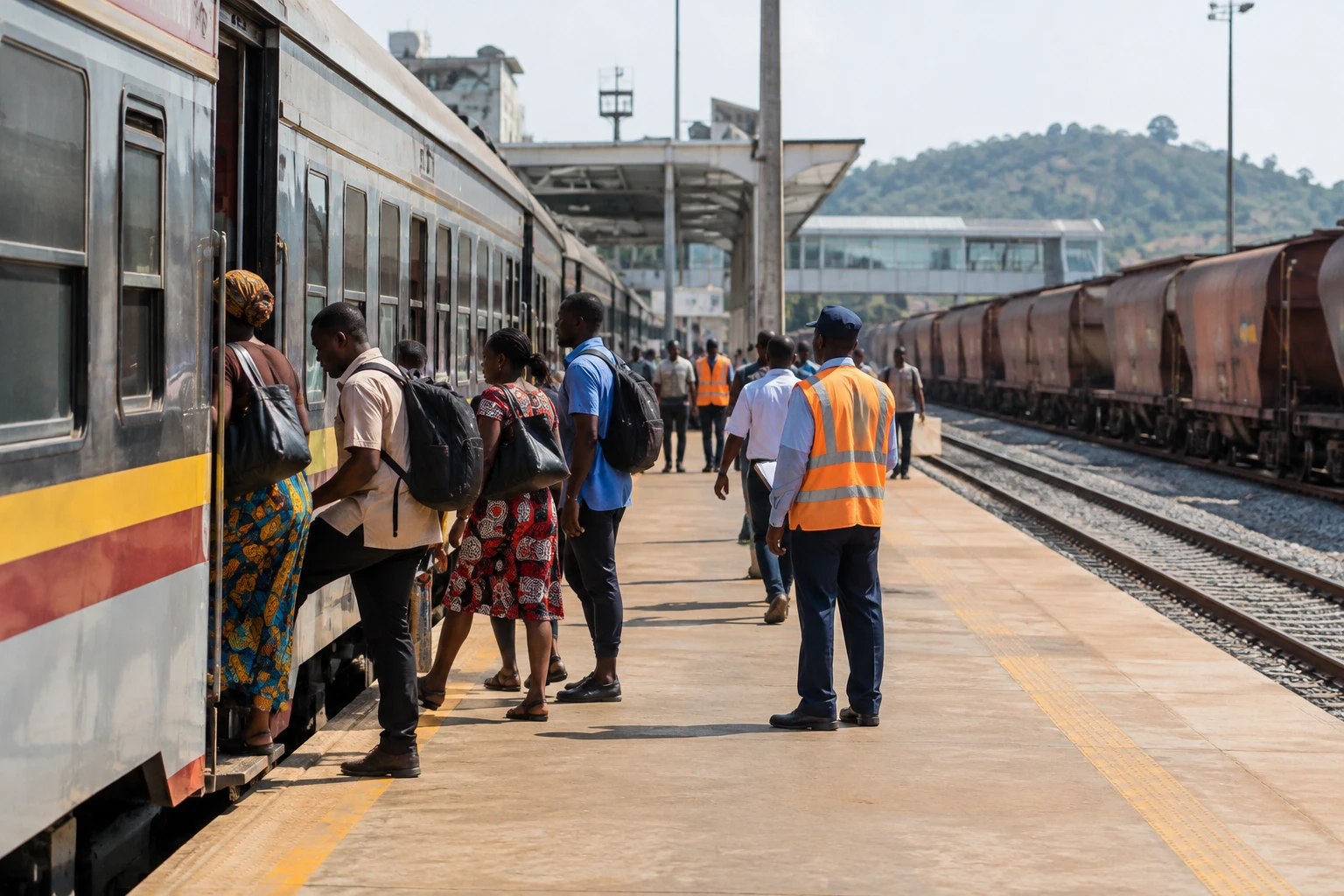
Simandou is also an infrastructure project. Its corridor links the mines in the south-east, a railway and port facilities. This infrastructure could reduce transport costs and connect remote regions to markets. It also raises a practical question: to what extent will it serve passengers, Guinean businesses and other sectors, beyond transporting ore? The authorities describe the railway as multi-purpose; actual access and local benefits will need to be monitored as operations expand.
The benefits will not be shared equally
The expected benefits concern the state, partner companies, workers, subcontractors and communities near the sites. They will not be distributed automatically. Public revenue will depend on volumes, prices, contracts and the ability to collect taxes. Local jobs, in turn, will depend on training and procurement rules. For villages and informal economic activities, the effects may also include displacement, changes in access to land or increased pressure on services.
In Conakry, the summit showcases the country’s appeal and its search for investors. In mining regions, the assessment will be more day-to-day: the quality of roads, access to water and electricity, sustainable jobs and compensation for affected communities. Announcements about infrastructure and future revenue do not yet amount to a social assessment. The gap between commitments and measurable results will be crucial to trust in the project.
The political context also matters. Guinea has been governed by transitional authorities since the 2021 coup. Mining development is therefore taking place at a time when governance, political representation and the management of public revenue remain national concerns. The summit may attract partners, but it cannot by itself answer questions about revenue oversight and accountability.
A Guinean challenge, regional lessons
For West Africa, Simandou brings back a question shared by producer countries: how can they negotiate with major investors without being confined to extraction? The answer depends on national choices, but also on regional connections, available skills and markets capable of absorbing processed output. ECOWAS, the West African economic co-operation organisation, provides a regional framework; the project’s infrastructure and contracts, however, remain primarily the responsibility of Guinea and its partners.
The summit will mainly show whether Guinea can turn Simandou’s geological advantage into industrial capacity and services that benefit sectors beyond mining. The next steps to watch are progress on processing facilities, the actual use of the rail and port corridor, and the publication of verifiable results on jobs, revenue and local benefits. Conakry’s ambition is now clear. Its credibility will be judged over time and on the ground.