Algeria
 Egypt
 Libya
 Morocco
 Sudan
 Tunisia
 Benin
 Burkina Faso
 Cabo Verde
 Côte d'Ivoire
 Ghana
 Guinea
 Guinea-Bissau
 Liberia
 Mali
 Mauritania
 Niger
 Nigeria
 Senegal
 Sierra Leone
 The Gambia
 Togo
 Cameroon
 Central African Republic
 Chad
 DR Congo
 Equatorial Guinea
 Gabon
 Republic of the Congo
 São Tomé and Príncipe
 Burundi
 Comoros
 Djibouti
 Eritrea
 Ethiopia
 Kenya
 Madagascar
 Malawi
 Mauritius
 Mozambique
 Rwanda
 Seychelles
 Somalia
 South Sudan
 Tanzania
 Uganda
 Angola
 Eswatini
 Lesotho
 Namibia
 South Africa
 Zambia
 Zimbabwe
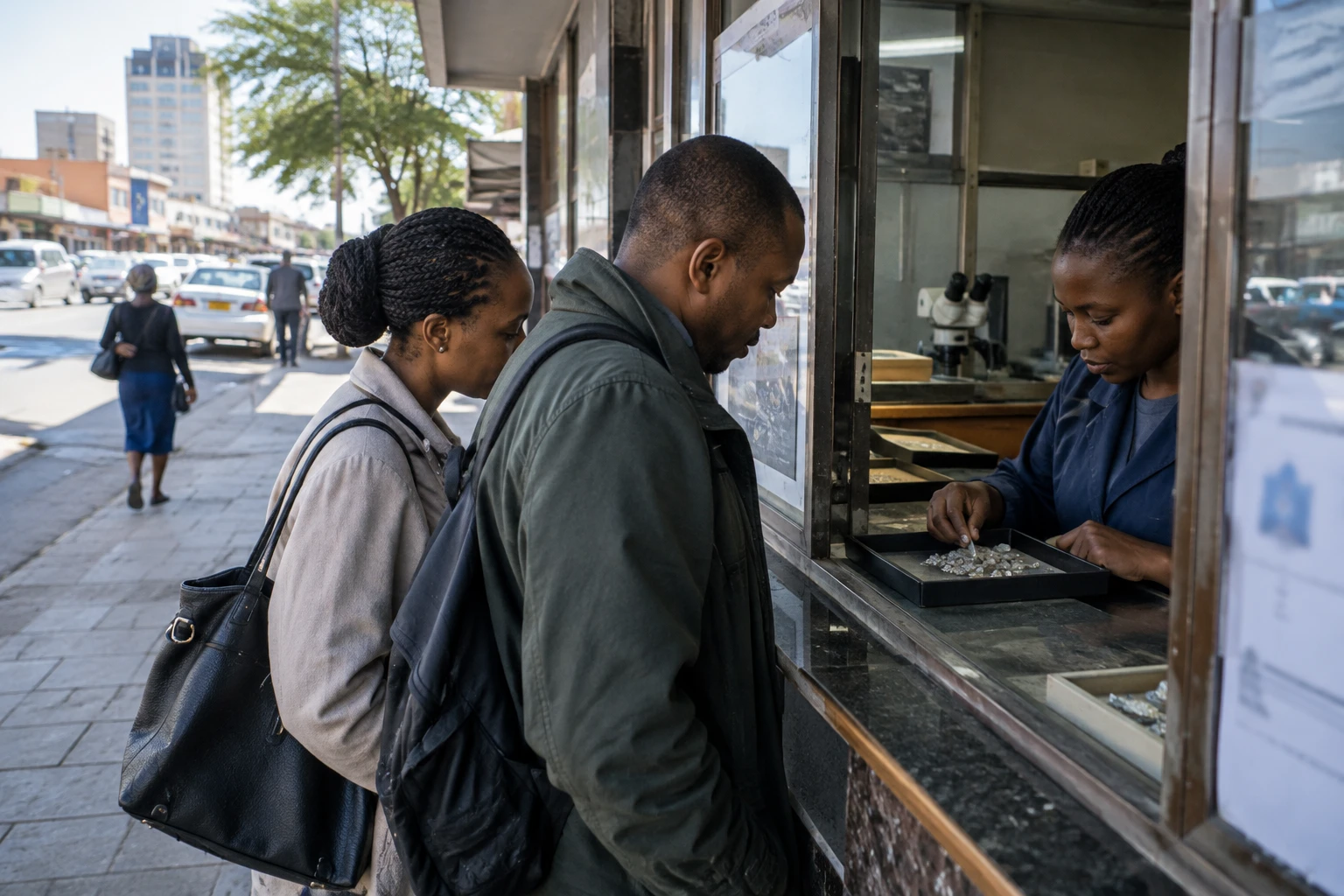
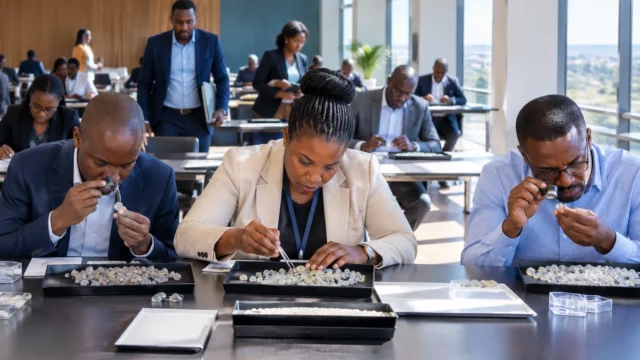
Who will decide the value of diamonds mined in southern Africa in the future: shareholders in a global group, or the countries that supply a significant share of its stones? In Botswana, this question is taking concrete shape with the possible reshaping of De Beers’ ownership.
An industrial deal becomes a regional issue
De Beers is more than its mines. The group extracts diamonds, organises their sale and is involved in marketing natural stones. Its future therefore matters to several producer countries, as well as buyers, employees and communities near mining sites.
Botswana is already closely linked to the company. The state owns 15% of De Beers and shares ownership of Debswana equally with the group. Debswana operates the country’s main mines. This relationship is part of a history in which diamonds have funded a significant share of public revenue, while leaving the economy exposed to fluctuations in global demand.
The deal now extends beyond Gaborone. Angola and Namibia, also diamond producers, have been named as possible participants in the transaction. These countries belong to different regional frameworks but share an economic interest: gaining greater influence over the value chain of a resource extracted on the continent. Southern Africa is shaped in particular by SADC, the Southern African Development Community.
Consortium led by former De Beers chief
On 9 November 2026, Botswana’s President Duma Boko announced that his government backed the Global Diamond Consortium (GDC) as the preferred buyer of Anglo American’s stake. The British group has been seeking to sell its 85% holding in De Beers since 2024. The sale has not yet been finalised.
Boko also said Botswana wanted to increase its stake from 15% to 30%. If the proposal goes ahead, the country would become De Beers’ largest individual shareholder. Angola and Namibia would also take part in the project, according to the presidential announcement, but their contributions and future stakes have not been specified.
The GDC brings together figures from the diamond industry. Its chairman, Gareth Penny, led De Beers from 2006 to 2010. Identified founders also include Saurin Parikh, head of Diarough, a trading and cutting company based in Antwerp, and Moshe Klein, head of Grandview Klein Diamonds in New York.
Diarough and Grandview Klein are De Beers “sightholders”: approved buyers who have regular access to the group’s rough-diamond sales. This experience could give the consortium direct knowledge of the market. It also raises a governance question: how can the interests of shareholders potentially active in the diamond trade be kept separate from those of a group that sells diamonds?
The names of Richemont, owner of luxury brands, and US retailer Signet Jewelers have been mentioned in the specialist press as possible participants. Their involvement has not been confirmed in the public announcements reviewed. A distinction must therefore be made between the identified GDC members and those merely cited as potential candidates.
Transaction still under negotiation
Gaborone’s backing marks a political step, not the completion of the sale. The financial terms have yet to be agreed. The ownership structure is also still open: the percentage allocated to the consortium, the split between states and private investors, and decision-making rights will all need to be clarified.
The Botswana government has reason to seek greater influence. Acquiring a larger stake could give the country more weight in the direction of a group linked to its mines and diamond sales. But a bigger holding could also concentrate more risk in a sector whose revenues fluctuate. Any benefits will depend on De Beers’ performance, governance rules and the ability to turn this influence into local economic gains.
For workers and mining communities, a change of shareholders does not automatically guarantee new investment or better-protected jobs. Such outcomes will depend on operational decisions, production plans and commitments made in each country. The effects will not necessarily be the same at mining sites, sales centres and in urban economies.
Market conditions add to the challenge. In its third-quarter 2026 report, De Beers said its average realised price since the start of the year had fallen by 37% to $97 per carat. The group also noted that lab-grown diamonds continued to weigh on demand for some categories of natural stones, although trading showed signs of stabilisation during the quarter.
A test of resource sovereignty
The project forms part of a broader debate in Africa: how can producer countries capture more value without bearing the risks of a global market alone? A bigger ownership stake can strengthen their bargaining power. However, it cannot replace economic diversification or local processing, and does not in itself guarantee a more balanced distribution of revenue.
The announced cooperation between Botswana, Angola and Namibia could also alter their relations with major international groups. It would give a regional dimension to a transaction so far centred on Anglo American and De Beers. But the interests of the three states are not necessarily the same: their production volumes, mining partnerships and budget priorities differ.
The next steps to watch are the possible conclusion of an agreement with Anglo American, confirmation of each participant’s stake and publication of the governance rules. For now, Duma Boko’s announcement sets out a clear ambition for Botswana: to be more than a mining partner of De Beers and take a more direct role in the group’s decisions.