Algeria
 Libya
 Morocco
 Sudan
 Tunisia
 Benin
 Burkina Faso
 Cabo Verde
 Côte d'Ivoire
 Ghana
 Guinea
 Guinea-Bissau
 Liberia
 Mali
 Mauritania
 Niger
 Nigeria
 Senegal
 Sierra Leone
 The Gambia
 Togo
 Cameroon
 Central African Republic
 Chad
 DR Congo
 Equatorial Guinea
 Gabon
 Republic of the Congo
 São Tomé and Príncipe
 Burundi
 Comoros
 Djibouti
 Eritrea
 Ethiopia
 Kenya
 Madagascar
 Malawi
 Mauritius
 Mozambique
 Rwanda
 Seychelles
 Somalia
 South Sudan
 Tanzania
 Uganda
 Angola
 Botswana
 Eswatini
 Lesotho
 Namibia
 South Africa
 Zambia
 Zimbabwe
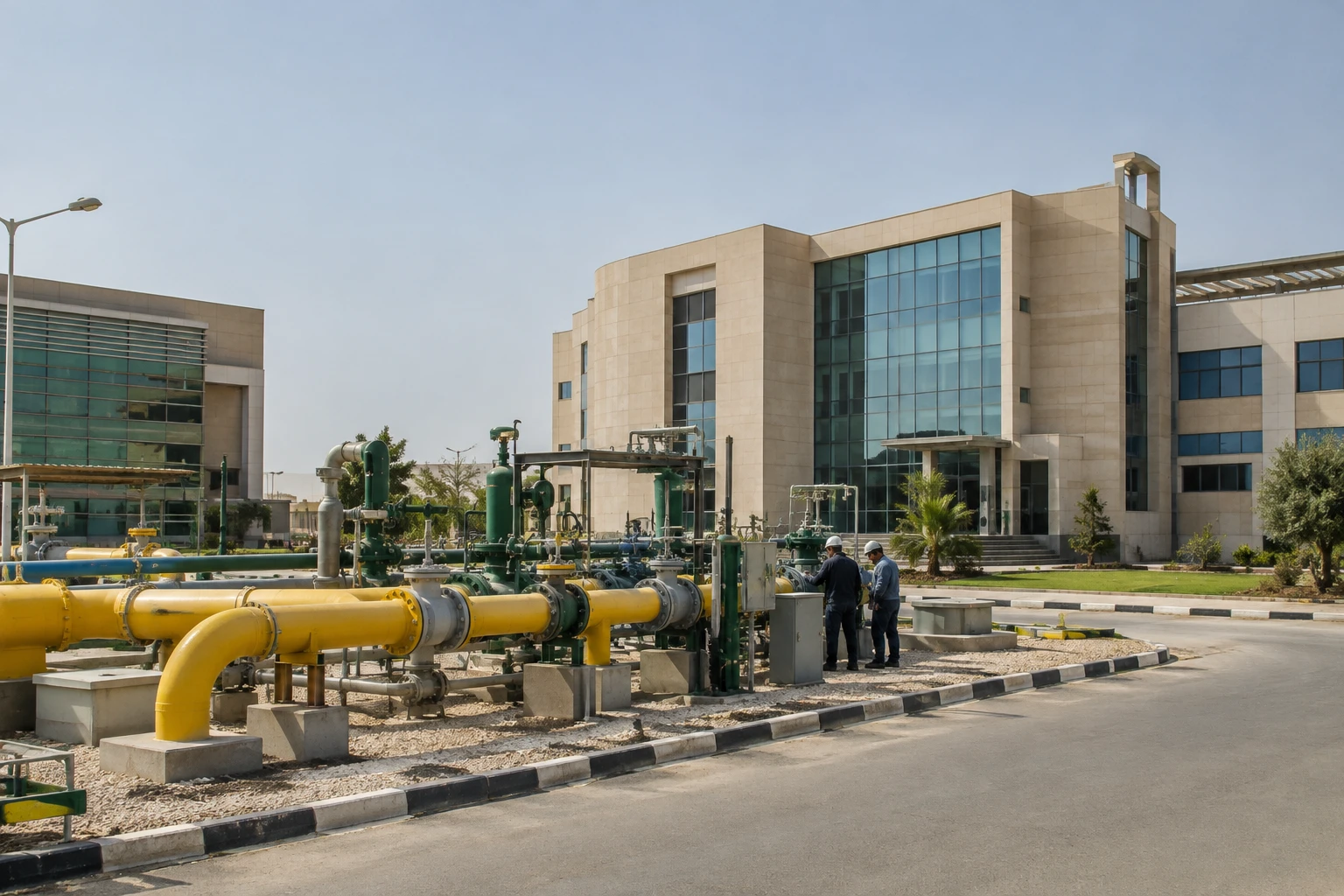
An announced gas field is not enough to light homes or power factories. For Egypt, the discovery of Nasim-1X raises a broader question: how quickly can the country turn its resources into available supply, as gas demand rises and imports have stepped in?
A Mediterranean basin of strategic importance
Gas occupies a central place in Egypt’s energy system, particularly in electricity generation. This dependence makes the balance delicate: when domestic fields decline, the country must import more to meet the needs of households, public services and industry.
The eastern Mediterranean is also a regional energy hub. Egypt has liquefaction facilities and infrastructure capable of processing gas from its own fields or neighbouring countries. The country can therefore play the role of a hub, but this position does not guarantee self-sufficiency in supply. Flows depend on available volumes, contracts and domestic needs.
At the African level, Egypt belongs to the African Union and the Arab Maghreb Union, a regional organisation in North Africa. However, gas trade in the eastern Mediterranean also involves partners outside these frameworks. Regional energy interests therefore do not amount to a common continental policy.
Nasim-1X: an estimate that remains preliminary
Egypt’s Ministry of Petroleum and Mineral Resources announced positive results at the Nasim-1X exploration well on 6 November 2026, in the Tiba concession in the Mediterranean. Initial estimates point to about 200 billion cubic feet of gas in the reservoir. The well encountered a gas-bearing layer approximately 15 metres thick.
This figure does not represent confirmed recoverable reserves. Technical studies must still establish what proportion of the gas can be extracted, at what rate and under what economic conditions. The ministry says a connection of about 22 kilometres to the Abu Madi–El Gamil gas pipeline is being considered to use existing infrastructure. No start-up timetable has been announced.
The concession is operated by Italy’s Eni with Australia’s Woodside. Petrobel, an Egyptian company, drilled the well on behalf of the partners. This division of responsibilities illustrates the development model adopted: international operators provide capital and expertise, while the state and its public companies oversee concessions and take part in operations.
A revival measured in delivered volumes
The discovery comes after several years of falling production, notably as output from the Zohr offshore field declined. According to the International Energy Agency, imports covered about half of Egypt’s demand in July 2026, when they reached a record level. Demand rises particularly as power plants consume more during hot periods.
S&P Global data show that Egypt imported 9.01 million tonnes of liquefied natural gas in 2025, a national record. Liquefied natural gas, or LNG, is gas cooled for transport by ship and then regasified on arrival. These purchases supplement supply, but leave the country more exposed to international prices and the availability of cargoes.
The government is therefore also relying on projects that could quickly add volumes. On 31 August, BP brought the Fayoum-4 well into production, which the ministry says produces about 80 million cubic feet per day. Eni, for its part, began start-up operations in October for the second phase of Meleiha in the Western Desert. The facility is designed to process up to 100 million cubic feet per day, a capacity that does not necessarily mean this volume is already being produced.
At the general assembly of EGAS, the state-owned gas holding company, the authorities also reported nine development projects and 28 new wells connected to the network during the 2025-2026 financial year. Announced investments total $1.12 billion. These results point to sustained activity, but their effect on supply depends on actual production and how quickly facilities are commissioned.
From the ground to the energy bill
For the authorities in Cairo, the immediate challenge is to narrow the gap between domestic supply and demand. Additional production can limit external purchases and support supplies to power plants. It can also help preserve supplies to industry, particularly sectors that use gas as a raw material or source of heat.
But the benefits for consumers are not automatic. Extracted gas must be processed, transported and distributed; its allocation then depends on national priorities. An increase in production therefore does not, by itself, guarantee either lower prices or a uniform improvement in service across all regions.
Nasim-1X’s significance thus goes beyond the drilling result alone. It tests Egypt’s ability to turn its resources into marketable volumes while managing high electricity demand and increased dependence on imports. The next data on recoverable reserves, the connection and actual output will show whether the discovery can genuinely ease pressure on the energy system.