Algeria
 Egypt
 Libya
 Morocco
 Sudan
 Tunisia
 Benin
 Burkina Faso
 Cabo Verde
 Côte d'Ivoire
 Ghana
 Guinea
 Guinea-Bissau
 Liberia
 Mali
 Mauritania
 Niger
 Nigeria
 Senegal
 Sierra Leone
 The Gambia
 Togo
 Cameroon
 Central African Republic
 Chad
 DR Congo
 Equatorial Guinea
 Gabon
 Republic of the Congo
 São Tomé and Príncipe
 Comoros
 Djibouti
 Eritrea
 Ethiopia
 Kenya
 Madagascar
 Malawi
 Mauritius
 Mozambique
 Rwanda
 Seychelles
 Somalia
 South Sudan
 Tanzania
 Uganda
 Angola
 Botswana
 Eswatini
 Lesotho
 Namibia
 South Africa
 Zambia
 Zimbabwe
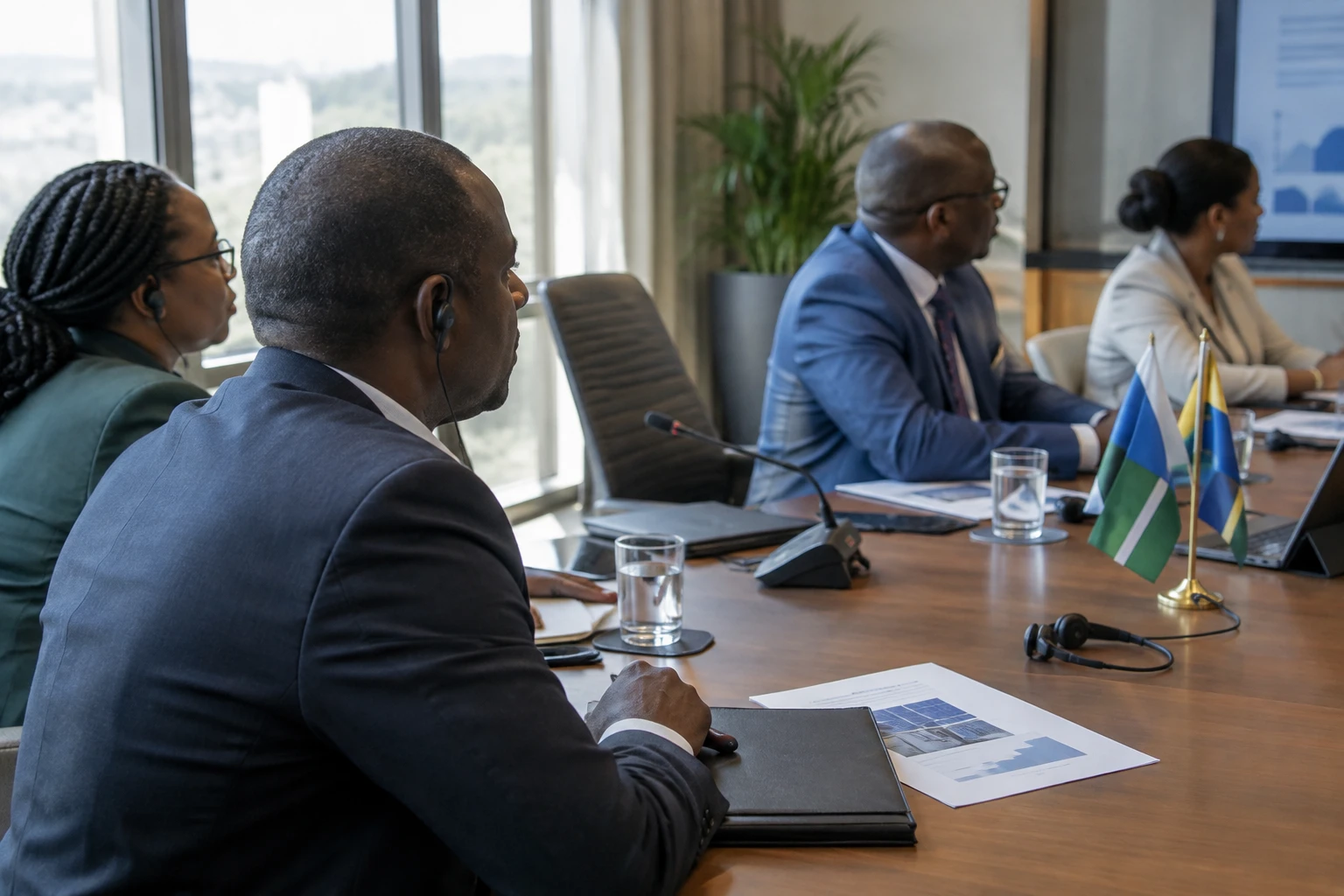
In Burundi, mobile network quality also depends on a very practical question: can operators power their antennas when the electricity supply is interrupted and diesel is scarce? Econet Wireless Burundi is turning to solar power and battery storage to reduce this dependence. The project could strengthen communications continuity, but it will not, on its own, resolve the weaknesses of the electricity system.
A mobile network caught between outages and shortages
Mobile base stations must operate continuously to carry calls, data and mobile transactions. When the public electricity grid is interrupted, operators often rely on generators. But this backup solution depends on fuel, supplies of which have themselves been difficult to secure in Burundi.
The Régie de production et de distribution d’eau et d’électricité (REGIDESO) supplies power to connected sites. Outages and irregular access to diesel therefore undermine two power sources at once. For subscribers, the consequences can include an unstable connection or a local service interruption. Businesses, government departments and users of mobile financial services are also affected.
This problem is not new. On 28 January 2025, at a meeting with the authorities, operators Econet, Lumitel — operated by Viettel Burundi — and ONATEL raised problems with electricity and fuel. ONATEL’s chief executive said at the time that 60 of its 150 sites had electricity, according to Burundian media outlet Iwacu. The Burundi Press Agency also reported on the meeting and the difficulties raised by the operators.
A phased investment running to 2028
On 5 November 2026, in Bujumbura, Econet and its partners launched the first phase of a programme to solarise its network. The operator plans to invest up to $6.5 million in total. The initial tranche, worth about $2.5 million, is expected to cover nearly a third of sites and be completed by July 2027. The stated aim is to extend renewable power to the entire network by December 2028.
The system combines photovoltaic panels and storage batteries. According to estimates provided by the project partners, it could generate 1.07 gigawatt hours of electricity a year, reduce diesel consumption by about 300,000 litres and avoid nearly 800 tonnes of carbon dioxide emissions annually. These figures are projections, not results already measured. Burundian media outlet Le Renouveau also covered the Renewable Energy Access Days held in Bujumbura on 5 and 6 November.
Solarisation is not entirely new in Burundi’s telecoms sector. The regulator has already referred to the installation of panels at some Lumitel sites. Econet’s initiative, however, is on a different scale in terms of the announced funding and its multi-year timetable. It does not mean the operator will immediately abandon other energy sources: solar generation varies with weather conditions, and autonomy also depends on available storage.
Solar power cannot replace an electricity policy
The transition has a substantial upfront cost. Panels, batteries, conversion equipment and their maintenance all need to be funded. Batteries also gradually lose capacity and must be replaced. These costs are compounded by the need to protect installations and the logistics required to service remote sites.
A 2026 feasibility study by Gloria Pierrette Irakoze at Makerere University compares solar and hybrid configurations for Burundian telecoms sites. It concludes that combining panels, batteries and a generator meets demand more effectively than solar power alone. Its simulations put the levelised cost of electricity at 36 US cents per kilowatt hour for hybrid systems, compared with 75 cents for exclusively solar installations. These results apply to the scenarios studied; they do not guarantee the same costs at every site.
The hybrid model highlights an essential point: operators can gain greater autonomy, but remain exposed to fuel availability as long as a generator serves as backup. Maintenance, battery safety and the ability to replace faulty equipment quickly will matter as much as the initial installation. The rollout will also need to show whether the announced diesel savings are achieved in practice.
The effects will not be distributed evenly. In cities, a more stable network can support commercial activity and digital services. In rural areas, coverage is also at stake: a reliable site is not enough if antennas remain too far apart or network expansion does not keep pace. The January 2025 meeting specifically brought to light coverage problems in several provinces. Energy continuity and territorial access are therefore related, but distinct, problems.
A national and regional issue
Burundi is a member of the East African Community (EAC), a regional framework in which infrastructure and digital exchanges are playing an increasingly important role. The EAC’s development strategy draws in particular on electricity interconnection projects and the Eastern Africa Power Pool. These initiatives can help strengthen national systems, but they do not replace the immediate solutions needed for mobile base stations.
Econet’s approach is also part of a continental trend: African operators are increasingly combining solar power, batteries and generators to control costs and reduce outages. For Burundians, however, the decisive indicator will not simply be the production of green electricity. It will be the reliability of calls and internet access, including beyond major urban centres.
The next stages will make it possible to assess the project’s reach: completion of the first phase, announced for July 2027, followed by the planned extension to the entire network in December 2028. Meanwhile, developments in electricity and fuel supplies will remain crucial. Solar power can give operators more room for manoeuvre; lasting telecoms reliability will also depend on the country’s energy infrastructure.