Algeria
 Egypt
 Libya
 Morocco
 Sudan
 Tunisia
 Benin
 Burkina Faso
 Cabo Verde
 Côte d'Ivoire
 Ghana
 Guinea
 Guinea-Bissau
 Liberia
 Mali
 Mauritania
 Niger
 Nigeria
 Senegal
 Sierra Leone
 The Gambia
 Togo
 Cameroon
 Central African Republic
 Chad
 Equatorial Guinea
 Gabon
 Republic of the Congo
 São Tomé and Príncipe
 Burundi
 Comoros
 Djibouti
 Eritrea
 Ethiopia
 Kenya
 Madagascar
 Malawi
 Mauritius
 Mozambique
 Rwanda
 Seychelles
 Somalia
 South Sudan
 Tanzania
 Uganda
 Angola
 Botswana
 Eswatini
 Lesotho
 Namibia
 South Africa
 Zambia
 Zimbabwe
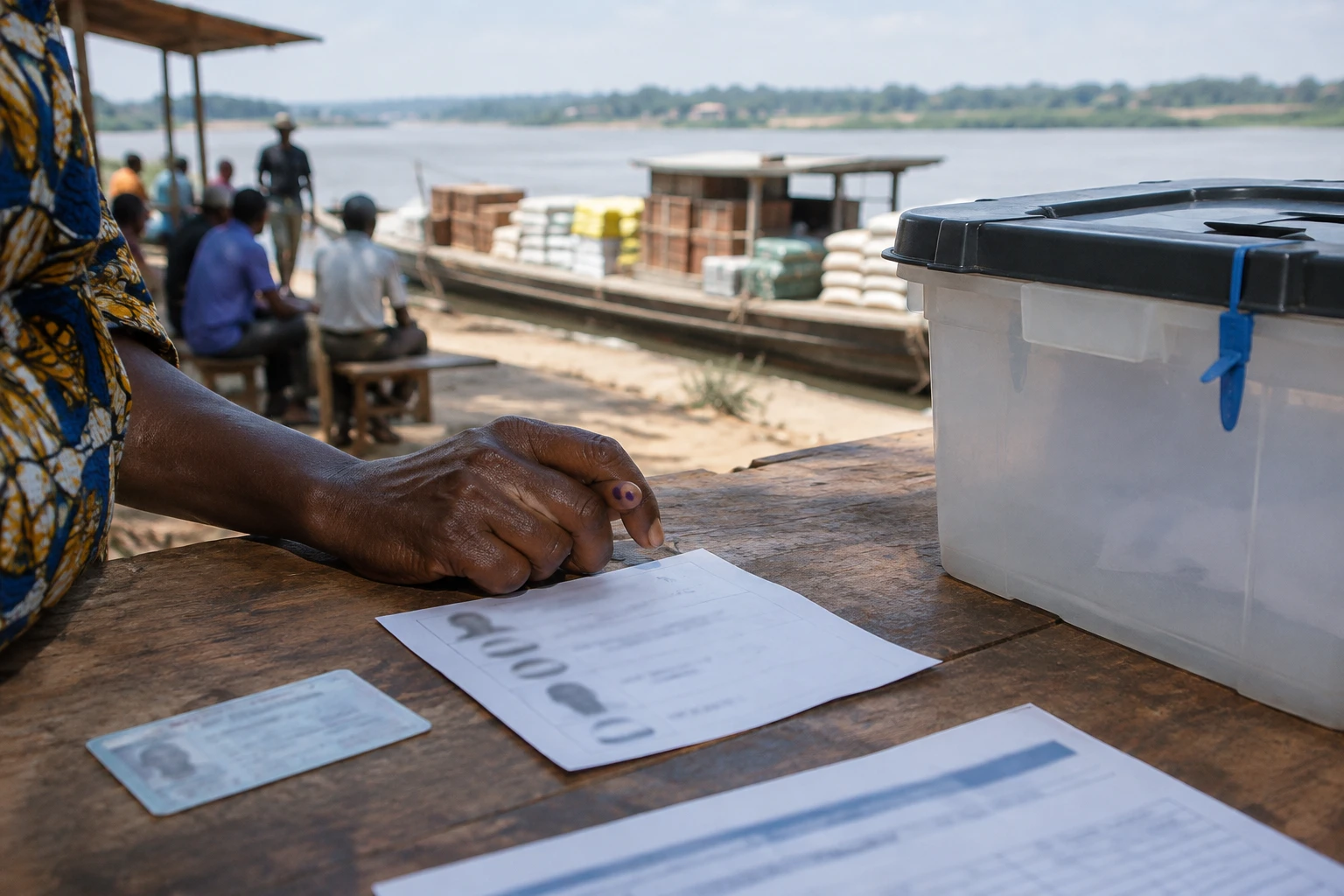
In Tshopo, the Congo River is not a back-up route: for many territories, it is the way food, medicines and goods are delivered. That is what makes the forthcoming ban on wooden boats difficult, even though the risks of travelling in them are central to the decision.
River safety and continuity of trade
The national measure is due to take effect on 15 November 2026. Announced by Transport Minister Jean-Pierre Bemba, it targets wooden boats operating on the Congo River, its tributaries, other waterways and lakes. The government justifies it by the repeated capsizing of vessels and failure to comply with safety rules.
The debate therefore pits two practical imperatives against each other: reducing risks to passengers and preventing a ban without replacements from blocking the transport of goods. In Tshopo province, the president of the provincial assembly, Mateus Kanga Londimo, has asked President Félix Tshisekedi for a moratorium of at least one year on freight transport. According to accounts of his appeal, he is not challenging the ban on carrying passengers in these vessels.
The timetable is tight. On 6 October, the Transport Ministry announced the decision. The following day, Jean-Pierre Bemba reiterated it to boat owners and publicly ruled out the idea of a general moratorium. Mateus Kanga Londimo’s letter, dated 6 November, therefore calls for an adjustment for Tshopo just days before the deadline. The dates and scope of the measure are reported by the Congolese Transport Ministry and the Congolese Press Agency.
A province dependent on waterways
Tshopo, whose provincial capital is Kisangani, lies in the north-east of the Democratic Republic of the Congo. Roads that are passable all year round remain limited in several areas. The river and its tributaries are therefore used both to transport people and to deliver food, medicines and essential goods.
The provincial representatives’ central argument is that there are no immediate alternatives. According to Mateus Kanga Londimo, the vessels currently used in the province are made of wood. An ACP dispatch published on 19 October reported that only seven metal vessels then met navigation standards in the Kisangani area. This figure, attributed to an administrative source, gives an indication of the gap between the existing fleet and demand, but is not a comprehensive inventory of all vessels.
If freight traffic stops without a replacement solution, the effects will not be shared equally. Traders and transport operators could lose their livelihoods or have to fund compliant boats. For households in areas served by the river, the consequence could be delays in deliveries and higher prices. This increase remains a concern expressed by provincial officials, not an effect that has already been measured.
A moratorium does not resolve the safety issue
The provincial appeal proposes a transition: register the vessels, strengthen inspections and standards, then support the gradual acquisition of metal boats. A one-year delay could give boat owners more time to adapt their fleets. But on its own, it would not be enough to guarantee safe boats or prevent overloading and departures in dangerous conditions.
The ministry, for its part, says it intends to provide boat owners with plans and a list of equipment for building metal vessels. It has also announced financing mechanisms and plans to acquire about a hundred barges to supplement the fleet of ONATRA, the state-owned transport company. These announcements outline a possible response, but the available information does not yet specify the delivery timetable or how the boats will be allocated among the provinces.
Past experience shows that enforcement matters as much as the material. In October 2024, the Congolese government had already raised concerns about overloading, night-time navigation, buoyage and compliance with construction standards. Replacing wooden hulls without improving inspections, safety equipment and compliance would therefore leave some of the risks in place.
A national issue in the Congo Basin
The decision concerns the navigable waterways of the whole of the DRC, but its implementation will have to take account of very different local realities. A uniform measure may be harder to absorb in provinces where roads are scarce and river transport links markets. Conversely, a prolonged exemption without stronger inspections would put passengers and crews at risk.
For Kinshasa, the challenge is to make the safety policy workable without interrupting essential routes. For Tshopo, it is to maintain supplies while reducing the dangers of navigation. The issue extends beyond the province: the Congo River links several regions of the country and is part of a basin shared with neighbouring Central African states. The safety and continuity of river transport there affect both local trade and regional connections.
In the short term, two points remain to be watched: any decision by the presidency on the requested moratorium and the effective implementation of the solutions announced by the ministry. Without clarification on cargoes, inspections and replacement boats, the 15 November deadline risks leaving boat owners, traders and residents facing strict rules but few immediate options.