Algeria
 Egypt
 Libya
 Morocco
 Sudan
 Tunisia
 Benin
 Burkina Faso
 Cabo Verde
 Côte d'Ivoire
 Ghana
 Guinea-Bissau
 Liberia
 Mali
 Mauritania
 Niger
 Nigeria
 Senegal
 Sierra Leone
 The Gambia
 Togo
 Cameroon
 Central African Republic
 Chad
 DR Congo
 Equatorial Guinea
 Gabon
 Republic of the Congo
 São Tomé and Príncipe
 Burundi
 Comoros
 Djibouti
 Eritrea
 Ethiopia
 Kenya
 Madagascar
 Malawi
 Mauritius
 Mozambique
 Rwanda
 Seychelles
 Somalia
 South Sudan
 Tanzania
 Uganda
 Angola
 Botswana
 Eswatini
 Lesotho
 Namibia
 South Africa
 Zambia
 Zimbabwe
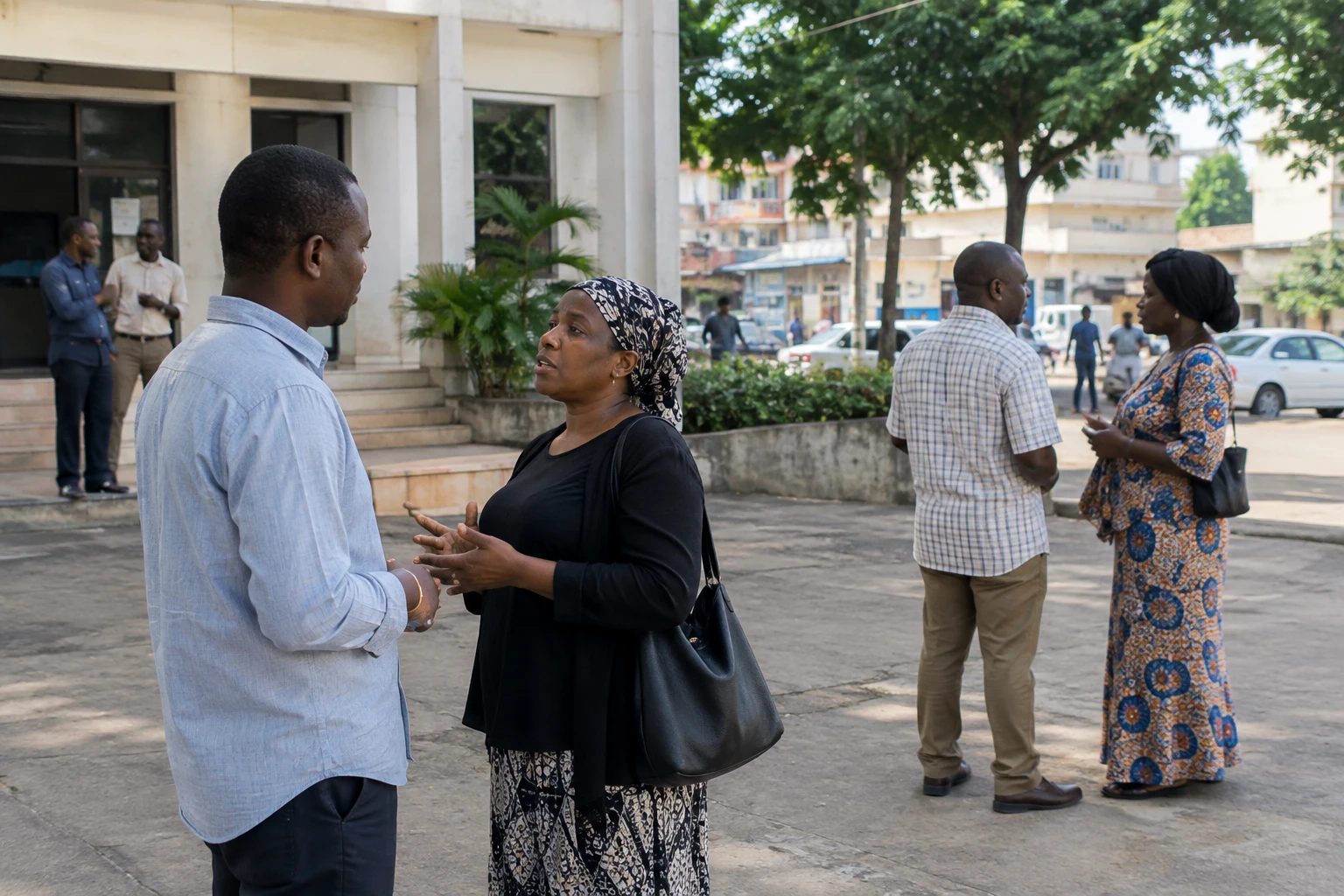
A presidential pardon does not always mean immediate release from prison. In Guinea, Aliou Bah regained his freedom on Friday 6 November 2026, after completing a 45-day civic training course imposed on beneficiaries of the measure. His experience raises a practical question: where does the sentence end, and reintegration begin?
Release after two distinct stages
The president of the Liberal Democratic Movement (MoDeL) was released after nearly 23 months in detention, according to information confirmed by his party and reported by several Guinean media outlets. He was arrested on 26 December 2024 at the border with Sierra Leone, then sentenced on 7 January 2025 to two years in prison without parole.
The Court of First Instance in Kaloum, Conakry, found him guilty of “offence and defamation” against the head of state, Mamadi Doumbouya. Aliou Bah denied the accusations. The conviction and arrest date were reported at the time by Guinean and international media. Guinee360’s report on the verdict and that of the daily newspaper Le Monde agree on these details.
The Guinean president granted him a pardon in a decree signed on 2 October 2026, on the occasion of Independence Day. The measure also applied to other detainees. However, it was conditional on a compulsory 45-day programme of civic supervision and preparation for reintegration. The Ministry of Justice had shown Aliou Bah among the beneficiaries taking part in the programme. Images of the training course in Sonfonia were published in mid-October.
MoDeL announced his release at the end of this period. Guinean media outlets Africa Guinee and Le Lynx also reported the news on 6 November. The party expressed relief and reaffirmed its commitment to democracy, the rule of law and fundamental freedoms.
A case rooted in Guinea’s transition
Aliou Bah’s arrest came during a period of high tension between the transitional authorities and political actors calling for a return to civilian rule. Mamadi Doumbouya has led the country since the September 2021 coup. The transition was initially due to end in late 2024, but the timetable was exceeded, fuelling disagreements over the conditions and pace of a return to constitutional order.
Guinea is a member of the Economic Community of West African States (ECOWAS), which brings together countries in the region and advocates, among other things, a return to constitutional order. The Bah case also took on a regional dimension: according to the Guinean press, the ECOWAS Court of Justice, in a ruling issued on 25 June 2026, identified violations of some of his fundamental rights and ordered his release. The presidential pardon then provided another route out of detention. Guinee360’s account of the pardon recalls this ECOWAS decision.
These decisions are not the same. A pardon falls within the executive’s powers and concerns the sentence. A regional court ruling, by contrast, examines whether the rights guaranteed to individuals have been respected. The coexistence of the two in one case highlights the different avenues of redress available to citizens, as well as debate over their effective implementation.
A political signal, but not an answer to every issue
For MoDeL, the release of its president means it can again rely on a leader able to resume his political activities. For the authorities, the implementation of the pardon and training course marks the end of the process set out in the decree. Both interpretations coexist, without changing the central fact: Aliou Bah spent nearly two years deprived of his freedom following a conviction linked to remarks about the head of state.
The significance of the case goes beyond the fate of one politician. It touches on the conditions under which opponents can criticise the authorities, guarantees of a fair trial, and the role of national and regional courts. It also concerns activists, journalists and citizens following public debate, in Conakry and in other regions of the country.
The pardon does not overturn the conviction handed down by the court. It ends the detention in accordance with the conditions set by the authorities. MoDeL, for its part, continues to contest the accusations against its president. This distinction matters in understanding what the release resolves — and what it does not: the political and legal dispute surrounding the case remains.
What happens next will play out in the political arena
Aliou Bah’s release comes as Guinea continues a transition whose timetable and democratic safeguards remain at the heart of debate. For ECOWAS, the regional challenge remains a lasting return to constitutional order. For Guineans, it is also measured by the possibility of taking part in political life and voicing criticism without debate turning into a criminal case.
The next indicator will be the room for manoeuvre granted to MoDeL and other political parties. The release of an opposition figure from prison is an important event, but it is not enough on its own to show that tensions over civil liberties have been resolved. How the authorities and political actors handle future disagreements will say more about the openness of the transition.