Algeria
 Egypt
 Libya
 Morocco
 Sudan
 Tunisia
 Benin
 Burkina Faso
 Cabo Verde
 Côte d'Ivoire
 Guinea
 Guinea-Bissau
 Liberia
 Mali
 Mauritania
 Niger
 Nigeria
 Senegal
 Sierra Leone
 The Gambia
 Togo
 Cameroon
 Central African Republic
 Chad
 DR Congo
 Equatorial Guinea
 Gabon
 Republic of the Congo
 São Tomé and Príncipe
 Burundi
 Comoros
 Djibouti
 Eritrea
 Ethiopia
 Kenya
 Madagascar
 Malawi
 Mauritius
 Mozambique
 Rwanda
 Seychelles
 Somalia
 South Sudan
 Tanzania
 Uganda
 Angola
 Botswana
 Eswatini
 Lesotho
 Namibia
 South Africa
 Zambia
 Zimbabwe
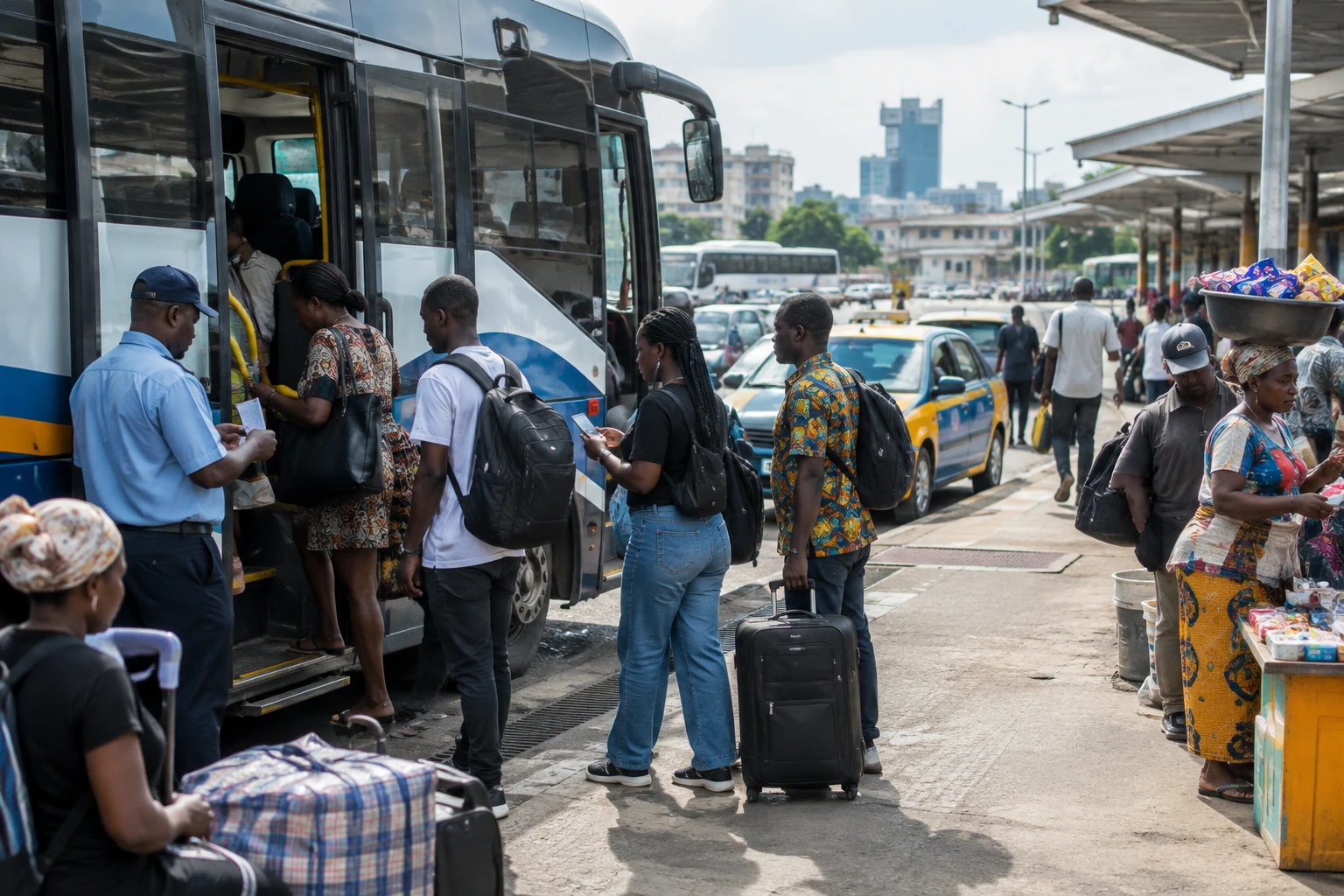
Inflation falling below target is not enough to protect households or Ghana’s public finances. For Accra, the challenge is now to consolidate the recovery while rebuilding foreign exchange reserves, as the country’s revenues remain tied to a handful of major commodities.
A recovery to consolidate
Ghana, a West African country and member of the Economic Community of West African States (ECOWAS), is emerging from a period of severe economic strain and an International Monetary Fund (IMF) financing programme. In July 2026, the Fund’s executive board completed the final review of its 39-month financing arrangement and considered a new Policy Coordination Instrument (PCI), a monitoring framework that does not involve a new loan. The arrangement is intended to support Ghana’s economic policy over three years.
On 5 November, IMF staff announced a staff-level agreement with the Ghanaian authorities on the first review of the PCI. Their assessment remains subject to approval by the Fund’s management and executive board. The mission took place in Accra from 22 October to 4 November, according to the Ghana News Agency and Ghanaian outlet 3News.
The IMF describes the results as “broadly satisfactory”: most of the quantitative targets reviewed were met. This does not, however, mean that the assessment has been definitively approved. Consideration by the executive board remains a separate step.
Indicators improve, but remain mixed
Real gross domestic product (GDP) grew by 6.2% year on year in the first half of 2026, driven in particular by investment, according to data provided by the IMF team. The Fund projects growth of 5.7% for the year as a whole. National statistics show growth of 6% in the second quarter, a figure that complements the half-year results without replacing them.
Annual inflation stood at 5.5% in October, below the 6–10% range associated with the Bank of Ghana’s target. But the recent trend calls for caution: inflation rose for a third consecutive month, after reaching 5.2% in September, the Ghana Statistical Service said, as reported by the Ghana News Agency. A favourable national average does not mean that all prices are falling, or that households experience the same changes depending on where they live or what they buy.
On the fiscal front, the IMF estimates that the primary surplus should meet the programme’s year-end target. This indicator measures the difference between government revenue and spending before interest payments on debt. The Fund also notes a substantial decline in public debt in recent years, though this does not eliminate refinancing needs or pressure on public finances.
Gold at the heart of the reserves equation
The main warning concerns foreign exchange reserves, which are used to pay for imports and cushion pressure on the currency. The IMF says they have fallen in recent months and welcomes corrective measures taken by the authorities. They have transferred to the Ghana Gold Board, or GoldBod, the intermediation of foreign exchange transactions related to the scheme in question, and raised the gold-selling requirement imposed on large mining companies. The Ghana News Agency reports the same measures.
This approach gives the state a greater role in mobilising foreign currency revenues from gold. It follows the recent establishment of GoldBod, a public body tasked with structuring Ghana’s gold trade. But the mechanism does not remove exposure to global prices: if prices fall, export revenues may contract. Cocoa and oil also leave the budget and external accounts exposed to market fluctuations.
The Fund also cites geopolitical tensions and tighter global financial conditions. Domestically, it points to refinancing needs for domestic debt, financial pressures in the energy and cocoa sectors, and persistent vulnerabilities in the financial sector. The fiscal balance therefore depends as much on spending discipline as on revenues that can be volatile.
Households and businesses face trade-offs
For households, lower overall inflation may ease the general rise in prices, but October’s data show a recent increase. The effects are uneven: transport, food, housing and energy weigh differently depending on income and region. For businesses, price and cedi stability make investment decisions easier, while credit constraints and exchange-rate uncertainty remain decisive factors.
The IMF recommends a cautious monetary policy, greater exchange-rate flexibility and stronger reserve buffers. It also calls for the creation of a sinking fund, a reserve intended to meet debt falling due. These tools can reduce the risk of a liquidity crisis, but they entail choices about how public revenues are used and how the burden is shared. The authorities’ challenge will be to preserve stability without slowing productive activity or transferring a disproportionate share of the costs to households.
A credibility test for the region
The issue will be watched beyond Ghana. As an ECOWAS member, the country is connected to West African trade and financial markets. More predictable management of its debt and reserves could strengthen the confidence of investors and regional partners; conversely, renewed pressure on the exchange rate or public finances could affect its imports and trade.
The immediate next step is consideration of the first review by IMF management and then the executive board. The PCI timetable envisages a decision on this review by 15 January 2027 at the latest. Until then, the indicators to watch are the trajectory of reserves, inflation, delivery of the primary surplus and GoldBod’s ability to support foreign currency revenues without increasing the country’s vulnerability to gold prices.