Algeria
 Egypt
 Libya
 Morocco
 Sudan
 Tunisia
 Benin
 Burkina Faso
 Cabo Verde
 Ghana
 Guinea
 Guinea-Bissau
 Liberia
 Mali
 Mauritania
 Niger
 Nigeria
 Senegal
 Sierra Leone
 The Gambia
 Togo
 Cameroon
 Central African Republic
 Chad
 DR Congo
 Equatorial Guinea
 Gabon
 Republic of the Congo
 São Tomé and Príncipe
 Burundi
 Comoros
 Djibouti
 Eritrea
 Ethiopia
 Kenya
 Madagascar
 Malawi
 Mauritius
 Mozambique
 Rwanda
 Seychelles
 Somalia
 South Sudan
 Tanzania
 Uganda
 Angola
 Botswana
 Eswatini
 Lesotho
 Namibia
 South Africa
 Zambia
 Zimbabwe
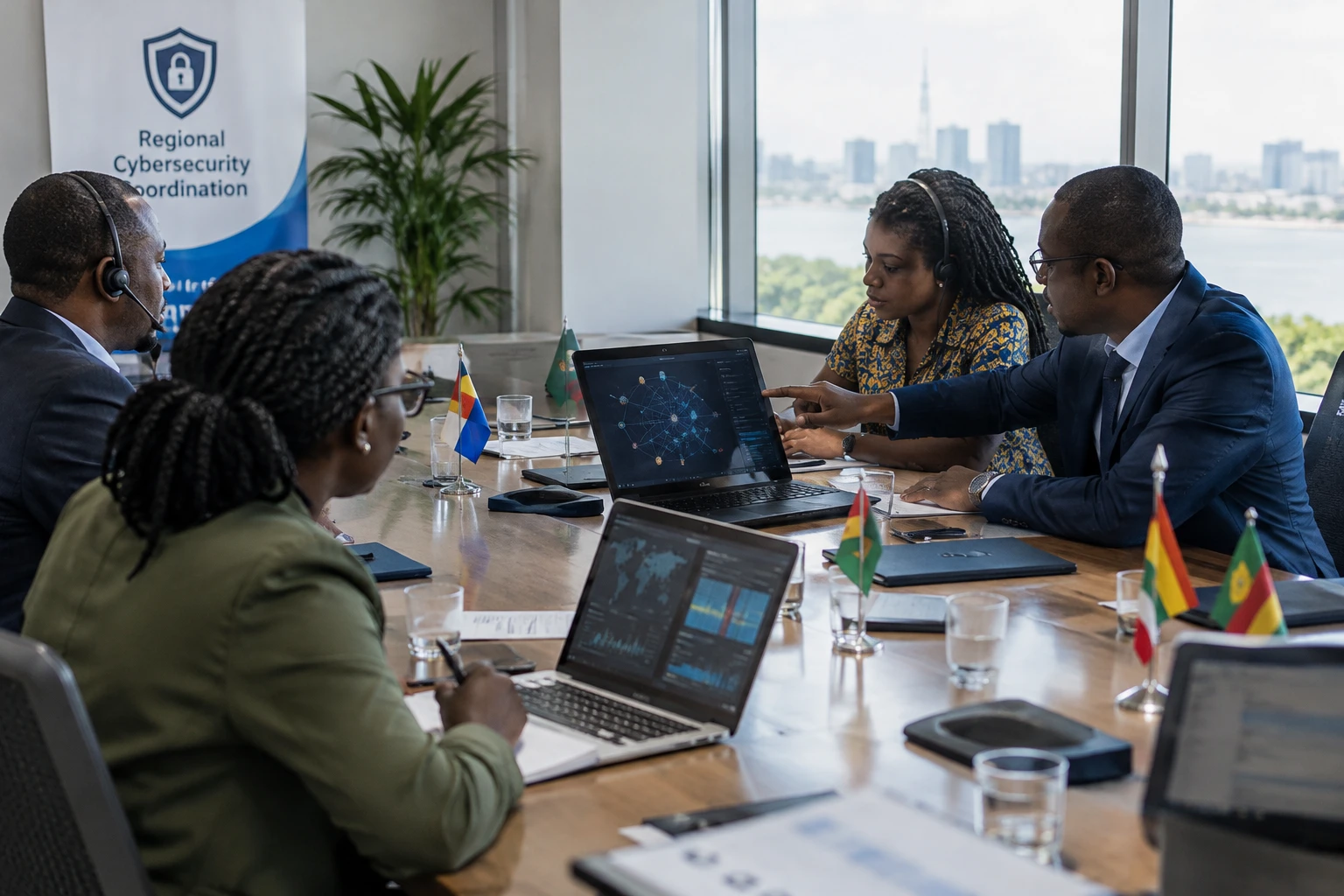
A cyber centre can detect an attack. But protecting public services, businesses and individuals also requires the ability to act quickly and cooperate across borders. That is the challenge facing the new regional facility announced in Abidjan, as digital use grows in Côte d’Ivoire and across West Africa.
Infrastructure for detection and response
On 5 November 2026, US company Cybastion inaugurated a cybersecurity centre in Abidjan, built using Cisco technology. The facility is intended to support the capabilities of Côte d’Ivoire and other African countries, notably through monitoring digital systems, incident response and training. Several specialist African media outlets have also reported its opening. Cybastion’s presentation of the centre describes its planned functions, while CyberC4ST and Startup Médias report the announcement.
The centre includes a SOC, or security operations centre, which monitors networks to detect suspicious behaviour. A specialist team is expected to investigate incidents and help manage them. The facility also plans to provide professional training. These functions could help reduce the time between detecting an attack and the affected organisations responding.
The facility does not, however, replace the Ivorian institutions responsible for digital security. It joins a landscape in which the National Agency for the Security of Information Systems (ANSSI) and other public bodies already have operational responsibilities. The division of roles, arrangements for sharing information and data protection will therefore be crucial in assessing the centre’s real contribution.
Losses that cross borders
Ivorian figures give an indication of the challenge. In 2024, ANSSI recorded more than 12,100 cybercrime cases. The Ivorian government also cited this total, specifying that it covered registered cases and estimated losses of CFA francs 6.9 billion. These statistics do not necessarily capture every attack: incidents that are not reported or detected are, by definition, absent from the count. ANSSI’s threat overview and the government portal confirm the figure.
Across the continent, INTERPOL estimates financial losses linked to cybercrime at $484 million in 2025, up from $192 million in 2024. Its 2026 report also says artificial intelligence is associated with 55% of reported cyber offences in the 36 countries studied. These are regional estimates, not a comprehensive tally of all African losses. INTERPOL sets out these estimates in its African cyber threat assessment.
Online fraud, business email compromise and scams involving mobile payments are among the threats identified. They can affect a large company, a trader, a government department or an individual user. When an attack involves accounts, servers or networks in several countries, a national team working alone may struggle to establish the origin and scale of the incident quickly.
Training, coordination and accountability
Training is another part of the project. In December 2024, Cybastion and Cisco launched DigiEmpower with the Ivorian authorities, a programme that aims to train 200,000 young people and women in ten regions of the country by 2030. The announced courses cover digital skills, artificial intelligence, IT infrastructure and cybersecurity, among other subjects. The figure is a target, not the number of people already trained. The DigiEmpower announcement outlines its ambitions and timetable.
For Ivorians, the issue extends beyond the security of major infrastructure. Fraud involving a mobile wallet can directly affect a household budget or a small business’s cash flow. An attack on a company can disrupt services and expose customer data. The ability to advise less well-resourced organisations, including those outside Abidjan, will therefore matter as much as the centre’s technical equipment.
The project also raises questions of governance. Who will have access to information gathered by the centre? How will users’ data be protected? What mechanisms will enable the Ivorian authorities to oversee operations and assess results? Cooperation with a foreign private-sector provider can bring tools and expertise, but its contribution will need to be clearly aligned with national priorities and applicable rules.
A regional concern for Côte d’Ivoire
Côte d’Ivoire is a member of ECOWAS, the Economic Community of West African States. In this area of economic exchange, digital networks and payments cross borders as readily as criminal activity can. A regional centre will therefore have a practical impact only if teams and institutions in partner countries can share alerts, coordinate investigations and agree on response procedures.
For Abidjan, the centre adds to training efforts and existing public-sector capabilities. For the public, the most meaningful measure will be not the announcement of new infrastructure but its ability to limit disruption, protect personal information and facilitate the handling of complaints. Across West Africa, it will be important to track how neighbouring states are actually able to access its services, as well as the results of DigiEmpower in the ten regions targeted. Cybersecurity is becoming an infrastructure of trust: it must protect digital activities without placing their governance beyond public scrutiny.