Algeria
 Egypt
 Libya
 Morocco
 Sudan
 Tunisia
 Benin
 Burkina Faso
 Cabo Verde
 Côte d'Ivoire
 Ghana
 Guinea
 Guinea-Bissau
 Liberia
 Mauritania
 Niger
 Nigeria
 Senegal
 Sierra Leone
 The Gambia
 Togo
 Cameroon
 Central African Republic
 Chad
 DR Congo
 Equatorial Guinea
 Gabon
 Republic of the Congo
 São Tomé and Príncipe
 Burundi
 Comoros
 Djibouti
 Eritrea
 Ethiopia
 Kenya
 Madagascar
 Malawi
 Mauritius
 Mozambique
 Rwanda
 Seychelles
 Somalia
 South Sudan
 Tanzania
 Uganda
 Angola
 Botswana
 Eswatini
 Lesotho
 Namibia
 South Africa
 Zambia
 Zimbabwe
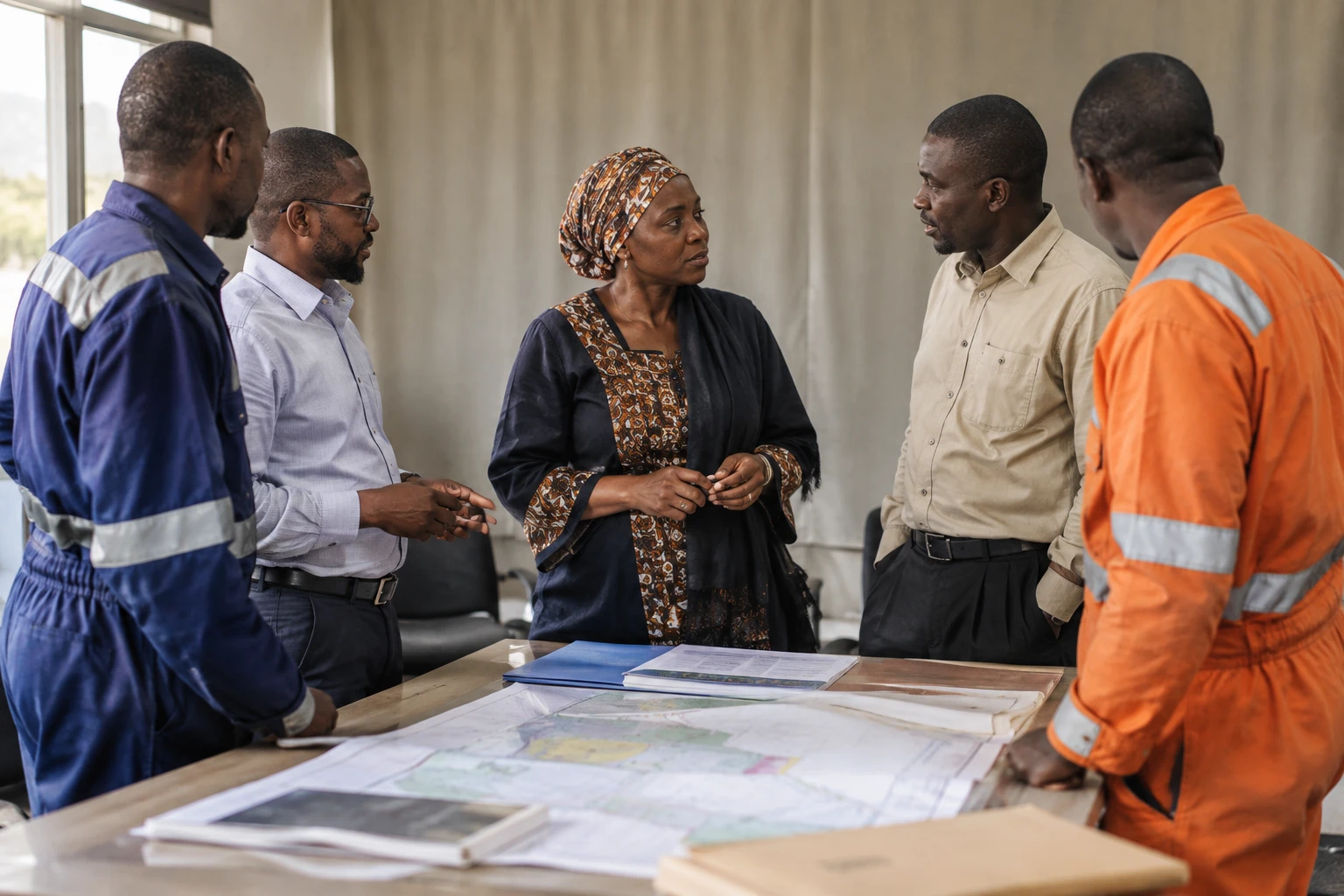
At Fekola, in south-western Mali, a mining permit is changing the outlook for a site facing a marked decline in quarterly production. For the Malian state, the stakes go beyond one company’s accounts: they also concern the share of mining revenues that returns to the country and the stability of the rules governing investment.
A new deposit under a renegotiated mining framework
Fekola is about 20 kilometres from Menankoto and Dandoko, two permits grouped under the name Fekola Regional. The area is operated by Canadian group B2Gold, whose activities in Mali are part of a sector that is strategic for exports and public revenues.
The regulatory context has changed with Mali’s 2023 Mining Code. In September 2024, the state and B2Gold concluded a protocol on governance and the rules applicable to the complex. The government said the agreement provided, in particular, for a 20% public stake in Fekola SA in the form of preference shares. Fekola Regional, meanwhile, falls under the new Mining Code.
This distinction matters: the mine’s historic permits and new regional projects are not governed by exactly the same framework. It reflects negotiations between Bamako and mining companies over taxation, state participation and implementation of the reform. It also comes amid broader tensions between the Malian authorities and some operators in the sector.
An accounting gain, but output remains lower
On 4 November 2026, B2Gold published its third-quarter results. The group reported a reversal of an impairment charge worth $253 million for the Fekola complex. The measure follows impairments recorded in 2023 and 2024, when regulatory changes had increased uncertainty over the site’s outlook.
The decision to grant the Menankoto mining permit on 7 August 2026 reduced uncertainty over the project’s timetable, according to the company. B2Gold estimates the reversal’s net effect on its profit at $212 million, after a deferred tax charge of $41 million. This is an accounting adjustment, not a new sum paid into the company’s accounts.
B2Gold’s net profit reached $414 million for the quarter, compared with $23 million a year earlier. But adjusted net profit, which excludes exceptional items among other things, stood at $183 million, barely above the $180 million recorded in the same period in 2025. The spectacular increase in reported profit therefore does not, on its own, reflect an equivalent rise in underlying activity.
On the ground, Fekola produced 78,000 ounces of gold between July and September, compared with 147,000 a year earlier, according to figures released by B2Gold. The fall was about 47%. The group attributed it in part to the sequencing of work in the pit: crews began removing waste rock in a new phase, while the plant processed more low-grade ore taken from stockpiles.
Menankoto is due to take over from 2027
B2Gold plans to deliver Menankoto ore to the Fekola plant in the first quarter of 2027, subject to finalising a processing agreement. Preparatory work began in October. The group expects Fekola Regional to ramp up through the end of 2027, followed by production of more than 150,000 ounces a year from 2028 until the mid-2030s.
The 2026 production target for the complex as a whole remains between 390,000 and 420,000 ounces. This forecast includes the existing mine and Fekola Regional. It should, however, be read as a company estimate, dependent on how operations proceed and on the commissioning of the new deposit.
The timetable directly links extraction to local processing: Menankoto is intended to supply the Fekola plant rather than operate as a standalone project. For B2Gold, this could support production in the medium term. For Mali, the questions also concern tax revenues, public participation and associated jobs. The company’s announcements alone are not enough to establish how these benefits will actually be distributed.
Benefits to be tracked beyond the group’s accounts
The reversal of the impairment charge indicates that B2Gold now considers the project more predictable and profitable than it did when the impairments were recorded. It guarantees neither future production volumes nor the revenues the state will receive. These results will depend in particular on the execution of the work, the terms for processing the ore and the practical application of agreements reached with the authorities.
Fekola’s progress is of interest to Mali’s partners in West Africa, including within ECOWAS, the Economic Community of West African States. Mali withdrew from the organisation with Burkina Faso and Niger in January 2025, but trade flows, investment and mining interests cross institutional borders. Bamako’s choices on state participation and permits may therefore matter in regional discussions on resource governance.
The next concrete step will be the announced arrival of Menankoto ore at the plant in early 2027. It will also be important to see whether the project keeps to its ramp-up schedule and how the provisions of the Mining Code translate into public revenues and local activity. The economic significance of the expansion will be measured by these results, rather than by an accounting revaluation.