
 Algeria
 Egypt
 Libya
 Morocco
 Sudan
 Tunisia
 Benin
 Burkina Faso
 Cabo Verde
 Côte d'Ivoire
 Ghana
 Guinea
 Guinea-Bissau
 Liberia
 Mali
 Mauritania
 Niger
 Nigeria
 Senegal
 Sierra Leone
 The Gambia
 Togo
 Cameroon
 Central African Republic
 Chad
 DR Congo
 Equatorial Guinea
 Gabon
 Republic of the Congo
 São Tomé and Príncipe
 Burundi
 Comoros
 Djibouti
 Eritrea
 Ethiopia
 Kenya
 Madagascar
 Malawi
 Mauritius
 Mozambique
 Rwanda
 Seychelles
 Somalia
 South Sudan
 Tanzania
 Uganda
 Angola
 Botswana
 Eswatini
 Lesotho
 Namibia
 Zambia
 Zimbabwe
When a municipality fails to pay an electricity bill, the debt does not stop at Eskom’s accounts. It can reach the national budget and, above all, undermine the services residents depend on. In South Africa, municipal arrears are putting the recovery of the electricity sector and cities’ ability to provide water and power to the test.
A chain of debt extending beyond Eskom
Municipalities owe Eskom about 122.5 billion rand. The state-owned company produces and distributes most of the country’s electricity. The figure, reported for August 2026, was cited in reports attributing it to the utility and a ministerial reply to Parliament. It follows a rise already reported in June, when arrears exceeded 110 billion rand. Parliamentary exchanges on municipal debt owed to Eskom confirm that the problem is worsening.
These sums should not be confused with unpaid bills owed by households and businesses to their municipalities. Those receivables were estimated at 484.5 billion rand in June 2026, according to budget data cited in available reports. The reported collection rate of 63.9% means that a significant share of expected revenue is not reaching local coffers. Short of cash, some municipalities in turn pay their suppliers late, including Eskom and water boards.
The problem varies from place to place. A major city may have a larger tax base and more economic activity, but also face hefty bills and costly networks. In mining towns and rural areas, a narrower local economy, water or electricity losses, and inadequate collections further reduce room for manoeuvre. Residents, meanwhile, bear the brunt of interruptions or deteriorating services, whether or not they pay their bills.
Eskom’s profit does not solve its cash-flow problem
After eight years of losses, Eskom announced a net profit of 16 billion rand for the 2024-2025 financial year. Its published financial statements report the same result, following a net loss of 55 billion rand the previous year. Eskom’s 2025 annual accounts attribute the improvement to several financial and operational developments. But an accounting profit does not guarantee that the company collects the money it needs on time to maintain the grid and repay its debts.
Stabilising electricity supply was a tangible improvement after years of load-shedding — scheduled power cuts to balance supply and demand. Municipal arrears nevertheless threaten that progress: they weigh on Eskom’s cash inflows at a time when the company needs to maintain its power stations, strengthen the grid and finance investment. The crisis is therefore not just about national generation. It also concerns local distribution and whether services are actually paid for.
The issue has a direct bearing on state finances. The Treasury has supported Eskom through a debt-relief programme and public guarantees. A weakened company could seek greater use of these mechanisms, adding to the risks facing the national finances. In its 2026 budget, the Treasury discussed distribution delegation agreements: in some struggling municipalities, Eskom could take over billing and collections functions to secure ongoing payments. The South African Treasury’s 2026 Budget Review presents this arrangement as a response to arrears and local management difficulties.
Financial measures face the test of local councils
The government has also withheld some transfers intended for struggling municipalities, linking them to repayment plans and compliance commitments. This pressure may encourage municipalities to pay their suppliers. It has a limitation, however: transfers also fund local services and spending. If penalties are applied without better collections or administrative support, residents risk bearing part of the cost of failures they do not control.
The national debt-relief programme launched in 2023 illustrates how difficult it is to secure lasting change. Information presented in public debate indicates that only a minority of the municipalities admitted to the programme are fully meeting their obligations to make ongoing payments. Parliament has also examined the introduction of delegation agreements, a sign that repaying arrears is not enough: municipalities must also prevent new unpaid bills from piling up.
Matjhabeng’s debt, in the Free State province, shows that the issue affects several essential services. The municipality owes nearly 9 billion rand to Vaal Central Water, the bulk water supplier. In March 2026, a parliamentary committee questioned its ability to honour a payment agreement. South Africa’s Parliament has documented Matjhabeng’s debt to its water supplier. Arrears can therefore jeopardise both electricity supply and the continuity of water services.
After the vote, responsibility rests with the new teams
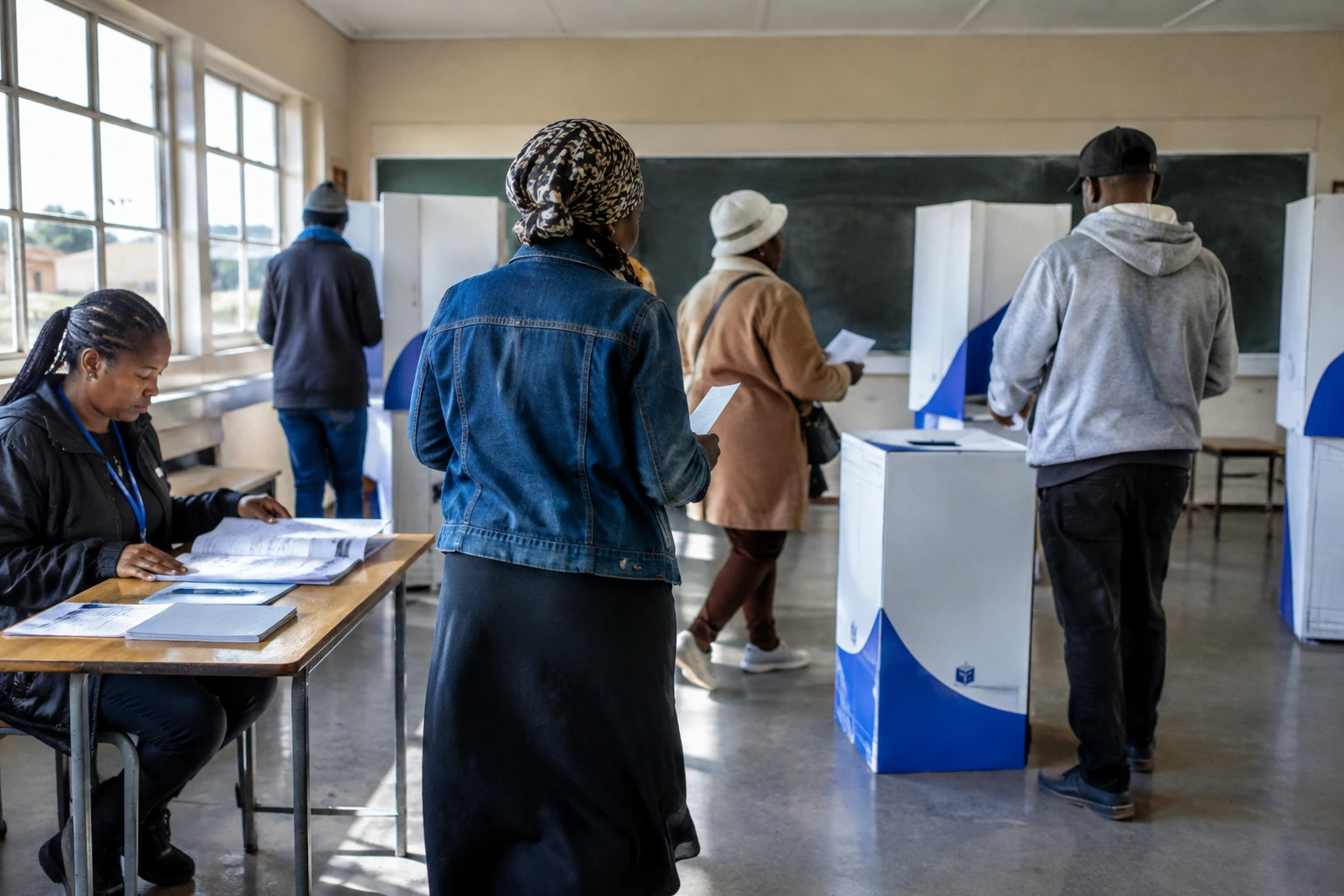
South Africa’s municipal elections were held on 4 November 2026. They renew the councils responsible, among other things, for budgets, billing and local services. The government set the date by decree. The official municipal election timetable underlines the central role these institutions play in local administration. The results may change coalitions and councils’ priorities, but they will not make accumulated debts disappear: incoming administrations inherit contracts, bills and repayment plans.
This political transition is a moment of accountability as well as a risk of uncertainty. Municipal teams will have to weigh collections, network maintenance and protection for vulnerable households. Eskom, water suppliers and the Treasury will, for their part, need to check that the agreements genuinely improve ongoing payments rather than shift arrears from one financial year to the next.
For Southern Africa, the issue is a reminder that a national electricity grid also depends on municipalities capable of billing customers and remitting revenues. It concerns an economy integrated into regional trade, where reliable electricity matters to businesses and cross-border services. The next decisive measure will not simply be the amount of historic debt: it will be whether the new councils can pay their current bills and maintain services in neighbourhoods and small towns alike.



