Algeria
 Egypt
 Libya
 Morocco
 Sudan
 Tunisia
 Benin
 Burkina Faso
 Cabo Verde
 Côte d'Ivoire
 Ghana
 Guinea
 Guinea-Bissau
 Liberia
 Mali
 Mauritania
 Niger
 Nigeria
 Sierra Leone
 The Gambia
 Togo
 Cameroon
 Central African Republic
 Chad
 DR Congo
 Equatorial Guinea
 Gabon
 Republic of the Congo
 São Tomé and Príncipe
 Burundi
 Comoros
 Djibouti
 Eritrea
 Ethiopia
 Kenya
 Madagascar
 Malawi
 Mauritius
 Mozambique
 Rwanda
 Seychelles
 Somalia
 South Sudan
 Tanzania
 Uganda
 Angola
 Botswana
 Eswatini
 Lesotho
 Namibia
 South Africa
 Zambia
 Zimbabwe
In south-eastern Senegal, artisanal gold supports thousands of people, but some of this activity falls outside public rules and statistics. The question is now a practical one: how can the people working at the sites be protected while more gold is brought into declared channels?
Organising sites in the south-east without cutting incomes
Senegal has put gold at the heart of its mining strategy as new industrial projects move forward. But artisanal activity follows a different logic. It relies on mobile workers, local networks and daily earnings. For households in Kédougou and Tambacounda, the new rules will therefore have a direct bearing on access to sites and livelihoods.
The challenge extends beyond Senegal’s borders. Gold-producing areas lie in a West African space through which workers, buyers and goods move. ECOWAS, the Economic Community of West African States, provides the regional framework for cooperation. However, formalisation depends first and foremost on the Senegalese state’s ability to offer accessible sites and procedures that can be applied on the ground.
The sector is not entirely clandestine. Gold panning is a legal activity in Senegal, but some mining operations and transactions fall outside authorisation and oversight. This distinction matters: an effective policy must curb illegal practices without treating all gold panners as traffickers.
Seven pilot corridors and a target for 2029
On 3 November 2026 in Dakar, the ministries of mines and armed forces signed a protocol to develop and secure seven gold-panning corridors in the regions of Kédougou and Tambacounda. The partnership is to run for two years. Three sites will be developed as a priority in Kédougou, according to Mines Minister Cheikhou Oumar Seck. The Senegalese Press Agency reported these details, which were also carried by regional media outlet Madar.
The government aims to formalise at least half of those involved by the end of 2029 and improve gold traceability. In the longer term, it plans to establish 35 corridors, including ten pilot ones. The proposed areas, each measuring about one square kilometre, could include boreholes, solar power, toilets, places of worship and eating areas. Nurseries have also been announced to facilitate women’s work and better protect children.
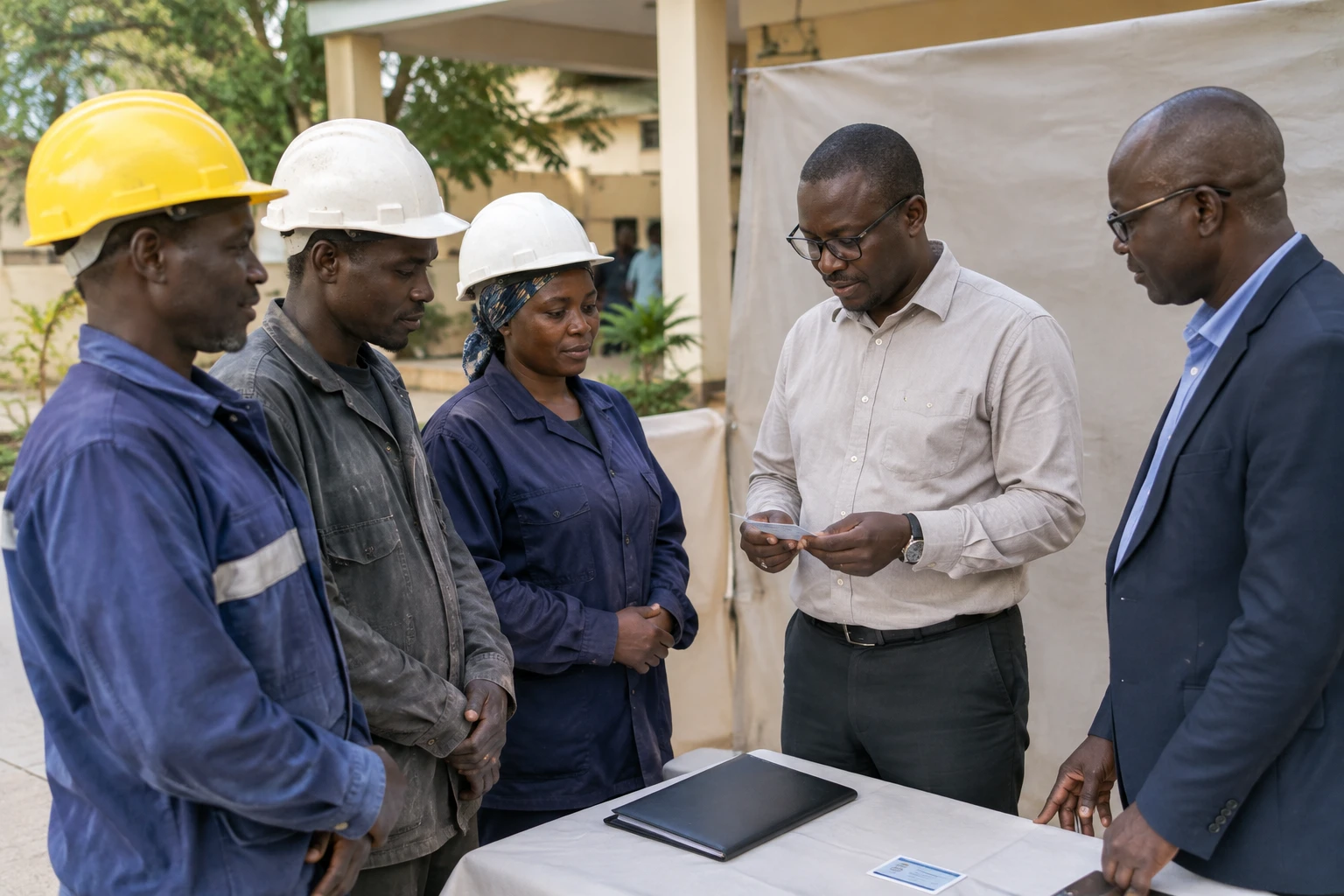
The initiative builds on an identification operation launched in 2026. In September, regional mining services announced the registration of 10,000 gold panners and the issuing of digital cards in Kédougou and Tambacounda. According to the APS, the cards are intended to identify workers and reserve access to official sites for their holders. The registration process also covers foreign gold panners in these regions.
The Ministry of the Armed Forces is to provide technical expertise to demarcate and secure the areas. This presence may facilitate the work, but it will not be enough to secure workers’ support. Success will also depend on consultation with communities, transparency over access criteria and the possibility of selling gold legally on viable terms.
Traceability, public revenue and working conditions
Formalisation addresses several issues at once. For the authorities, better-recorded volumes can increase revenue for the state and local authorities. For workers, equipped sites can reduce some risks, including collapses and exposure to toxic substances. But these benefits remain stated objectives: they will depend on the actual enforcement of standards and the quality of the equipment.
A report by the NGO SWISSAID estimates that 36 to 41 tonnes of gold may have left Senegal clandestinely between 2013 and 2022, with a value estimated at between $2.38bn and $2.71bn. These estimates relate to a past period and are not a direct count of every export. They nonetheless indicate the possible gap between actual production and the volumes passing through official channels. Senegalese media have also reported these findings.
Public data show why it is important to distinguish declared gold from unrecorded artisanal gold. For 2024, the report of the Extractive Industries Transparency Initiative (EITI), a mechanism for publishing data on extractive revenues, records 354,715 ounces of gold, or about 11 tonnes. The figure is based on disclosures from the industrial sector and does not measure all artisanal production.
The everyday challenge therefore plays out at site level. If a card becomes a condition of access, workers must be able to register without prohibitive fees or travel. If the corridors are too far from mining areas, they may see little use. And if official buyers offer less favourable prices or payment times than parallel channels, traceability could advance on paper without diverting informal sales.
An expanding industrial sector, and a balance to strike
Artisanal activity is developing as industrial mining expands. The Boto mine, in the Kédougou region, produced its first gold bar in September 2025, according to its operator, Moroccan group Managem. Senegal’s mining ministry also lists several gold projects under development. This growth does not replace gold panning; rather, it creates two different economic realities, with structured companies on one side and often self-employed workers on the other.
For people in mining regions, the benefits will depend on how revenue is shared, access to jobs, and the protection of land and waterways. The minister cited pollution of the Falémé as one of the concerns associated with clandestine activity. Regulation will therefore have to reconcile safety, economic activity and environmental protection without placing the entire cost of the transition on artisanal workers.
The next step will be to check the timetable for the first seven corridors, whether they actually open and how many people are registered. At the West African level, the question is also whether improved traceability in Senegal can help limit undeclared cross-border flows. Success will be measured less by the number of cards issued than by the share of gold actually sold and declared, as well as by working conditions at the sites.