Algeria
 Libya
 Morocco
 Sudan
 Tunisia
 Benin
 Burkina Faso
 Cabo Verde
 Côte d'Ivoire
 Ghana
 Guinea
 Guinea-Bissau
 Liberia
 Mali
 Mauritania
 Niger
 Nigeria
 Senegal
 Sierra Leone
 The Gambia
 Togo
 Cameroon
 Central African Republic
 Chad
 DR Congo
 Equatorial Guinea
 Gabon
 Republic of the Congo
 São Tomé and Príncipe
 Burundi
 Comoros
 Djibouti
 Eritrea
 Ethiopia
 Kenya
 Madagascar
 Malawi
 Mauritius
 Mozambique
 Rwanda
 Seychelles
 Somalia
 South Sudan
 Tanzania
 Uganda
 Angola
 Botswana
 Eswatini
 Lesotho
 Namibia
 South Africa
 Zambia
 Zimbabwe
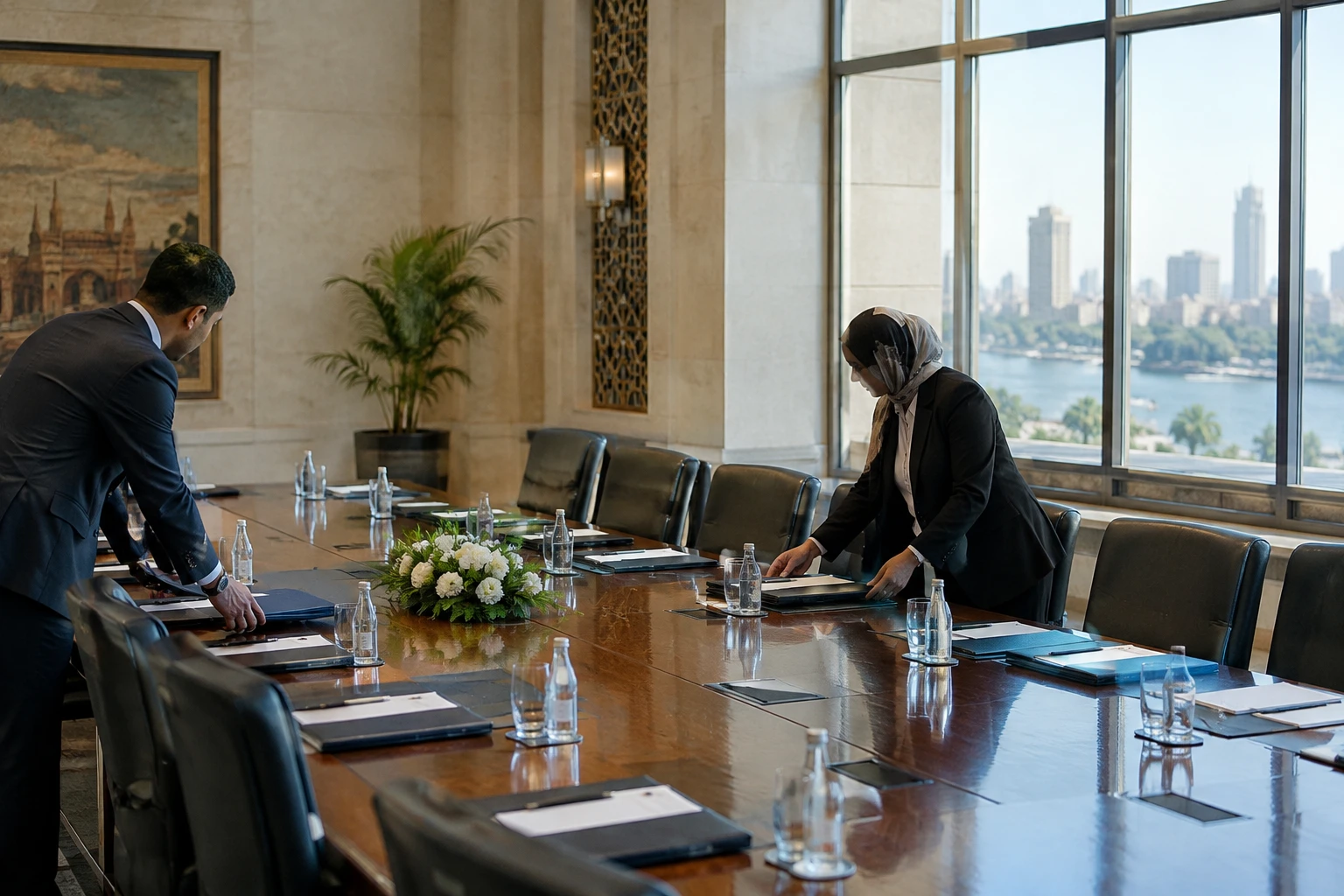
For Egypt, a confrontation between Washington and Tehran would not remain confined to the two capitals. It could undermine maritime routes, trade and the security of neighbouring countries. This is the risk highlighted by Abdel Fattah al-Sisi in Cairo, as the region seeks to prevent a resumption of military operations.
Cairo backs de-escalation
On Tuesday 3 November 2026, the Egyptian president called on the United States and Iran to prioritise dialogue. He was speaking at a press conference with Slovenia’s president, Nataša Pirc Musar, who was visiting Cairo. Al-Sisi backed a political agreement that takes account of each side’s main demands and concerns. His full remarks are published by the Egyptian presidency.
The head of state warned that renewed escalation could have serious consequences for the region and beyond. He also expressed confidence in Donald Trump’s ability to support mediators. This assessment reflects the Egyptian president’s political position; it does not guarantee that Washington or Tehran will accept the terms of a compromise.
Al-Sisi also said that Egypt would continue its efforts, alongside regional and international partners, to reduce tensions. The statement does not, however, specify a timeline for these efforts or the concrete proposals currently under discussion. It sets out a diplomatic priority rather than an agreement that has already been negotiated.
A neighbourhood where crises are interconnected
The appeal comes at a time when clashes and rivalries in the region can quickly affect countries not directly involved. For Egypt, regional stability is also an economic issue: nearby maritime routes, trade and energy prices affect businesses as well as households. The Suez Canal, a major route for global trade, makes these issues particularly tangible for Cairo.
Egyptian diplomacy must also take account of its ties with the Arab Gulf states and its relations with Washington. In his remarks, al-Sisi reaffirmed Egypt’s support for the security of the Gulf states. This position underlines that Cairo is seeking both to contain escalation and to reassure its Arab partners. It does not mean that all the governments concerned share the same reading of the conflict.
At regional level, the Arab League provides a forum for consultation among Arab states, but Iran is not a member. Discussions between Washington and Tehran therefore also depend on other mediators and diplomatic channels. Egypt can bring its political weight and relationships to bear, but it cannot impose a settlement on its own.
Preserving room for manoeuvre
For the Egyptian authorities, preventing the conflict from worsening is as much a matter of security as of protecting economic activity. Prolonged tension can complicate trade, increase uncertainty over supplies and drive up transport costs. The effects are not felt equally: businesses linked to international trade can be hit quickly, while households feel the impact particularly through price fluctuations and pressure on budgets.
This diplomacy also forms part of a broader effort by Cairo to retain a role as an interlocutor in regional crises. The Egyptian presidency says it wants to work with regional and international partners. But the scope of this ambition will depend on whether reciprocal gestures can be secured and whether the parties are willing to maintain dialogue rather than resume military operations.
Al-Sisi’s remarks also strike a delicate political balance. By calling on Washington and Tehran to show flexibility, Egypt avoids portraying de-escalation as a concession demanded of only one side. At the same time, by expressing solidarity with the Gulf states, it highlights the concerns of its Arab partners. This combination could support mediation, but it does not resolve fundamental disagreements.
From words to concrete guarantees
The decisive question now is whether the call for dialogue leads to sustained diplomatic exchanges and acceptable guarantees. The presidential speech does not specify what compromises might address each side’s demands. It therefore does not, by itself, allow any conclusion that a resumption of fighting has been averted or that an agreement is near.
For Egypt and its neighbours, the stakes go beyond the relationship between two governments. Any escalation could affect maritime routes, markets and regional security. Conversely, a credible negotiating process could reduce these risks, provided it involves the relevant actors and addresses their concerns. In the coming days, signs to watch will include the continuity of contacts between mediators, decisions by Washington and Tehran, and the response of the Arab Gulf states.
Cairo’s message is therefore clear about its objective but cautious about the means: prevent the confrontation from widening and keep a political solution within reach. Egypt’s ability to influence what happens next will depend less on its statements than on the space the parties actually leave for diplomacy.