Algeria
 Egypt
 Libya
 Morocco
 Sudan
 Tunisia
 Benin
 Burkina Faso
 Cabo Verde
 Côte d'Ivoire
 Ghana
 Guinea
 Guinea-Bissau
 Liberia
 Mali
 Mauritania
 Niger
 Nigeria
 Sierra Leone
 The Gambia
 Togo
 Cameroon
 Central African Republic
 Chad
 DR Congo
 Equatorial Guinea
 Gabon
 Republic of the Congo
 São Tomé and Príncipe
 Burundi
 Comoros
 Djibouti
 Eritrea
 Ethiopia
 Kenya
 Madagascar
 Malawi
 Mauritius
 Mozambique
 Rwanda
 Seychelles
 Somalia
 South Sudan
 Tanzania
 Uganda
 Angola
 Botswana
 Eswatini
 Lesotho
 Namibia
 South Africa
 Zambia
 Zimbabwe
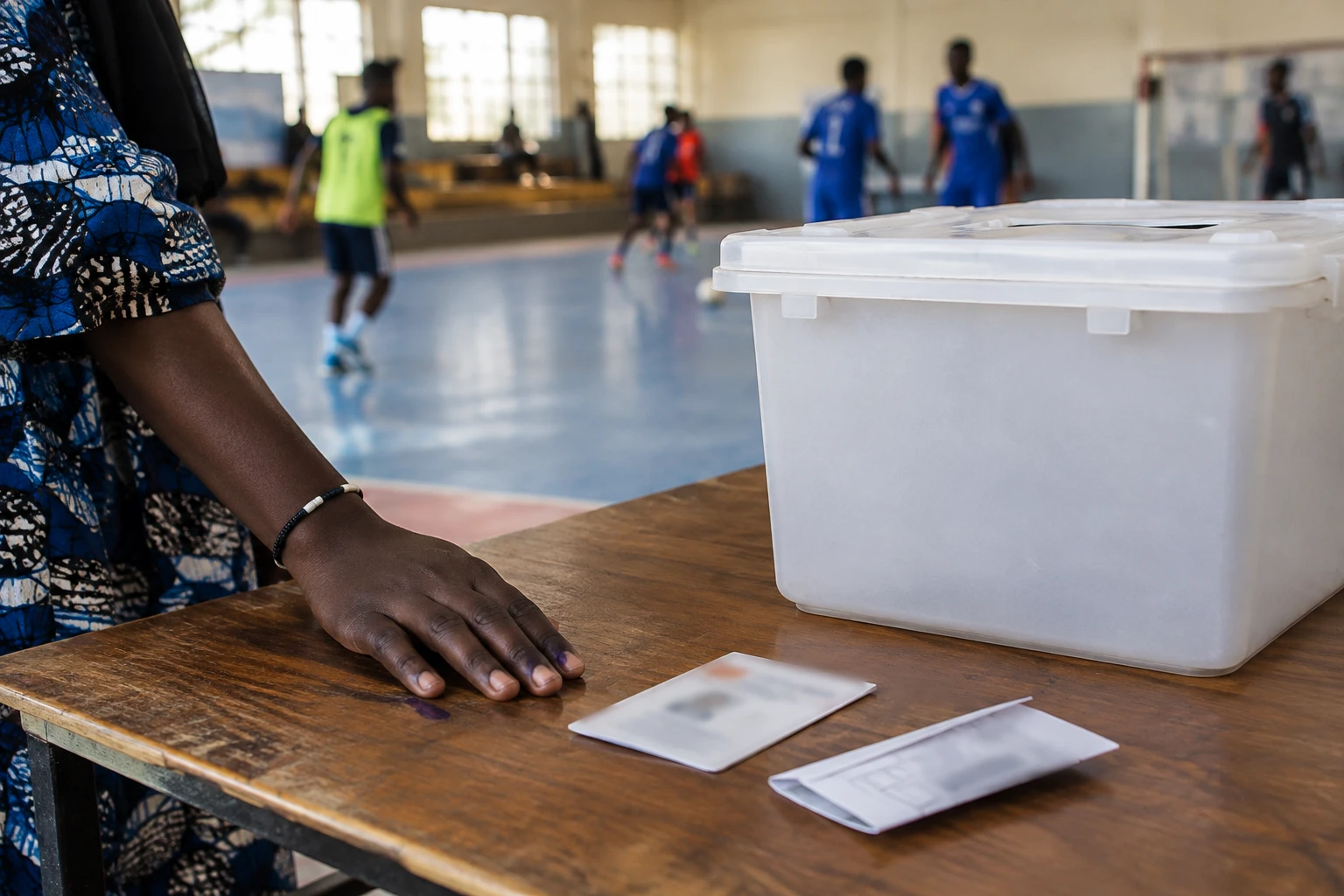
In Dakar, spectators did not wait for the final day to gauge what is at stake in the tournament: in a tight group, a single action can shift the balance. The Senegalese women left the floor beaten by Venezuela, but their campaign at the Youth Olympic Games (YOG) remains open ahead of their next fixture.
A home tournament, an international competition
The Dakar 2026 Youth Olympic Games take place from 31 October to 13 November in Senegal. It is the first time the Youth Olympic Games have been held on the African continent. The events are spread across Dakar, Diamniadio and Saly. For young Senegalese athletes, playing at home offers particular visibility. It also places the national teams against opponents from several regions of the world.
The women’s futsal tournament brings together eight teams divided into two groups. Senegal play in Group A with Fiji, Ukraine and Venezuela. Futsal, a version of football played indoors on a smaller pitch, demands quick transitions and leaves little time to correct a mistake.
The Senegalese side entered the tournament after winning the « Dakar En Jeux » tournament, held the previous year in Diamniadio. That result had raised expectations, without guaranteeing an Olympic qualification. The Youth Olympic Games bring together youth teams from different sporting traditions. The challenge is therefore as much about handling pressure as it is about adapting to the opponent’s game.
A late goal decides the match
On Tuesday 3 November, at the Iba Mar Diop complex, Senegal lost 1-0 to Venezuela in their second group match. The Senegalese women had opened their tournament with an 8-1 win over Fiji on 1 November. The contrast between the two scores highlights the difference in pace and opposition between the matches, but does not on its own sum up the team’s progress.
The Venezuelan goal came in the final minutes, after a match that had been evenly contested until then. The Senegalese Press Agency (APS) also reported that coach Walimata Sèye regretted her side’s lack of efficiency in front of goal. The coach called for lessons to be drawn from the match without drawing hasty conclusions about her group’s level. This reading recalls a central feature of futsal: a few chances can decide a game, even when both teams neutralise each other for long periods.
The results published after this second matchday placed Ukraine at the top of Group A with six points. Senegal and Venezuela each had three. The defeat therefore did not eliminate all chances of reaching the semi-finals, but it made the final group match decisive. The standings and group results must be read as of this matchday, before the next game.
The final match becomes decisive
For the players, the immediate goal is to turn disappointment into a sporting response. A narrow defeat may reveal a problem with finishing, but also a team’s capacity to stay organised under pressure. Without detailed statistics on shots or possession, it would be unwise to go beyond the observations reported by the coach and the match reports.
The effects extend beyond the pitch. In Dakar, the public watches young Senegalese women compete against international teams in an Olympic competition held in Senegal. This presence may give greater visibility to women’s futsal, a discipline that still shares attention and resources with eleven-a-side football. However, a match or a tournament is not enough to establish lasting development of infrastructure, leagues or girls’ access to sport. These questions will depend on what follows the Games.
The match also counts within a broader continental sequence. Cameroon are also taking part in the women’s tournament, while the other groups bring together teams from Africa, Asia, Europe and the Americas. African performances are therefore being played out before a local audience, but in a competition where results are measured by the same rules and on the same international calendar.
An African event in the spotlight
The significance of Dakar 2026 lies as much in the results as in hosting a youth Olympic event on the continent. For Senegal, the organisation creates a stage where athletes, volunteers and spectators take part in an international competition in their own country. For other African delegations, it offers an opportunity to compete nearby and to face the best teams in their age category.
Senegal’s next match was to decide the ambitions of Group A. The team needed a favourable result to continue on its route to the semi-finals, while the standings also depended on the other matches. The established fact after the clash with Venezuela is therefore clear: the Senegalese women lost 1-0 on 3 November, but their campaign was not yet over. What followed would determine whether the team could turn the experience of this defeat into qualification.
For more on the tournament’s context, see the Senegal results and Group A standings reported by the APS, as well as the FIFA summary of the first day of the women’s tournament.