
 Algeria
 Egypt
 Libya
 Morocco
 Sudan
 Tunisia
 Benin
 Burkina Faso
 Cabo Verde
 Côte d'Ivoire
 Ghana
 Guinea
 Guinea-Bissau
 Liberia
 Mali
 Mauritania
 Niger
 Nigeria
 Senegal
 Sierra Leone
 The Gambia
 Togo
 Cameroon
 Central African Republic
 Chad
 Equatorial Guinea
 Gabon
 Republic of the Congo
 São Tomé and Príncipe
 Burundi
 Comoros
 Djibouti
 Eritrea
 Ethiopia
 Kenya
 Madagascar
 Malawi
 Mauritius
 Mozambique
 Rwanda
 Seychelles
 Somalia
 South Sudan
 Tanzania
 Uganda
 Angola
 Botswana
 Eswatini
 Lesotho
 Namibia
 South Africa
 Zambia
 Zimbabwe
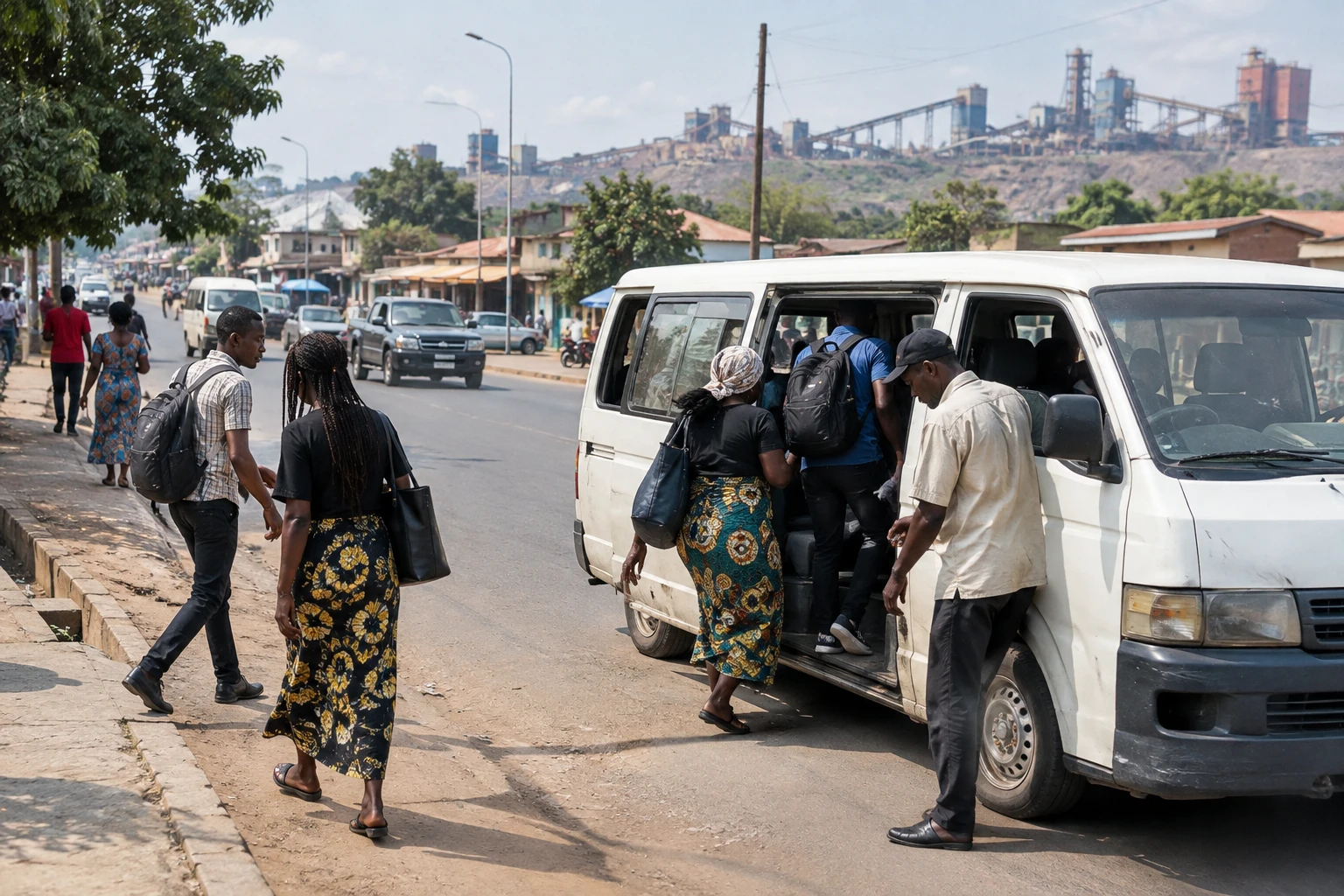
In Kolwezi, the wealth generated by copper and cobalt is also measured by the distance between industrial sites and the neighbourhoods where families live. For 27 residents, including eight children, the question is now before a court: who must answer when mining activity is accused of damaging water, air and soil?
A local dispute with national stakes
Kolwezi, the capital of Lualaba Province, lies at the heart of the copper and cobalt belt in the south-east of the Democratic Republic of the Congo. These minerals feed into supply chains for batteries, electricity grids and many other products. They attract foreign investment and generate revenue for the state. But extraction also transforms the areas where people live, farm and work.
The region is part of Central Africa, but the case also resonates across the Southern African Development Community (SADC), of which DR Congo is a member. Mining trade, infrastructure and environmental issues extend beyond national borders. Yet the rules governing permits, inspections and compensation are primarily the responsibility of Congolese institutions.
The trial follows other warnings about the effects of mining activity in the country. In Lubumbashi, an industrial spill in November 2025 prompted the authorities to announce assistance and compensation measures, whose implementation was still being debated several months later. That separate case proves nothing about the Kolwezi mine. It does, however, illustrate the practical importance of monitoring and tracking compensation for local residents. Mongabay’s report on Lubumbashi documents the difficulties residents faced after the incident.
The allegations have yet to be examined
On 3 November 2026, the Kolwezi Commercial Court held an initial hearing in proceedings brought by 27 residents against the Compagnie minière de Musonoie Global (COMMUS), the Congolese state and the Congolese Environment Agency (ACE). The company is controlled by China’s Zijin Mining. The plaintiffs accuse COMMUS of polluting the air, water and soil near its facilities. They also accuse the state and ACE of failing to monitor the site adequately or enforce environmental standards.
The first hearing dealt with procedural matters. The court has not yet examined the substance of the case, and no liability has been established. At this stage, the residents’ allegations therefore do not amount to a judgement on the practices of the company or the authorities.
The claimants are seeking nearly $1.3 million for the harm they attribute to pollution, including medical expenses, lost income and non-material damage. They are also seeking $5 million to restore the environment, as well as measures to prevent further discharges and guarantee access to drinking water. These sums are claims submitted to the court, not compensation that has already been awarded.
In evidence presented by the organisations supporting the residents, one claimant identified by a pseudonym describes a watercourse once used for fishing, cooking and washing. She says her family can no longer use it as before. Her account offers a glimpse of local concerns, but the links between each alleged health problem and the mine’s activities will have to be assessed as part of the case.
COMMUS disputes that its activities are responsible for all the pollution found in the region. A response from the company, reported by Africa Briefing, points to several possible causes, including natural geological conditions, past mining and other industrial activities. That position will have to be weighed against the evidence submitted to the judges.
Public oversight at the heart of the debate
The claimants are relying, among other provisions, on Article 285 bis of the Congolese Mining Code. According to AFREWATCH, which is supporting them, the provision sets out a specific liability regime for environmental damage linked to mining activity. Its application and scope will be central to the court’s debate. The issue is not only whether damage occurred: its cause must also be established, and the respective obligations of the company and the authorities examined.
The residents also say they have been unable to access COMMUS’s environmental and social impact assessment. The document is meant to set out a project’s risks and the measures planned to reduce them. Access to it matters to local residents, as well as to researchers and public services responsible for checking environmental commitments.
Scientific analyses carried out in 2026 around mining sites in Lualaba Province found high concentrations of fine particles and metals at some locations. AFREWATCH and RAID, organisations supporting the plaintiffs, have reported specific findings from sites near COMMUS. They are evidence in the public debate; they do not replace the court’s adversarial examination and are not, on their own, enough to determine legal liability. AFREWATCH’s statement sets out the residents’ claims and the analyses they are drawing on.
Potential consequences beyond Kolwezi
For families living near the mine, the outcome could affect access to water, health, farming activities and the value of any compensation. For workers and local businesses, the case reflects a broader reality: mining supports jobs and trade, while environmental risks can have a concentrated impact on neighbouring communities. The challenge is to reconcile resource extraction, the protection of residents and effective oversight of commitments made.
The significance of the trial will depend on the evidence examined, procedural decisions and the institutions’ ability to enforce any eventual judgement. If it clarifies how the Mining Code applies to environmental disputes, other communities in the copper and cobalt belt may follow it closely. It is not yet a legal precedent: the substance of the case remains to be decided.
For DR Congo, a key country in global copper and cobalt supply chains, the credibility of mining governance is not determined solely by investment contracts. It also depends on transparent impact assessments, accessible public inspections and verifiable compensation when damage is recognised. The next stage will therefore be judicial as well as institutional: the court must investigate the facts, while the authorities will continue to face scrutiny over their oversight role.



