Algeria
 Egypt
 Libya
 Morocco
 Sudan
 Tunisia
 Benin
 Burkina Faso
 Cabo Verde
 Côte d'Ivoire
 Ghana
 Guinea
 Guinea-Bissau
 Liberia
 Mali
 Mauritania
 Niger
 Nigeria
 Sierra Leone
 The Gambia
 Togo
 Cameroon
 Central African Republic
 Chad
 DR Congo
 Equatorial Guinea
 Gabon
 Republic of the Congo
 São Tomé and Príncipe
 Burundi
 Comoros
 Djibouti
 Eritrea
 Ethiopia
 Kenya
 Madagascar
 Malawi
 Mauritius
 Mozambique
 Rwanda
 Seychelles
 Somalia
 South Sudan
 Tanzania
 Uganda
 Angola
 Botswana
 Eswatini
 Lesotho
 Namibia
 South Africa
 Zambia
 Zimbabwe
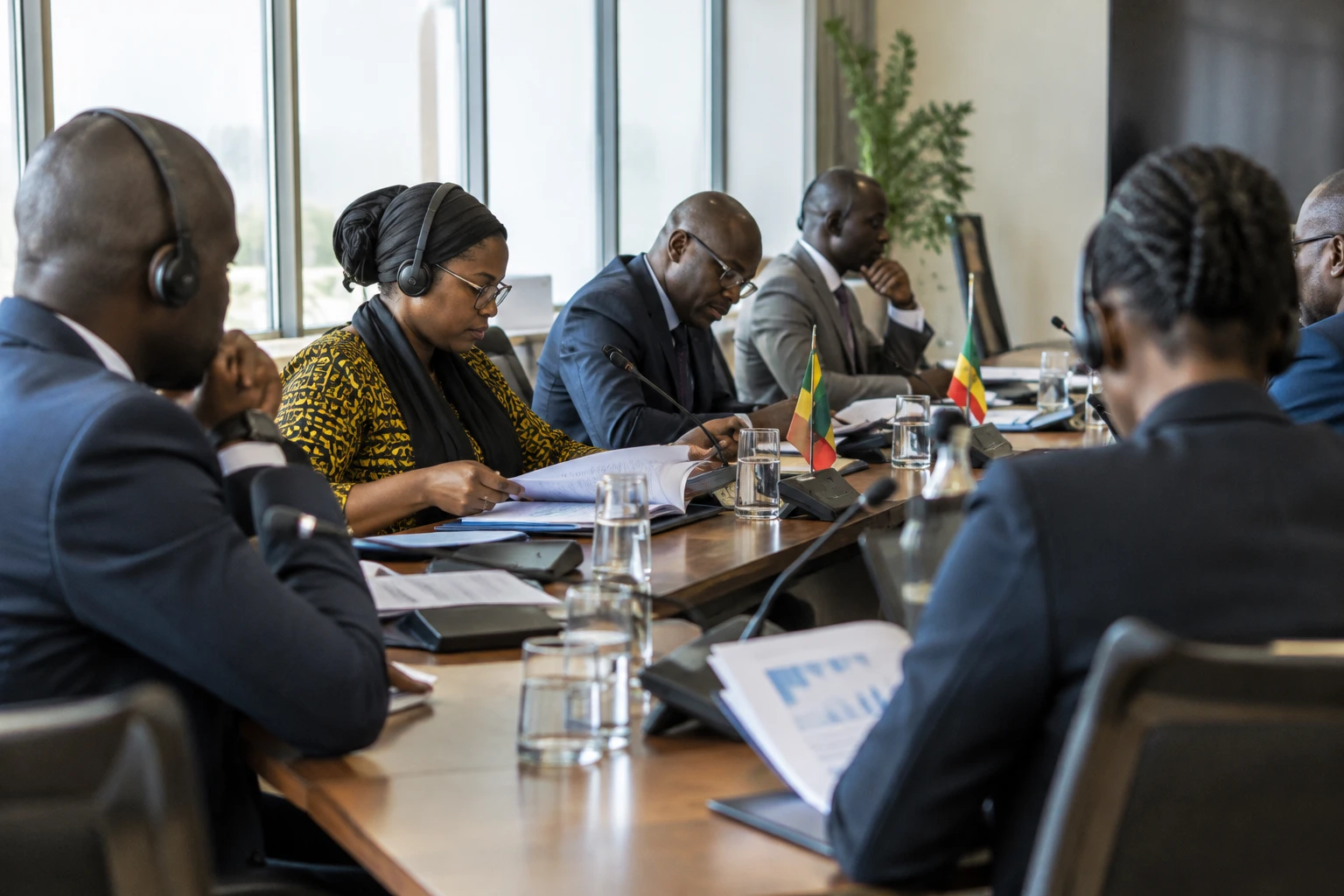
In Senegal, the dispute over the revised budget goes beyond a battle of figures. It raises an immediate question: how can year-end public spending be financed without weakening essential services or delaying projects expected by the population? In Dakar, MPs’ rejection of the bill leaves that equation without a parliamentary compromise.
A revised budget challenged over its assumptions
On Tuesday 3 November 2026, the National Assembly rejected bill No. 40/2026 on the supplementary finance law (LFR). The bill was intended to adjust the state budget during the financial year, notably to account for revenue and spending that differed from initial forecasts. The parliamentary institution confirmed the rejection and reported that MPs had deemed the framework “insincere”, particularly in view of spending cuts affecting health and education.
The vote followed two unfavourable opinions from the Finance and Budgetary Control Committee, on 23 and 30 October. The bill had been referred back to the committee on 27 October for further discussions. But the talks did not bring the positions closer. Senegal’s public broadcaster RTS said the rejection in plenary followed the adoption of a preliminary motion put forward by MP Amadou Ba.
Disagreements also concern the credibility of the figures and the state’s ability to execute the announced spending before year-end. RTS reported that MPs challenged the projected deficit, set at 7.6% of gross domestic product (GDP), as well as the expected execution of 644 billion CFA francs in investment financed by external resources. These are objections raised by parliamentarians; they do not, on their own, amount to an independent verification of the forecasts.
The bill reduced budget revenue to 5,848.7 billion CFA francs, from 6,188.8 billion in the initial finance law, while raising spending to 7,583.9 billion, according to the Pan-African News Agency. The Budget Ministry, for its part, said expected revenue from the Economic and Social Recovery Plan had been revised to 311.5 billion CFA francs, down from 762.9 billion in the initial budget. These figures illustrate the scale of the adjustment, although the amounts and budgetary scopes must be distinguished.
Subsidies and investment at the heart of the trade-off
Higher energy subsidies are one of the main sources of pressure. The government is planning an allocation of 790.3 billion CFA francs, compared with an initial 250 billion, to support prices and purchasing power. This spending protects households and businesses from part of the cost of energy. However, it reduces the room available for other priorities and makes it harder to meet deficit targets.
At the same time, the executive plans to cut investment appropriations by about 555 billion CFA francs. The effects will not be the same everywhere. Businesses and workers linked to public contracts may feel the impact of a slowdown in construction. In the regions, postponed infrastructure projects may affect access to services and economic opportunities. In Dakar, public administrations and state suppliers are more exposed to cash-flow pressures and payment delays.
The Finance Ministry has also warned of the risk that prolonged uncertainty could affect the mobilisation of the financing needed in 2026. Information presented during the budget revision showed 1,956.3 billion CFA francs in unpaid arrears. This particularly sensitive figure should be read as a number reported in the budget framework, not as a tally corroborated by two independent sources. For the suppliers concerned, however, delays can turn a public-sector cash-flow difficulty into a private-sector one.
The rejection therefore brings two imperatives into tension. The government must contain spending and finance commitments already made. MPs are calling for credible forecasts and challenging how the savings are distributed, particularly when they affect social services. Energy subsidies can cushion the impact of rising costs on households, while investment cuts and payment delays risk weighing on economic activity and public services.
The budget debate in its regional context
The situation forms part of the national effort to restore public finances, launched after discrepancies were uncovered in debt and deficit data for previous years. It also matters for the West African Economic and Monetary Union (WAEMU), which brings together eight countries that share, among other things, the CFA franc and a budgetary convergence framework. Senegal’s revised deficit of 7.6% of GDP exceeds the community reference of 3%, although adjustment paths and timetables are under discussion.
The Economic Community of West African States (ECOWAS), which brings countries in the region together in a broader framework for economic and political cooperation, is also relevant. Senegal’s budget credibility may influence the confidence of partners and investors, but the issue goes beyond the signals sent to markets. It also concerns the state’s ability to pay suppliers, maintain services and distribute the burden of adjustment across sectors and regions.
The issue is closely linked to discussions with the International Monetary Fund (IMF). On 1 September 2026, Fund staff and the Senegalese authorities reached a staff-level agreement on a 36-month programme worth about US$2.2 billion. This step does not amount to final approval: the IMF says the agreement remains subject to approval by its management and executive board, as well as corrective measures and financing assurances. The budget framework presented by Dakar is therefore an important part of the process, but not its only condition.
In the short term, the rejection resolves neither spending already committed nor payment deadlines. Instead, it opens a period of uncertainty over the next steps and the adjustments the executive may propose. The ministry and MPs will need to clarify their positions, while creditors, suppliers and those working in social sectors monitor how appropriations evolve. For WAEMU and ECOWAS partners, Senegal’s case is a reminder that fiscal consolidation depends as much on reliable accounts as on the concrete choices about which spending to protect or cut.
Information on the vote and parliamentary discussions was reported by Senegal’s National Assembly, RTS and the Pan-African News Agency. The budget framework is available on the Directorate General of the Budget website; the programme conditions are detailed by the IMF.