Algeria
 Egypt
 Libya
 Morocco
 Sudan
 Tunisia
 Benin
 Burkina Faso
 Cabo Verde
 Côte d'Ivoire
 Guinea
 Guinea-Bissau
 Liberia
 Mali
 Mauritania
 Niger
 Nigeria
 Senegal
 Sierra Leone
 The Gambia
 Togo
 Cameroon
 Central African Republic
 Chad
 DR Congo
 Equatorial Guinea
 Gabon
 Republic of the Congo
 São Tomé and Príncipe
 Burundi
 Comoros
 Djibouti
 Eritrea
 Ethiopia
 Kenya
 Madagascar
 Malawi
 Mauritius
 Mozambique
 Rwanda
 Seychelles
 Somalia
 South Sudan
 Tanzania
 Uganda
 Angola
 Botswana
 Eswatini
 Lesotho
 Namibia
 South Africa
 Zambia
 Zimbabwe
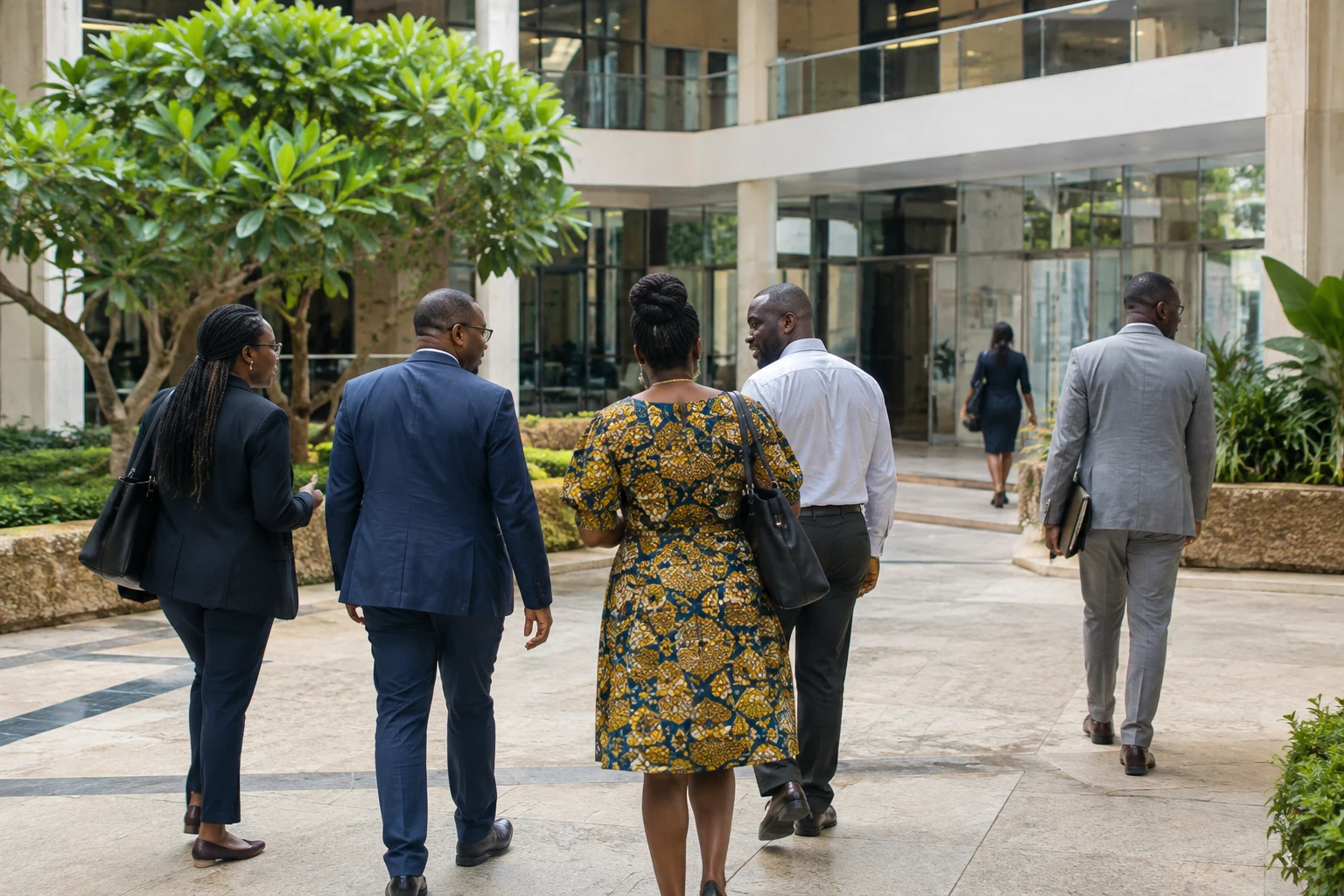
An official apology can acknowledge history, but it cannot by itself change the economic rules that weigh on African countries. This is the issue Ghana wants to put at the heart of international discussions on reparations for the transatlantic slave trade and the enslavement of Africans.
In Accra, an argument that goes beyond a symbolic gesture
Ghanaian President John Dramani Mahama has set out five priorities to structure the debate. In a statement published on 1 November 2026, he cautiously welcomed British Prime Minister Andy Burnham’s openness to a possible formal apology. The head of the British government has, however, rejected the idea of direct financial reparations, according to the Associated Press. The announced dialogue therefore does not mean there is agreement on the nature of reparations.
Ghana’s proposals link historical recognition with development conditions. They call for investment in education, science, health, youth empowerment and climate resilience. Mahama is also calling for development partnerships able to address structural poverty and imbalances in the global economy, notably through reform of the international financial architecture and debt mechanisms.
The plan also includes an official apology from states involved in the slave trade and slavery, coordinated action against systemic racism and Afrophobia, and the return of African cultural property taken during slavery and colonisation. These priorities were reported by Ghanaian media outlet 3News, which cited the presidential statement.
An African and Caribbean process already under way
Ghana is not addressing this issue alone. In West Africa, the country is a member of ECOWAS, the Economic Community of West African States. But the central framework for this issue extends beyond the regional organisation: it brings together the African Union, Caribbean countries united in CARICOM, and African diaspora communities.
An important step was taken on 25 March 2026. The United Nations General Assembly adopted resolution A/RES/80/250, introduced by Ghana, describing the transatlantic slave trade and the racialised enslavement of Africans as “the gravest crime against humanity”. The text received 123 votes in favour, three against and 52 abstentions. It marks political recognition, but does not in itself establish a legally binding compensation mechanism.
In June, Accra hosted a consultative conference bringing together African and Caribbean officials, lawyers, researchers and civil society organisations. Participants sought to turn political support for the UN resolution into a roadmap. Mahama announced three international groups there, focusing on policy, the return of cultural heritage and legal avenues. The Ghana News Agency and Ghana’s Ministry of Foreign Affairs also reported on the meeting.
Debt, heritage and reparations: connected, but distinct issues
By extending the debate to development finance, Accra is making a structural case for reparations. The Ghanaian president’s argument is that justice cannot be limited to apologies or the return of objects. It must also examine contemporary economic relations and the constraints that limit the room for manoeuvre of many states.
This approach ties in with discussions already under way on reforming development finance and climate action. It does not, however, mean that every country’s current debt stems directly from slavery, or that all African countries face the same constraints. National circumstances differ, as do historical responsibilities and the positions of the governments concerned.
For populations, the tangible effects will therefore depend on the commitments that follow the statements. Investment in health or education could benefit households and young people, while reform of borrowing conditions would affect public budgets and state-funded services. The return of heritage, meanwhile, raises questions of provenance, conservation and cooperation between cultural institutions.
The United Kingdom has opened the door to discussion of an apology and to structured dialogue, but has ruled out financial reparations. This difference shows that the terms of the process itself remain contested. For Accra, the challenge will be to maintain a common position with African and Caribbean partners without conflating moral recognition, cultural restitution, development measures and financial compensation.
The next step will be commitments
Ghana is seeking to make this a sustained diplomatic issue rather than a process limited to commemorations. The UN resolution and the Accra conference have provided a framework for this ambition. The announced working groups will have to flesh out their proposals and how they fit with African Union and CARICOM initiatives.
The continent-wide reach of the effort will depend on African states’ ability to coordinate their demands and set shared priorities with the Caribbean and the diaspora. It will also depend on the response of the governments being approached: openness to dialogue is not the same as apologies already made or measures already funded. For now, Accra is advocating a broad definition of reparative justice. It remains to be seen whether international discussions will produce verifiable decisions on debt, investment and the return of cultural property.