Algeria
 Egypt
 Libya
 Morocco
 Sudan
 Tunisia
 Benin
 Burkina Faso
 Cabo Verde
 Côte d'Ivoire
 Ghana
 Guinea
 Guinea-Bissau
 Liberia
 Mali
 Mauritania
 Niger
 Nigeria
 Senegal
 Sierra Leone
 The Gambia
 Togo
 Cameroon
 Central African Republic
 Chad
 DR Congo
 Equatorial Guinea
 Gabon
 Republic of the Congo
 São Tomé and Príncipe
 Burundi
 Comoros
 Djibouti
 Eritrea
 Ethiopia
 Kenya
 Malawi
 Mauritius
 Mozambique
 Rwanda
 Seychelles
 Somalia
 South Sudan
 Tanzania
 Uganda
 Angola
 Botswana
 Eswatini
 Lesotho
 Namibia
 South Africa
 Zambia
 Zimbabwe
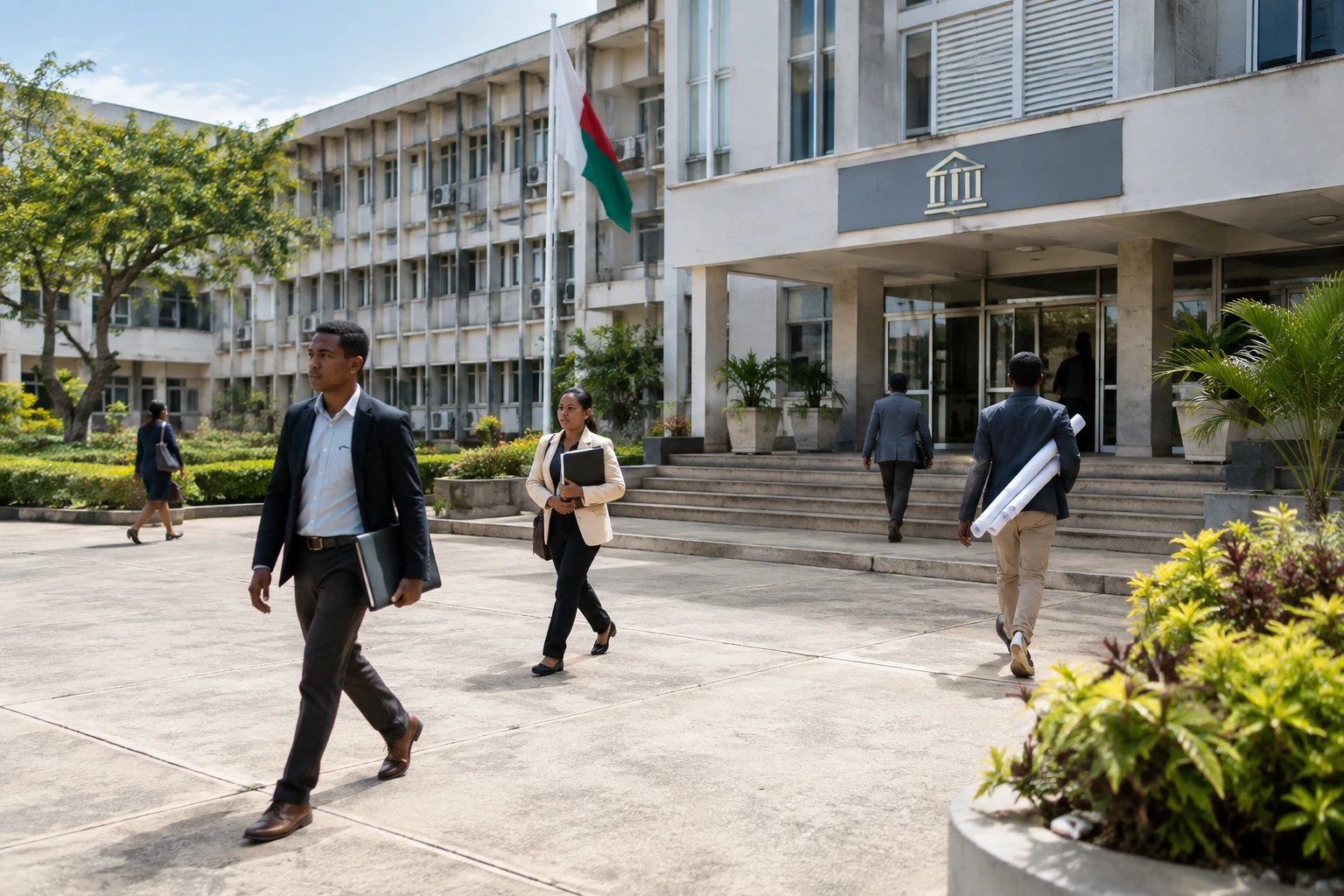
In Madagascar, an iron mine is not just a deposit. The ore must also be transported to the coast, buyers must be found and infrastructure must be financed. The future of Bekisopa, in the centre of the country, now hinges on these practical conditions.
The project could open a new export sector for the island. However, the mining licence obtained in 2026 does not yet mean production will begin. Discussions held in Antananarivo with international partners focus first on the road, the ports and the financing.
Malagasy iron awaits its first major project
Madagascar has a varied mineral endowment, including nickel, cobalt, graphite and rare earths. Yet the existence of a deposit guarantees neither industrial extraction nor lasting benefits for local residents. The sector also depends on infrastructure, public rules and the ability to turn projects into actual investment.
The precedent of Soalala illustrates the gap between potential and production. In 2010, the Chinese group Wuhan Iron and Steel, since integrated into China Baowu, committed to this deposit in the north-west. The agreement was linked to an announced payment of $100 million to the Malagasy state. Developing the mine and its infrastructure was then expected to require far larger investment.
The project did not, however, progress beyond the exploration stage, according to a World Bank document. An academic study also revisits the payment announced in 2010, although the amounts reported at the time are not all identical. This discrepancy calls for distinguishing the often-cited figure of $100 million from other published estimates. The World Bank’s review of mining activity in Madagascar describes the project as not having advanced beyond exploration. An academic analysis of the anticipated mining boom in Madagascar likewise notes differing figures for the payment linked to Soalala.
This history matters today because it highlights the risk of announcements that come long before any first exports. Mining projects can encounter logistical costs, high financing requirements and changing market conditions. For authorities and affected communities alike, the challenge is to verify the steps actually completed, not just investment promises.
Bekisopa moves forward, but financing and logistics remain decisive
AKORA Resources, an Australian company that entered the project in 2014, says it obtained a mining licence for Bekisopa in 2026. On 26 October, the company announced discussions held in Antananarivo with the World Bank, its private sector financing arm, the International Finance Corporation (IFC), and the European Union. The talks focused in particular on the infrastructure needed to transport the ore.
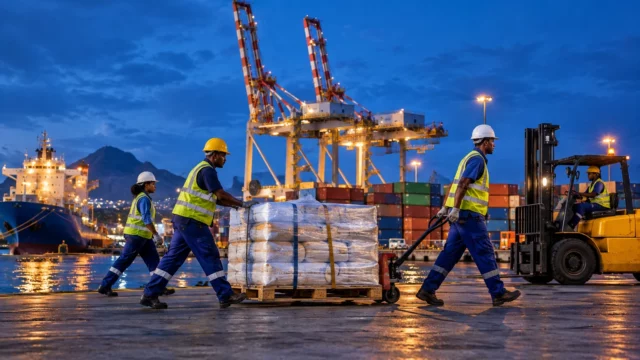
The envisaged logistics scheme includes around 130 kilometres of road between the site and the RN7 national road, followed by transport to the port of Toliara. According to AKORA, the interlocutors raised the prospect of coordination with transport and agriculture programmes. The company states that the IFC agreed to continue discussions on possible financing structures. It nevertheless specifies that no direct EU financing has been identified at this stage. These exchanges are preliminary and do not constitute an investment decision by the institutions concerned. AKORA’s announcement on infrastructure discussions for Bekisopa details the avenues raised and their stage of progress.
The company estimates Bekisopa’s inferred mineral resources at 194.7 million tonnes. An inferred resource rests on geological data with a lower level of confidence than the more advanced categories. The pre-feasibility study published in March 2025 outlines a first phase targeting nominal production of two million tonnes of ore per year over six years. It puts the initial investment at $61 million and the cumulative revenue of the scenario at $789 million. These are the company’s projections, not results already achieved. AKORA’s presentation of the Bekisopa project sets out these estimates and the study’s parameters.
To reach construction, the financing must therefore be completed, sales agreements specified and transport to the port organised. The road could also improve access for neighbouring localities and facilitate agricultural or livestock activities, as the company argues. These benefits are not automatic, however: they will depend on the route chosen, the works carried out and how the needs of local populations are taken into account.
Benefits will also depend on rules and markets
At national level, a new mining project can bring public revenue, jobs and contracts for local firms. How these gains are shared, however, depends on tax arrangements, social and environmental commitments and the transparency of contracts. The effects will not be the same for project workers, companies in the capital, communities near the mine and transport operators serving the coast.
The global market is another uncertainty. Bekisopa’s profitability will depend in particular on the ore price, steelmakers’ demand and transport costs. A pre-feasibility study therefore guarantees neither the final investment decision nor the announced timetable. The project will also need to show that its assumptions hold under the commercial conditions prevailing when expenditure is committed.
At regional level, Madagascar is a member of the Southern African Development Community (SADC), which brings together countries of southern Africa and the Indian Ocean. Bekisopa could feed into supply chains linking regional producers to international markets. The project’s regional significance will, however, depend first on its realisation and on its capacity to create useful connections beyond the mine itself. The contrast with Soalala is already a test of the credibility of Malagasy mining projects.
The next steps to watch are financing agreements, commercial commitments and any formal decision to launch works. For now, Bekisopa has cleared an administrative milestone and opened discussions on its infrastructure. Turning Malagasy iron ore into industrial activity remains to be demonstrated.