Algeria
 Egypt
 Libya
 Morocco
 Sudan
 Tunisia
 Benin
 Burkina Faso
 Cabo Verde
 Ghana
 Guinea
 Guinea-Bissau
 Liberia
 Mali
 Mauritania
 Niger
 Nigeria
 Senegal
 Sierra Leone
 The Gambia
 Togo
 Cameroon
 Central African Republic
 Chad
 DR Congo
 Equatorial Guinea
 Gabon
 Republic of the Congo
 São Tomé and Príncipe
 Burundi
 Comoros
 Djibouti
 Eritrea
 Ethiopia
 Kenya
 Madagascar
 Malawi
 Mauritius
 Mozambique
 Rwanda
 Seychelles
 Somalia
 South Sudan
 Tanzania
 Uganda
 Angola
 Botswana
 Eswatini
 Lesotho
 Namibia
 South Africa
 Zambia
 Zimbabwe
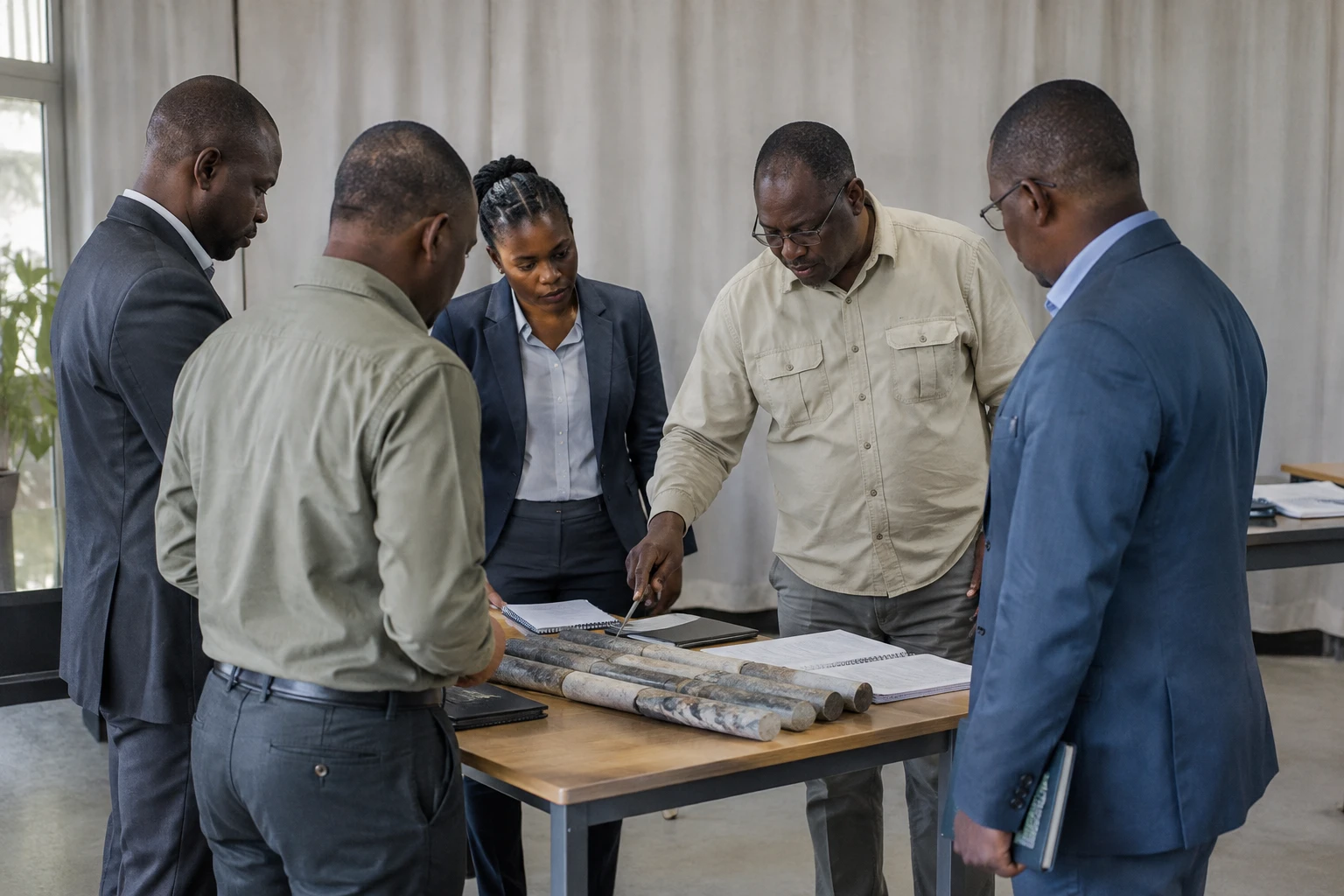
At Issia, in south-western Côte d’Ivoire, the first drilling has provided a new indication of what lies underground: lithium has been identified beneath a surface spodumene discovery. For British exploration company Switch Metals, however, tantalum remains the priority. What happens next will depend on the analyses still awaited and on whether the mineralisation can be shown to continue.
At Issia, a discovery still to be defined
On 2 November 2026, Switch Metals announced the results of the first seven drill holes analysed as part of its programme at Issia. The company says it completed 34 holes, totalling 3,438 metres, at the Kabore and Zraty prospects. The results released cover four holes at Kabore and three at Zraty.
At Kabore, one hole intersected 14 metres at 1.02% lithium oxide (Li₂O), including 7 metres at 1.75%. Another interval, about 200 metres away, measured 13 metres at 0.26%, including one metre at 1.42%. These results, announced by the company and published by the London Stock Exchange, indicate the presence of lithium at depth. They do not yet amount to a mineral resource estimate or prove the exploitable size of the deposit.
This distinction matters. The intervals cited are lengths measured down the drill holes, and do not necessarily represent the true thickness of the mineralised rocks. The company estimates that true widths could be about 50 to 70% of the drill lengths. The results remain preliminary: 27 holes have yet to be analysed.
At Zraty, all three holes tested intersected pegmatites, rocks that can host several metals. Indications of tantalum and niobium were reported in two of them. The grades reported there are, however, lower than those of some samples collected at the surface. Switch Metals says it plans to continue work to better understand the continuity and quality of the mineralised zones.
Tantalum remains the primary commercial target
Lithium is attracting attention, but the Issia project was initially built around surface coltan. The term refers to an ore containing, among other things, tantalum and niobium. Tantalum is used in the manufacture of electronic components and industrial alloys. At Issia, the company is studying near-surface deposits that could be mined using washing and gravity separation, a concentration method based on differences in mineral density.
This approach could require less investment than hard-rock mining, but it remains an option under consideration, not an operating mine. Switch Metals is working on an initial tantalum resource estimate. The new drilling results also provide indications of tantalum and niobium at Kabore and Zraty, without replacing the specific work needed to quantify the surface resources.
The company describes lithium as a potential addition. At Kabore, spodumene — a mineral containing lithium — had already been observed at the surface. The initial drilling results suggest that this mineralisation could continue at depth. But only four of the 30 holes drilled at Kabore were analysed in this first batch. The area explored therefore remains only partially assessed.
A portfolio spread across several regions
Issia is not Switch Metals’ only project in Côte d’Ivoire. At Tiassalé, in the south-east, the company has defined seven geochemical targets based on soil samples. Three are considered priorities. These are areas for further investigation, not confirmed deposits: the company plans to carry out mapping work there, followed potentially by trenching or drilling. The announcements on Tiassalé were published on 7 October 2026 by the London Stock Exchange.
This strategy comes as the country seeks to expand its mining sector beyond resources already being exploited. For communities near the licences, the benefits will depend in particular on whether a mine eventually opens, the local availability of jobs and infrastructure needs. At this stage, exploration announcements do not make it possible to draw conclusions about these effects. Nor do they provide information on the agreements that would govern any future production or on the share of value that would remain in Côte d’Ivoire.
The national and regional context also matters. Côte d’Ivoire is a member of ECOWAS, the Economic Community of West African States, which aims, among other things, to strengthen economic integration among its member states. The possible development of minerals used in batteries and electronics thus raises a broader question: will these resources mainly be exported in raw form, or will they contribute to processing activities and regional value chains? The drilling results do not resolve this question, but they form part of a practical debate about industrial diversification.
Further analyses will be decisive
Switch Metals says results from 27 drill holes are still expected by the end of 2026. They should help guide the next steps at Issia, including follow-up drilling and an assessment of the continuity of the mineralisation. The company estimates that its work at Kabore has tested about 500 metres of a prospective zone extending for more than 1.3 kilometres. This is the company’s assessment and will need to be tested against the analyses and subsequent work.
The point to watch, then, is less the announcement of a new metal than the transition from an indication to a measured resource. Until the full results, technical studies and economic assessments are available, it is premature to talk about lithium production at Issia. For Côte d’Ivoire, the question will also be whether exploration leads to projects capable of creating value locally, beyond the export of minerals.