Algeria
 Egypt
 Libya
 Morocco
 Sudan
 Tunisia
 Benin
 Burkina Faso
 Cabo Verde
 Ghana
 Guinea
 Guinea-Bissau
 Liberia
 Mali
 Mauritania
 Niger
 Nigeria
 Senegal
 Sierra Leone
 The Gambia
 Togo
 Cameroon
 Central African Republic
 Chad
 DR Congo
 Equatorial Guinea
 Gabon
 Republic of the Congo
 São Tomé and Príncipe
 Burundi
 Comoros
 Djibouti
 Eritrea
 Ethiopia
 Kenya
 Madagascar
 Malawi
 Mauritius
 Mozambique
 Rwanda
 Seychelles
 Somalia
 South Sudan
 Tanzania
 Uganda
 Angola
 Botswana
 Eswatini
 Lesotho
 Namibia
 South Africa
 Zambia
 Zimbabwe
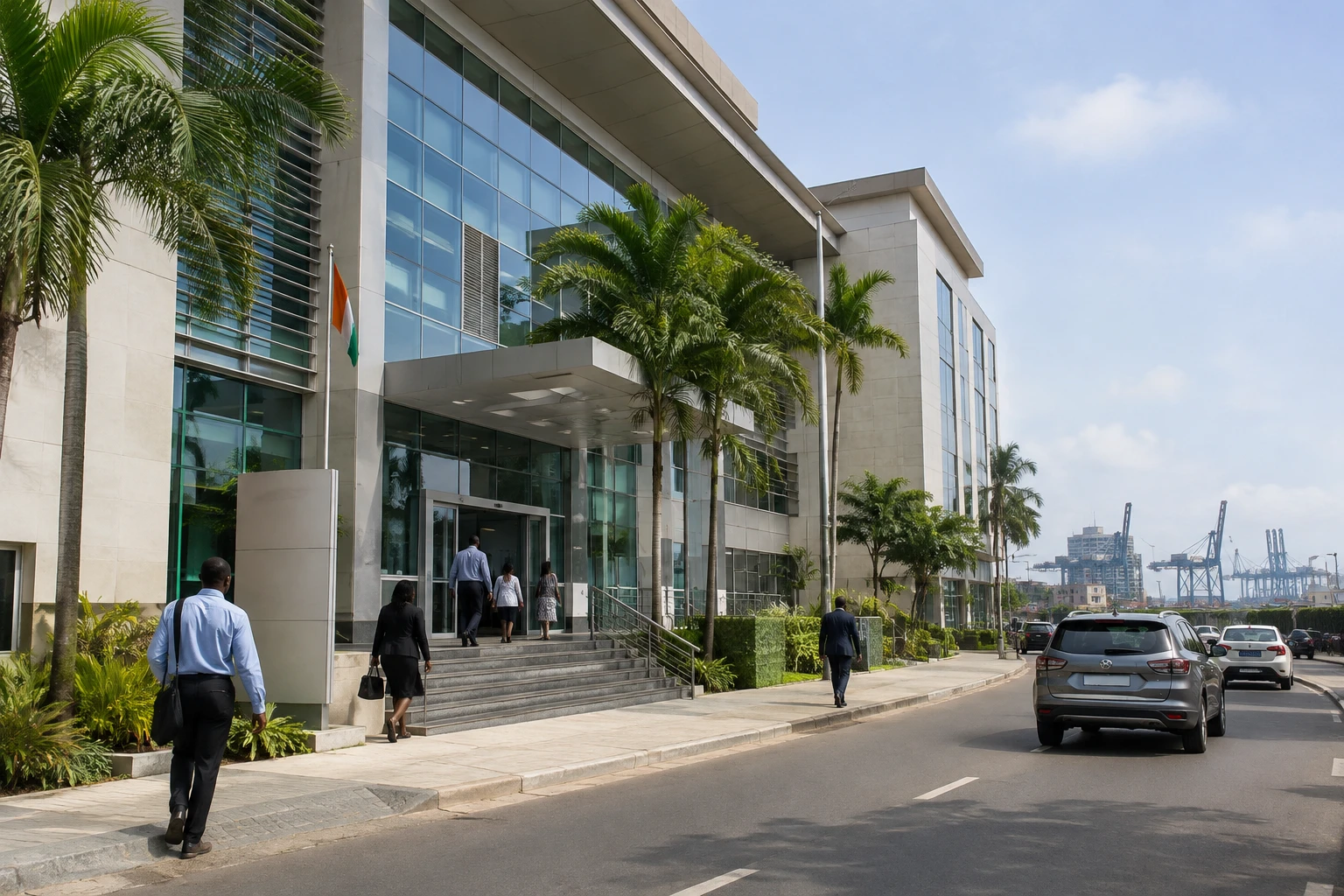
When a country’s trade grows, the question is not simply how much it sells and buys. It is also important to look at what is moving, with which partners, and what share of this activity creates value locally.
In Côte d’Ivoire, merchandise trade has risen sharply since 2018. This trend accompanies growth in agricultural and energy exports, as well as purchases needed for investment. It highlights a challenge: turning growing trade volumes into benefits that are more widely shared by Ivorian businesses and workers.
Growth driven by several industries
Afreximbank’s 2026 country note estimates the total value of merchandise trade at $57 billion in 2025, up from $26 billion in 2018. The bank forecasts a slight decline to $56.3 billion in 2026, followed by a rise to $58.7 billion in 2027. These figures are estimates and projections, not a definitive customs tally.
Ivorian sales still rely heavily on agriculture. Cocoa remains central, alongside cashew nuts and natural rubber. Gold and hydrocarbons are gradually broadening the range of exported products. This does not mean that the economy has already escaped its dependence on commodities: global prices and harvests continue to weigh on revenues.
Oil is, however, adding a new element to this trajectory. The offshore Baleine field began production in 2023 and is contributing to rising national output. For Calao, discovered in 2024, the available announcements concern potential resources and development prospects; these should not be confused with volumes already produced or exported.
Imports also tell a story of investment
Purchases from abroad are increasing in parallel. According to figures attributed to Afreximbank for 2025, chemicals and industrial goods, as well as fuels, account for $6.7 billion in imports. Machinery and complex manufactured goods come next. Some of these goods meet the needs of construction projects and businesses, but imports of fuel and inputs also expose the economy to external prices.
China and Nigeria are among the main suppliers cited for 2025. Available official Ivorian figures for 2024 already confirm the importance of China and Nigeria in supplies, although they relate to a different year. They therefore do not, on their own, validate the amounts announced for 2025.
The distinction matters: an increase in trade does not automatically mean an improvement in the trade balance or higher incomes for households. Imported equipment can support infrastructure and production. Local businesses, however, need access to markets, finance and skills if they are to capture a greater share of the value created.
Regional trade: a practical concern
African markets account for about 22% of Côte d’Ivoire’s merchandise trade in 2025, according to Afreximbank’s estimate. Mali and Burkina Faso are the main African destinations for exports mentioned in the note. Nigeria, meanwhile, plays an important role in supplies, particularly of fuel and industrial goods.
These flows link Côte d’Ivoire’s ports and businesses with neighbouring countries, several of which have no direct access to the sea. They therefore depend on road corridors, customs formalities and smooth border crossings. Delays and costs affect major importers, but also SMEs, transporters and traders with less room to absorb disruption.
A member of ECOWAS, the Economic Community of West African States, and WAEMU, the monetary and economic union of eight countries using the CFA franc, Côte d’Ivoire is integrated into several regional frameworks. Customs links with Ghana, the single window for foreign trade and the digitisation of procedures are intended to simplify operations. Their effectiveness will depend on how they are implemented at border posts and whether small businesses can access them.
The next step: sharing value more widely
The concentration of exports in agricultural products remains a fundamental issue. Processing cocoa, cashew nuts and other products locally can increase the value retained in the country, but requires industrial capacity, energy, markets and financing. The development of hydrocarbons raises a similar question: revenues and wider benefits will depend on investment choices, taxation and links established with local suppliers.
For producers, national figures alone do not show how income is distributed among farms, cooperatives, traders and processors. For consumers and businesses, the cost of imported goods remains sensitive to global prices and logistical conditions. The effects of trade growth are therefore not the same in major cities, production areas and regions connected to export corridors.
The slight decline forecast for 2026 should be treated with caution: it is a projection that may change with prices, harvests and import volumes. Across West Africa, the challenge extends beyond the performance of any one country. It is about making regional trade flow more smoothly and developing value chains in which producer countries process more of their resources. The next customs figures and progress on logistics reforms will help show whether rising trade is also translating into stronger diversification.
For context on the data, see Afreximbank’s database and country notes, the official Ivorian economic portal on foreign trade, the World Trade Organization’s trade data and the official information on the Baleine and Calao fields.